Aortic Pathway
Interactive passage with audio narration, comprehension questions, and printable PDF.
By completing this purchase you agree to our Terms of Use and Privacy Policy. Your subscription renews automatically until you cancel. You can cancel anytime from your account settings. All sales are final and non-refundable. Digital content is available for download in your account immediately upon purchase.
What's included
Aortic Pathway preview and details
About this printable Aortic Pathway science reading passage, NGSS-aligned (Grade 6)
Sample passage and quiz from Aortic Pathway
Reading passage and comprehension quiz preview
Aortic Pathway
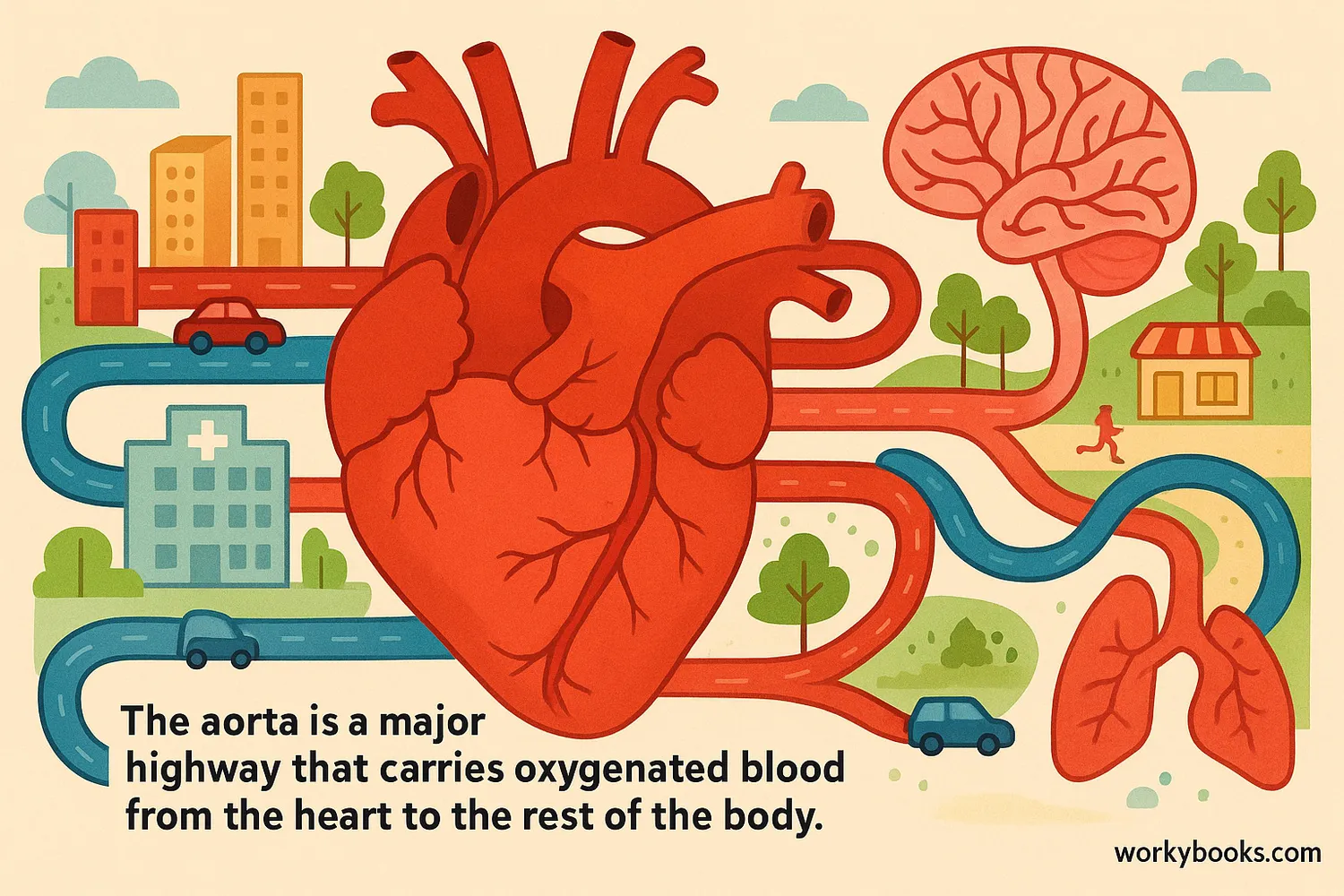
Imagine your body as a bustling city, and your heart as the main power station. This incredible organ works tirelessly, pumping blood to every single part of your body, keeping it alive and energized. But how does this vital blood travel? It uses a network of tiny roads and highways, and the biggest, most important highway for blood leaving your heart is called the aorta.
The aorta is a large, powerful artery. Think of arteries as the main pipes that carry blood away from your heart. When your heart beats, it pushes a gush of fresh, oxygen-rich blood into the aorta. This blood is called oxygenated blood because it carries the oxygen your body's cells need to function. From the aorta, this oxygenated blood then branches off into smaller arteries, which spread out like tree branches to deliver oxygen and nutrients to your brain, arms, legs, and all your internal organs.
The journey of blood through the aorta is a vital part of your body's circulatory system, also known as the cardiovascular system. This system is responsible for moving blood, nutrients, oxygen, carbon dioxide, and hormones around the body. Without the aorta, the heart wouldn't be able to effectively distribute the oxygenated blood needed for all your body's functions. The aorta begins at the top of the heart's left ventricle, which is the heart's strongest pumping chamber. It then curves down through your chest and abdomen, delivering blood all the way to your legs.
After your cells use up the oxygen, the blood becomes deoxygenated blood. This means it has less oxygen and more carbon dioxide, a waste product. This deoxygenated blood then travels back to the heart through a different set of vessels called veins. The heart then pumps this deoxygenated blood to the lungs to pick up more oxygen and release carbon dioxide, starting the whole amazing cycle again. So, the aorta is truly the superhighway of your circulatory system, ensuring every part of your body gets what it needs!
Interesting Fact: The aorta is about the diameter of a garden hose and is the largest artery in the human body.
Comprehension quiz (10 questions)
1. What is the heart compared to in the passage?
2. What is the largest artery?
3. What does oxygenated blood carry?
4. Which part of the heart pumps blood into the aorta?
5. What happens to blood after cells use oxygen?
6. Why is the aorta called the 'superhighway'?
7. What is the primary function of the circulatory system?
8. If the aorta was blocked, what would happen?
9. Arteries carry blood away from the heart. True or False?
10. What is 'ventricle' in the passage?
Perfect for the way you teach
- Build comprehension skills
- Auto-graded quiz
- Differentiated reading
- Read together at home
- Improve fluency
- Quiet reading time
- Reading curriculum support
- Independent practice
- Track Lexile growth