Arctic Fox Facts: What Do Arctic Foxes Eat?
Interactive passage with audio narration, comprehension questions, and printable PDF.
What's included
Arctic Fox Facts: What Do Arctic Foxes Eat? preview and details
About this printable Arctic Fox Facts: What Do Arctic Foxes Eat? science reading passage, NGSS-aligned (Grades 5-8)
Sample passage and quiz from Arctic Fox Facts: What Do Arctic Foxes Eat?
Reading passage and comprehension quiz preview
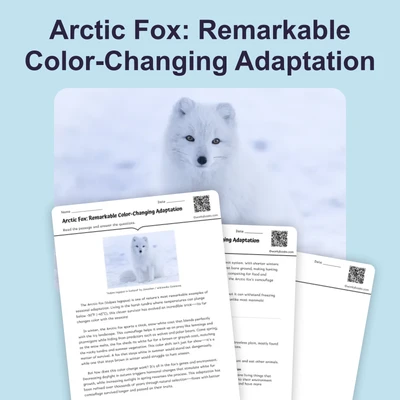
Arctic Fox Facts: What Do Arctic Foxes Eat?
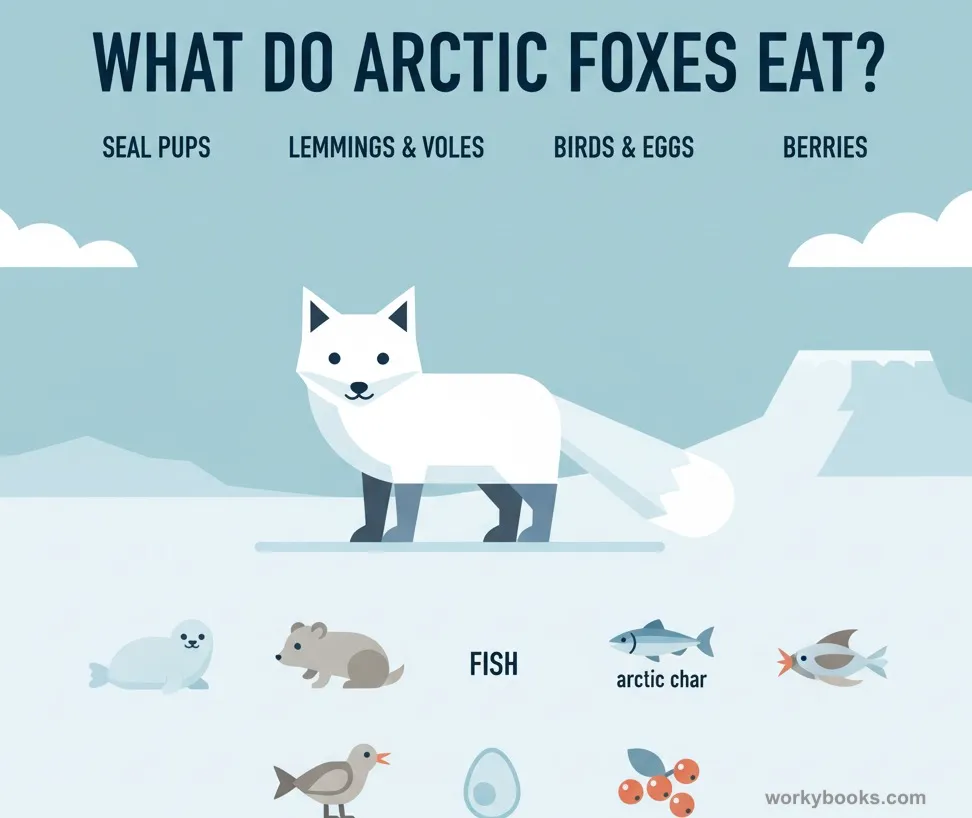
The Arctic fox (Vulpes lagopus) is a master of survival in the frozen tundra. With its thick white winter coat and keen hunting skills, this small predator thrives in one of Earth’s harshest environments. But what does it eat to stay alive?
Arctic foxes are opportunistic feeders, meaning they eat whatever is available. Their diet changes with the seasons. In summer, they hunt lemmings, voles, and birds, relying on their sharp hearing to detect prey under the snow. A single fox can eat dozens of lemmings in a day! They also scavenge eggs from nests and even munch on berries and seaweed when meat is scarce.
Winter brings tougher challenges. When food is limited, Arctic foxes follow polar bears to feed on leftover seal carcasses. They also store extra food underground, saving it for later. Amazingly, their metabolism slows in extreme cold, helping them survive on scraps for weeks.
Climate change threatens Arctic foxes by reducing their prey and forcing competition with larger red foxes moving north. Yet, their ability to adapt—switching diets and enduring long hunger periods—keeps them alive.
Fun Fact: An Arctic fox’s fur changes color with the seasons—white in winter for camouflage and brown/gray in summer to blend with rocks and plants!
Comprehension quiz (8 questions)
1. What is the main winter food source for Arctic foxes when hunting is difficult?
2. How do Arctic foxes find lemmings under the snow?
3. What adaptation helps Arctic foxes survive food shortages in winter?
4. Why is climate change a threat to Arctic foxes?
5. What seasonal change helps Arctic foxes hide from predators?
6. Which food is NOT part of an Arctic fox’s diet?
7. How do Arctic foxes prepare for winter food shortages?
8. What makes Arctic foxes "opportunistic feeders"?
Perfect for the way you teach
- Build comprehension skills
- Auto-graded quiz
- Differentiated reading
- Read together at home
- Improve fluency
- Quiet reading time
- Reading curriculum support
- Independent practice
- Track Lexile growth