Human Impacts: Climate Change — Reading Comprehension
Rate this
Premium Resource
Present
Present in classroom. No work saved
Assign
Classroom with student accounts, Track progress
Quick Play
No student accounts, assign with a link
Grades
5
6
7
8
Standards
MS-LS2-4
MS-ESS3-5
PRINT+DIGITAL RESOURCE
This learning resource is available in interactive and printable formats. The interactive worksheet can be played online and assigned to students. The Printable PDF version can be downloaded and printed for completion by hand.
This standards-aligned science reading passage for grades 6-8 explains the mechanisms and effects of human-driven climate change on biodiversity and ecosystems, aligning with NGSS standards MS-LS2-4 and MS-ESS3-5. Students will learn about temperature changes, sea level rise, ocean acidification, feedback loops, and species responses such as adaptation or migration. Real-world examples like coral bleaching and permafrost melting are explored to illustrate the interconnectedness of Earth’s systems. The passage emphasizes cause-and-effect relationships, scientific evidence, and the impact of climate change on vulnerable ecosystems, such as polar regions and coral reefs. Also included are a glossary, Spanish translation, differentiated reading version, quizzes, writing prompts, and graphic organizers. Audio integration supports diverse learners. This resource helps students connect scientific principles to environmental issues and encourages critical thinking about global challenges.
CONTENT PREVIEW
Expand content preview
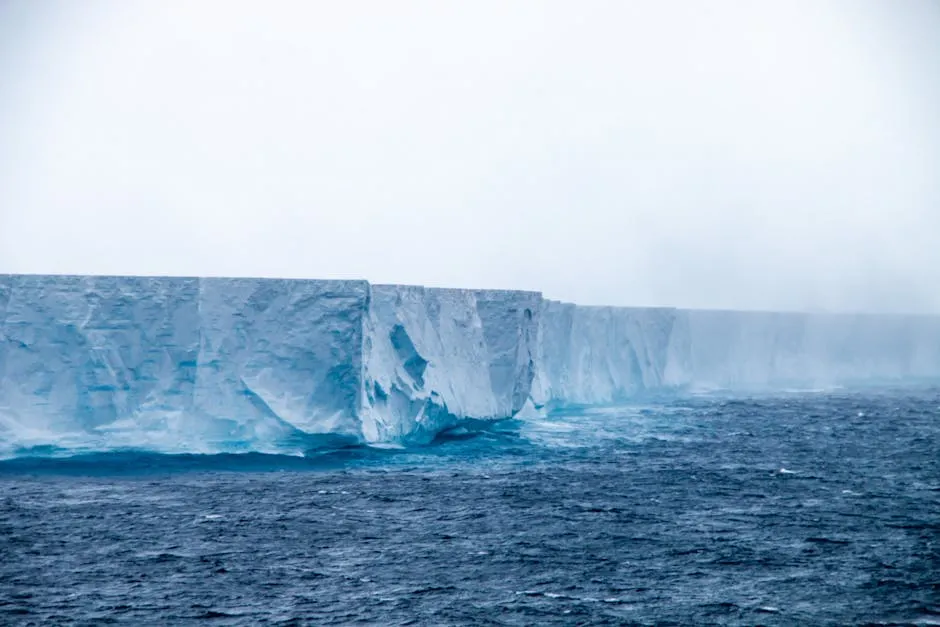
One of the major impacts of climate change is sea ice loss. Image by ArcticDesire.com Polarreisen / Pexels.
Climate change is altering the natural balance of Earth’s systems, with measurable effects on biodiversity and ecosystems worldwide. Scientists have observed that global average temperatures have risen by about 1.1°C (2°F) since the late 1800s, mainly due to the increased release of greenhouse gases from human activities like burning fossil fuels. These changes are not only causing warmer weather but are also leading to complex shifts in where species live and how natural systems function.
How Climate Change Affects Living Things
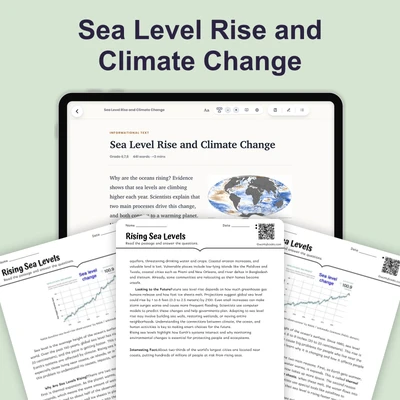
One major effect of climate change is the shift in species ranges. As temperatures warm, many plants and animals are moving toward the poles or to higher elevations. For example, some butterfly species in North America have shifted their habitats northward by up to 200 kilometers in recent decades. Another impact is phenology disruption—a mismatch in the timing of natural events. For instance, some birds now migrate earlier in the spring, but the insects they eat may not be available yet, disrupting food chains. Rising sea levels, caused by melting glaciers and thermal expansion of seawater, are flooding coastal habitats. This threatens species like sea turtles, whose nesting beaches are disappearing.
Ocean Acidification, Extreme Weather, and Feedback Loops
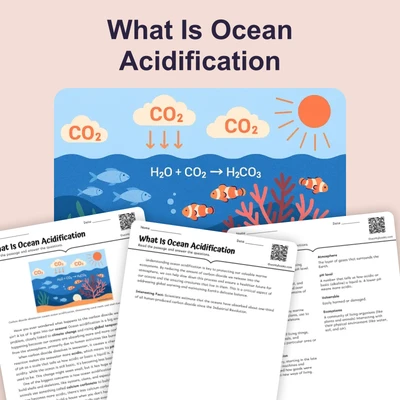
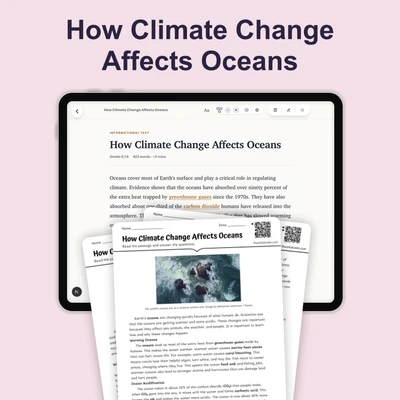
Increased levels of carbon dioxide in the atmosphere not only trap heat but also dissolve in oceans, leading to ocean acidification. This process makes it harder for corals and shell-forming organisms, like oysters, to build their skeletons and shells. Coral reefs, which support 25% of marine life, are experiencing coral bleaching as warmer and more acidic waters stress coral polyps. Extreme weather events, such as hurricanes, droughts, and wildfires, are becoming more frequent and severe. These disturbances can wipe out entire populations and destroy habitats. Additionally, climate change triggers feedback loops. For example, melting permafrost in polar regions releases methane, a powerful greenhouse gas, which further accelerates warming.
Vulnerable Ecosystems and Species Responses
Ecosystems like polar regions, coral reefs, and alpine zones are especially vulnerable. In the Arctic, sea ice loss endangers species such as polar bears and walruses. Alpine plants may have nowhere higher to go as temperatures climb. In response to these changes, species may try to adapt, migrate to new areas, or face the risk of extinction. Scientists monitor these changes using satellite data, long-term field studies, and computer models, which help predict future impacts and inform conservation efforts.
Climate change illustrates the interconnectedness of Earth’s systems—changes in one part can have ripple effects across the globe. Understanding these processes is key for developing solutions to protect biodiversity and maintain healthy ecosystems now and for future generations.
Interesting Fact: Permafrost stores twice as much carbon as is currently in the atmosphere. When it melts, it can release huge amounts of greenhouse gases, speeding up climate change even more.
What is the main cause of recent global temperature increases, according to the passage?
Increased greenhouse gases from human activitiesNatural changes in Earth's orbitVolcanic eruptionsSolar flares
Which of the following is a direct effect of rising sea levels?
What does 'phenology disruption' mean in the context of the passage?
A mismatch in the timing of natural eventsAnimals going extinctPlants growing fasterWeather patterns becoming more stable
Which ecosystem is especially at risk due to melting permafrost?
Polar regionsDesertsRainforestsGrasslands
What is ocean acidification and how does it affect marine life?
It makes the ocean more acidic, harming corals and shell-forming organisms.It makes ocean water saltier, helping fish grow.It cools the ocean, causing more icebergs to form.It increases oxygen in water, helping corals thrive.
According to the passage, what is a feedback loop?
A process where a change causes more changes that strengthen the original effect.A process where animals migrate in a circle.A system where plants and animals are not connected.A repeated weather event every year.
Why are coral reefs important to marine life?
They support about 25% of marine life.They control ocean currents.They reduce carbon dioxide.They increase salt levels in water.
If permafrost melts, what gas is released that speeds up climate change?
MethaneOxygenNitrogenHelium
True or False: Some species respond to climate change by adapting, migrating, or risking extinction.
TrueFalse
True or False: Extreme weather events are becoming less frequent due to climate change.
TrueFalse
Perfect For:
👩🏫 Teachers
• Reading comprehension practice
• Auto-graded assessments
• Literacy skill development
👨👩👧👦 Parents
• Reading practice at home
• Comprehension improvement
• Educational reading time
🏠 Homeschoolers
• Reading curriculum support
• Independent reading practice
• Progress monitoring
Reading Features:
📖
Reading Passage
Engaging fiction or nonfiction text
❓
Comprehension Quiz
Auto-graded questions
📊
Instant Feedback
Immediate results and scoring
📄
Printable Version
Download for offline reading
🔊
Read Aloud
Voice-over with word highlighting
Reviews & Ratings
No reviews yet. Be the first to share your experience!
Related Content
Natural Disaster: Hurricanes
Hurricanes are massive storms with strong winds and rain. Tracking and preparing for them helps protect people in their ...
RI.3.1RI.4.4RI.4.2RI.5.2
How Climate Change Affects Animal Migration
This NGSS-aligned science reading passage explains how climate change affects animal migration by altering seasonal cues...
MS-LS2-6MS-ESS3-5
What Is Global Warming?
This NGSS-aligned reading passage explains global warming, the greenhouse effect, and how human activities like burning ...
MS-ESS3-5
What Causes Global Warming?
This NGSS-aligned reading passage explains what causes global warming, focusing on how human activities like burning fos...
MS-ESS3-5
How to Stop Global Warming
This NGSS-aligned reading passage helps students understand how to stop global warming by reducing greenhouse gases. It ...
MS-ESS3-5
Climate Change: Vulnerable Ecosystems
This middle school science passage, aligned with NGSS standards MS-ESS3-5 and MS-LS2-4, helps students understand how cl...
MS-ESS3-5MS-LS2-4
Climate Change: Solutions and Mitigation
This passage explores scientific solutions and mitigation strategies for climate change, designed for middle school scie...
MS-ESS3-4MS-ESS3-5
Scientific Inquiry in Earth Science
This passage explores scientific inquiry in Earth science for grades 6-8, aligned with NGSS standards MS-ESS1-4, MS-ESS2...
MS-ESS1-4MS-ESS2-1MS-ESS3-5SEP
Great Barrier Reef
This passage introduces middle school students to the Great Barrier Reef, the world's largest coral reef system, located...
MS-LS2-1MS-LS2-4MS-ESS3-5
Siberian Taiga
This engaging middle school science passage explores the Siberian Taiga, the world’s largest forest ecosystem, stretchin...
MS-LS2-1MS-ESS3-5
The Greenhouse Effect
This comprehensive middle school science passage explores the greenhouse effect, a process essential to maintaining Eart...
MS-ESS2-6MS-ESS3-5
Melting Ice and Snow
This passage, designed for grades 6-8 and aligned with NGSS MS-ESS3-5, explores the mechanisms and impacts of melting ic...
MS-ESS3-5
Rising Sea Levels
This science passage, written for grades 6-8, explores the phenomenon of rising sea levels, a key topic aligned with NGS...
MS-ESS3-5
Ice Cores
This passage, aligned with NGSS standards MS-ESS3-5 and MS-ESS1-4, explores the scientific process of extracting and ana...
MS-ESS3-5MS-ESS1-4
How Climate Change Affects Weather
This middle school science passage explores how and why weather patterns are changing globally. Students will learn abou...
MS-ESS3-5
How Climate Change Affects Oceans
This NGSS-aligned passage explores major changes occurring in Earth’s oceans, focusing on the mechanisms and impacts of ...
MS-ESS3-5
Carbon Footprint
This NGSS-aligned passage for grades 6-8 explores the concept of a carbon footprint, focusing on how personal activities...
MS-ESS3-4MS-ESS3-5
El Niño
This middle school science passage provides an in-depth exploration of El Niño, the warm phase of the El Niño-Southern O...
MS-ESS2-6MS-ESS3-5
ENSO and Global Climate
This comprehensive passage explores the El Niño-Southern Oscillation (ENSO), a crucial driver of global climate variabil...