This learning resource is available in interactive and printable formats. The interactive worksheet can be played online and assigned to students. The Printable PDF version can be downloaded and printed for completion by hand.
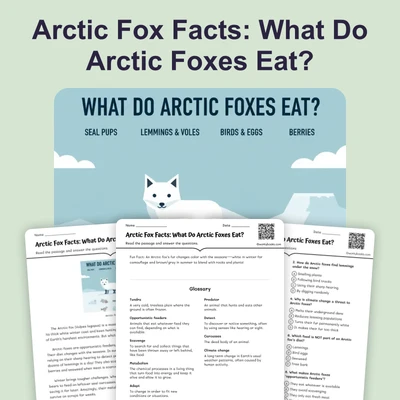
This NGSS-aligned passage (MS-LS4-4) examines the Arctic fox's remarkable seasonal color change from winter white to summer brown. Students discover how photoperiod triggers hormonal changes that control fur pigmentation, demonstrating natural selection in action. The text explains the survival advantages of camouflage against predators and prey, with discussion of climate change impacts on this adaptation. A fun fact reveals their fur provides such insulation that they don't need to increase metabolic rate in cold. Comprehension questions target the mechanisms and evolutionary advantages of seasonal camouflage, while vocabulary questions clarify 'metabolism' in extreme environments. Ideal for teaching about heredity, adaptation, and climate change impacts on Arctic species.
CONTENT PREVIEW
Expand content preview
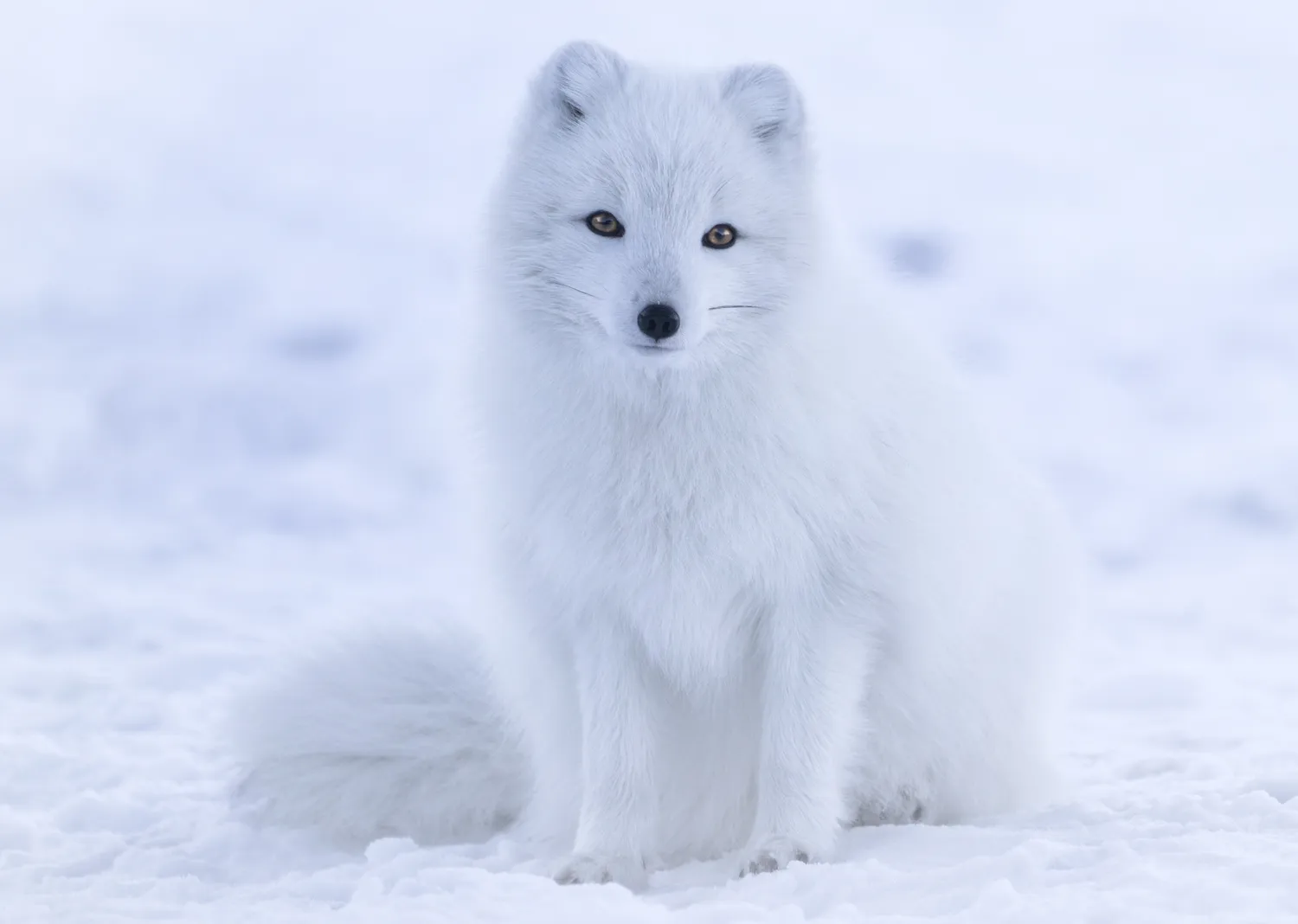
"Vulpes lagopus in Iceland" by Jonathen / Wikimedia Commons.
The Arctic fox (Vulpes lagopus) is one of nature's most remarkable examples of seasonal adaptation. Living in the harsh tundra where temperatures can plunge below -50°F (-45°C), this clever survivor has evolved an incredible trick—its fur changes color with the seasons!
In winter, the Arctic fox sports a thick, snow-white coat that blends perfectly with the icy landscape. This camouflage helps it sneak up on prey like lemmings and ptarmigans while hiding from predators such as wolves and polar bears. Come spring, as the snow melts, the fox sheds its white fur for a brown or grayish coat, matching the rocky tundra and summer vegetation. This color shift isn't just for show—it’s a matter of survival. A fox that stays white in summer would stand out dangerously, while one that stays brown in winter would struggle to hunt unseen.
But how does this color change work? It's all in the fox's genes and environment. Decreasing daylight in autumn triggers hormonal changes that stimulate white fur growth, while increasing sunlight in spring reverses the process. This adaptation has been refined over thousands of years through natural selection—foxes with better camouflage survived longer and passed on their traits.
Climate change, however, is disrupting this perfect system. With shorter winters and less snow, white foxes sometimes stick out against bare ground, making hunting harder. Meanwhile, red foxes are moving northward, competing for food and territory. Scientists worry that if warming continues, the Arctic fox’s camouflage may become less effective, threatening its future.
Fun Fact: An Arctic fox’s winter coat is so insulating that it can withstand freezing temperatures without increasing its metabolic rate—unlike most mammals!
Why does the Arctic fox's fur turn white in winter?
To attract matesTo blend with snowTo repel insectsTo absorb sunlight
What triggers the Arctic fox's seasonal color change?
Temperature shiftsChanges in daylightFood availabilityRain patterns
How does camouflage help the Arctic fox in winter?
It keeps the fox warmerIt hides the fox from predators and preyIt makes running through snow easierIt helps the fox swim in icy water
What is a major threat to the Arctic fox’s camouflage today?
Too much snowClimate change reducing snow coverOverhunting by humansThicker fur growth
What color is an Arctic fox’s summer coat?
Pure whiteBlack and whiteBrown or grayReddish-orange
How does natural selection relate to the Arctic fox’s camouflage?
Foxes choose their fur colorBest-camouflaged foxes survive and reproduceHumans bred them for color changesAll foxes change color at the same time
Why are red foxes a problem for Arctic foxes?
They spread diseasesThey compete for food and territoryThey interbreed with Arctic foxesThey have the same camouflage
What’s special about the Arctic fox’s winter coat?
It’s waterproofIt glows in the darkIt provides insulation without extra energyIt repels snow
Perfect For:
👩🏫 Teachers
• Reading comprehension practice
• Auto-graded assessments
• Literacy skill development
👨👩👧👦 Parents
• Reading practice at home
• Comprehension improvement
• Educational reading time
🏠 Homeschoolers
• Reading curriculum support
• Independent reading practice
• Progress monitoring
Reading Features:
📖
Reading Passage
Engaging fiction or nonfiction text
❓
Comprehension Quiz
Auto-graded questions
📊
Instant Feedback
Immediate results and scoring
📄
Printable Version
Download for offline reading
🔊
Read Aloud
Voice-over with word highlighting
Reviews & Ratings
No reviews yet. Be the first to share your experience!
Related Content
Why Are Pollinators Important?
This passage explores the critical ecological role of pollinators in maintaining ecosystem stability and supporting huma...
MS-LS2-4RI.6.3RI.7.3RI.8.8
What Would Happen If Bees Went Extinct?
This passage examines the potential consequences of bee extinction, perfectly aligned with NGSS standard MS-LS2-4 on eco...
MS-LS2-4RI.6.3RI.7.3RI.8.8
Why Are Honeybees Important?
This passage explores the essential ecological and agricultural roles of honeybees, supporting NGSS standard MS-LS2-4 on...
MS-LS2-4RI.6.3RI.7.3RI.8.8
How Can We Help Pollinators and Stop Their Decline?
Pollinators including bees (Apis mellifera), butterflies (Lepidoptera), birds, and bats face severe threats with 40% of ...
MS-LS2-4RI.7.3RI.8.8RI.8.3
Wolves of Yellowstone
This passage explores the ecological concept of trophic cascades through the landmark case study of wolf reintroduction ...
MS-LS2-4RI.6.3RI.7.3RI.8.8
Barreleye Fish: The Deep-Sea Telescope
This science passage explores the barreleye fish's extraordinary adaptations aligned with NGSS standard MS-LS2-4 (Ecosys...
MS-LS2-4RI.6.3RI.7.3RI.8.8
Arctic Fox Facts: What Do Arctic Foxes Eat?
This passage explores the Arctic fox's dietary adaptations aligned with NGSS standard MS-LS2-4 (Ecosystem Interactions)....
MS-LS2-4RI.6.3RI.7.3RI.8.8
Human Impacts: Invasive Species
This passage explores the science behind invasive species—non-native organisms that harm native ecosystems. Aligned to N...
MS-LS2-4MS-LS2-5
Human Impacts: Pollution
This middle school science reading passage, aligned with NGSS standards MS-LS2-4 and MS-ESS3-3, examines the mechanisms ...
MS-LS2-4MS-ESS3-3
Human Impacts: Climate Change
This standards-aligned science reading passage for grades 6-8 explains the mechanisms and effects of human-driven climat...
MS-LS2-4MS-ESS3-5
Human Impacts: Habitat Destruction
This grade 6-8 science passage explores human impacts on ecosystems, focusing on habitat destruction as the leading caus...
MS-LS2-4MS-LS2-5MS-ESS3-3
Human Impacts: Overexploitation
This middle school science passage aligns with NGSS standards MS-LS2-4 and MS-LS2-5, focusing on human impacts through o...
MS-LS2-4MS-LS2-5
Environmental Problems and Solutions
This passage for grades 6-8 introduces major environmental problems such as habitat loss, pollution, climate change, inv...
MS-LS2-4MS-ESS3-3MS-ESS3-4
Climate Change: Vulnerable Ecosystems
This middle school science passage, aligned with NGSS standards MS-ESS3-5 and MS-LS2-4, helps students understand how cl...
MS-ESS3-5MS-LS2-4
Restoration Ecology
This passage introduces middle school students to the vital field of restoration ecology, aligning with NGSS standards M...
MS-LS2-4MS-ESS3-4
Florida Everglades
This comprehensive passage introduces middle school students to the Florida Everglades, a distinctive wetland ecosystem ...
MS-LS2-1MS-LS2-4MS-ESS3-3MS-ESS3-4
Great Barrier Reef
This passage introduces middle school students to the Great Barrier Reef, the world's largest coral reef system, located...
MS-LS2-1MS-LS2-4MS-ESS3-5
What Is a Tropical Savanna?
This NGSS-aligned science passage for grades 6-8 explores the rich animal diversity of the savanna ecosystem. Students w...
MS-LS2-1MS-LS2-2MS-LS2-4MS-LS1-4
Predators and Scavengers of Savanna
This comprehensive science passage introduces middle school students to the vital roles of predators and scavengers in e...