The Florida Everglades
Interactive passage with audio narration, comprehension questions, and printable PDF.
By completing this purchase you agree to our Terms of Use and Privacy Policy. Your subscription renews automatically until you cancel. You can cancel anytime from your account settings. All sales are final and non-refundable. Digital content is available for download in your account immediately upon purchase.
What's included
The Florida Everglades preview and details
About this printable The Florida Everglades science reading passage, NGSS-aligned (Grades 5-8)
Sample passage and quiz from The Florida Everglades
Reading passage and comprehension quiz preview
Everglades
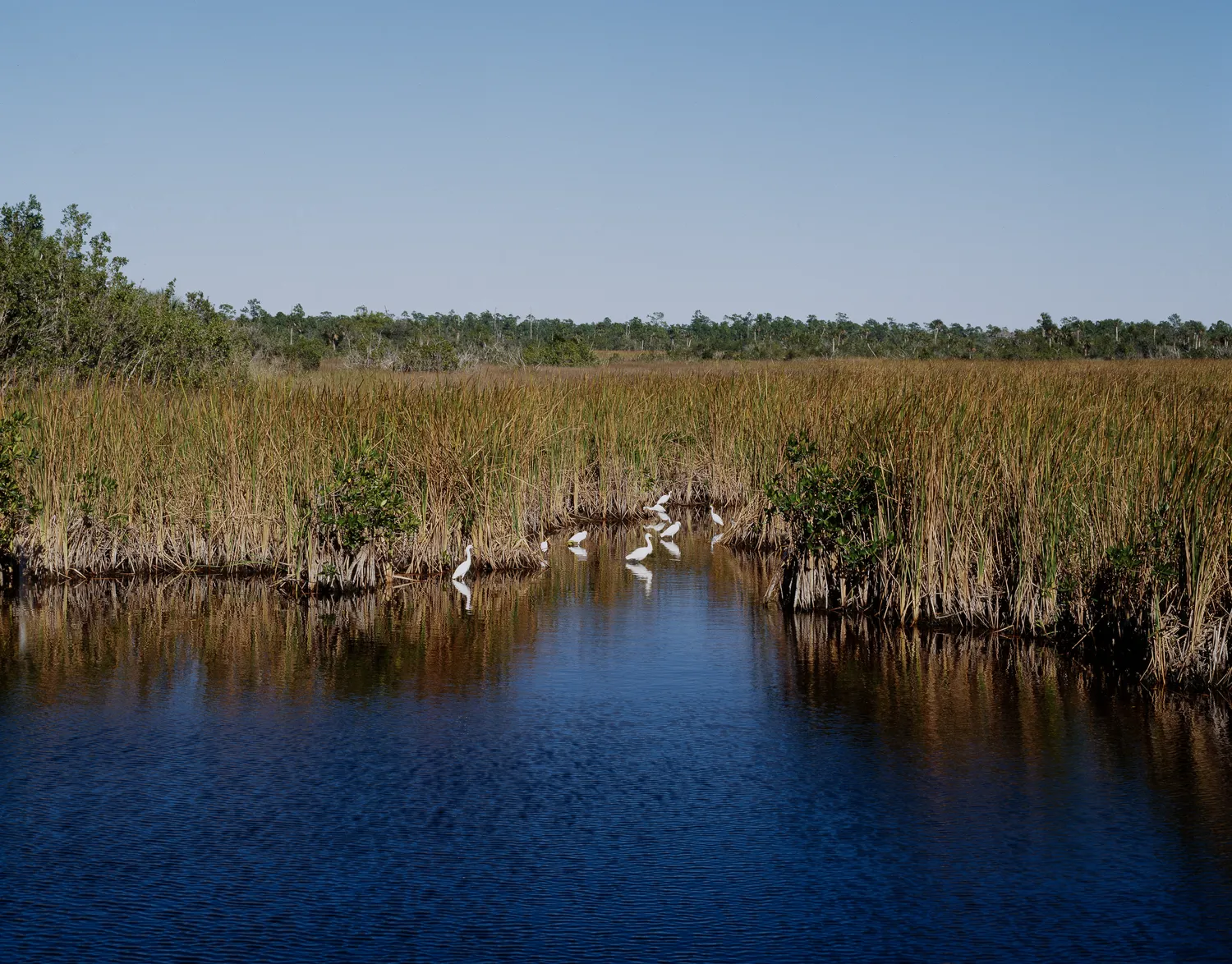
Everglades, freshwater ecosystem located in southern Florida by Carol M. Highsmith / Wikimedia Commons (Public domain).
The Florida Everglades is a vast, slow-moving freshwater ecosystem located in southern Florida. Known as the "river of grass," the Everglades stretches over 1.5 million acres and supports some of the most diverse life in North America. The Everglades is important because it provides habitat for countless plants and animals, filters water, and helps protect southern Florida from flooding. Scientific research has shown that this wetland system depends on a delicate balance between water flow, seasonal flooding, and interactions among living and nonliving parts.
Slow-Moving Water and Seasonal Flooding
The Everglades is not a typical river. Instead, it is a shallow, slow-moving sheet of water averaging less than one meter deep. Rainfall during Florida's wet season, from May to October, causes water to flow from Lake Okeechobee southward. This gradual flow creates seasonal flooding, which is critical for the survival of many species. For example, alligators dig alligator holes that collect water during dry months, providing refuge for fish and birds. The slow movement of water allows nutrients to settle and supports the growth of sawgrass, a plant that dominates the marshes. Seasonal flooding also shapes the distribution of habitats, from open marshes to tree-covered cypress swamps.
Diverse Habitats and Wildlife
The Everglades contains several distinct habitats, each with unique features. Sawgrass marshes cover much of the area, providing food and shelter for animals like herons, egrets, and the endangered Florida panther. Mangrove forests grow along the southern coast, where saltwater and freshwater mix, supporting manatees and mangrove snails. Cypress swamps are home to turtles, amphibians, and wading birds. Scientists use field studies and data collection to understand how these habitats interact and how wildlife populations change over time. For example, over 350 bird species have been recorded in the Everglades, making it one of the most important bird habitats in North America.
Human Impact and Restoration Efforts
In the early 1900s, people began draining large sections of the Everglades for farms and cities. Canals and levees changed the natural flow of water, causing some areas to dry out and others to flood too much. This led to a loss of habitat and a decline in wildlife populations. Recognizing these problems, scientists and engineers now work together on restoration projects. The Comprehensive Everglades Restoration Plan (CERP) aims to restore the natural water flow, improve water quality, and protect wildlife. These efforts include removing barriers, constructing reservoirs, and monitoring environmental changes. Ongoing research and monitoring help scientists measure the success of restoration and adjust strategies as needed.
The Florida Everglades is a living example of how water shapes ecosystems and how human actions can both harm and help the environment. Understanding the complex relationships between water, land, and wildlife is essential for protecting this "river of grass" for future generations.
Interesting Fact: The Everglades is the only place in the world where alligators and crocodiles live side by side in the wild.
Comprehension quiz (10 questions)
1. What nickname is used to describe the Florida Everglades?
2. How deep is the water in the Everglades on average?
3. What is the main plant found in the Everglades marshes?
4. What is the purpose of alligator holes during the dry months?
5. Based on the passage, what does the term 'restoration' mean?
6. Which two animals live together in the Everglades, unlike anywhere else in the world?
7. Why is the Everglades considered important for birds?
8. How did human activities in the early 1900s affect the Everglades?
9. The Everglades is a freshwater ecosystem. (True/False)
10. The Comprehensive Everglades Restoration Plan aims to increase flooding in cities. (True/False)
Perfect for the way you teach
- Build comprehension skills
- Auto-graded quiz
- Differentiated reading
- Read together at home
- Improve fluency
- Quiet reading time
- Reading curriculum support
- Independent practice
- Track Lexile growth