Are Plants Autotrophs
Interactive passage with audio narration, comprehension questions, and printable PDF.
By completing this purchase you agree to our Terms of Use and Privacy Policy. Your subscription renews automatically until you cancel. You can cancel anytime from your account settings. All sales are final and non-refundable. Digital content is available for download in your account immediately upon purchase.
What's included
Are Plants Autotrophs preview and details
About this printable Are Plants Autotrophs science reading passage, NGSS-aligned (Grade 6)
Sample passage and quiz from Are Plants Autotrophs
Reading passage and comprehension quiz preview
Are Plants Autotrophs?
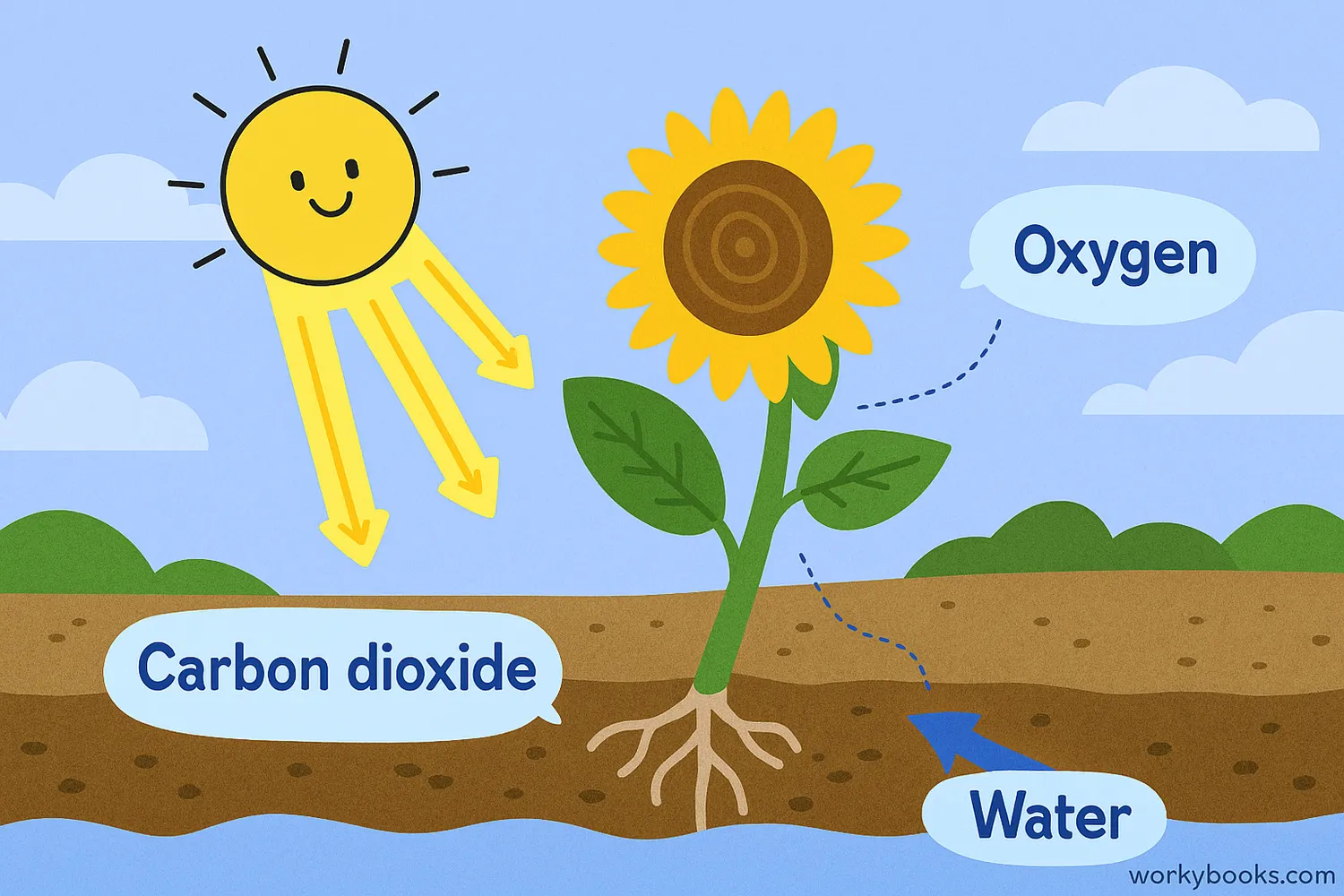
Imagine being able to make your own lunch just by standing in the sun! While humans can't do that, plants have this amazing ability. They are the ultimate food makers of our planet. This unique skill means plants are called autotrophs. The word "auto" means self, and "troph" means feeding. So, an autotroph is an organism that produces its own food, rather than relying on other organisms.
How do plants accomplish this incredible feat? They use a process called photosynthesis. Think of photosynthesis as a plant's kitchen, where all the ingredients come together to create food. The main ingredients plants need are sunlight, water, and carbon dioxide. Carbon dioxide is a gas present in the air all around us. Water is absorbed from the soil through the plant's roots. Sunlight provides the energy needed to power this whole cooking process.
During photosynthesis, plants capture the energy from sunlight using a special green pigment called chlorophyll, which is mostly found in their leaves. This captured light energy is then used to convert carbon dioxide and water into sugars. These sugars are a type of carbon-based molecule, and they are the plant's food source. The sugars provide the plant with the energy it needs to grow, reproduce, and carry out all its life functions. It's like baking a cake – you mix ingredients, apply heat (energy), and get a delicious product.
An important byproduct of photosynthesis is oxygen. Plants release oxygen back into the atmosphere, which is essential for most living things, including us, to breathe. So, plants not only feed themselves but also help provide the air we need to survive. This makes plants incredibly important producers in almost every ecosystem on Earth, forming the base of many food chains.
Interesting Fact: Some plants, like certain types of orchids, can also get some nutrients from fungi or decaying matter, but they primarily rely on photosynthesis for their energy.
Comprehension quiz (10 questions)
1. What does the word 'autotroph' mean?
2. What gas do plants release during photosynthesis?
3. What is the main purpose of photosynthesis for a plant?
4. Which of these is NOT an ingredient for photosynthesis?
5. Why are plants considered important 'producers'?
6. If a plant doesn't get enough sunlight, what might happen to its ability to make food?
7. What role does chlorophyll play in photosynthesis?
8. The sugars produced during photosynthesis are primarily used by the plant for energy.
9. What are carbon-based molecules?
10. Imagine you have a plant in a sealed container without enough carbon dioxide. How would this affect the plant's growth?
Perfect for the way you teach
- Build comprehension skills
- Auto-graded quiz
- Differentiated reading
- Read together at home
- Improve fluency
- Quiet reading time
- Reading curriculum support
- Independent practice
- Track Lexile growth