This learning resource is available in interactive and printable formats. The interactive worksheet can be played online and assigned to students. The Printable PDF version can be downloaded and printed for completion by hand.
This engaging history passage explores the life of Siddhartha Gautama, also known as the Buddha, and his search for enlightenment in ancient India. Students will learn about the historical context of the Buddha’s life, including his early years as a prince, his renunciation of luxury, and the spiritual journey that led to the development of Buddhism. The text incorporates vocabulary such as ascetic, meditation, enlightenment, and the Four Noble Truths, helping students build academic language. The passage references primary and archaeological sources, such as the Bodhi tree at Bodh Gaya and early Buddhist texts. Activities include comprehension questions, writing prompts, graphic organizers, and a timeline, fostering critical thinking and historical analysis. The passage and activities align with CA HSS 6.1.2, RH.6-8.1, and RH.6-8.2 standards. Spanish translations and read aloud audio support diverse learners. This resource is ideal for units on ancient India, world religions, and the development of major belief systems.
CONTENT PREVIEW
Expand content preview
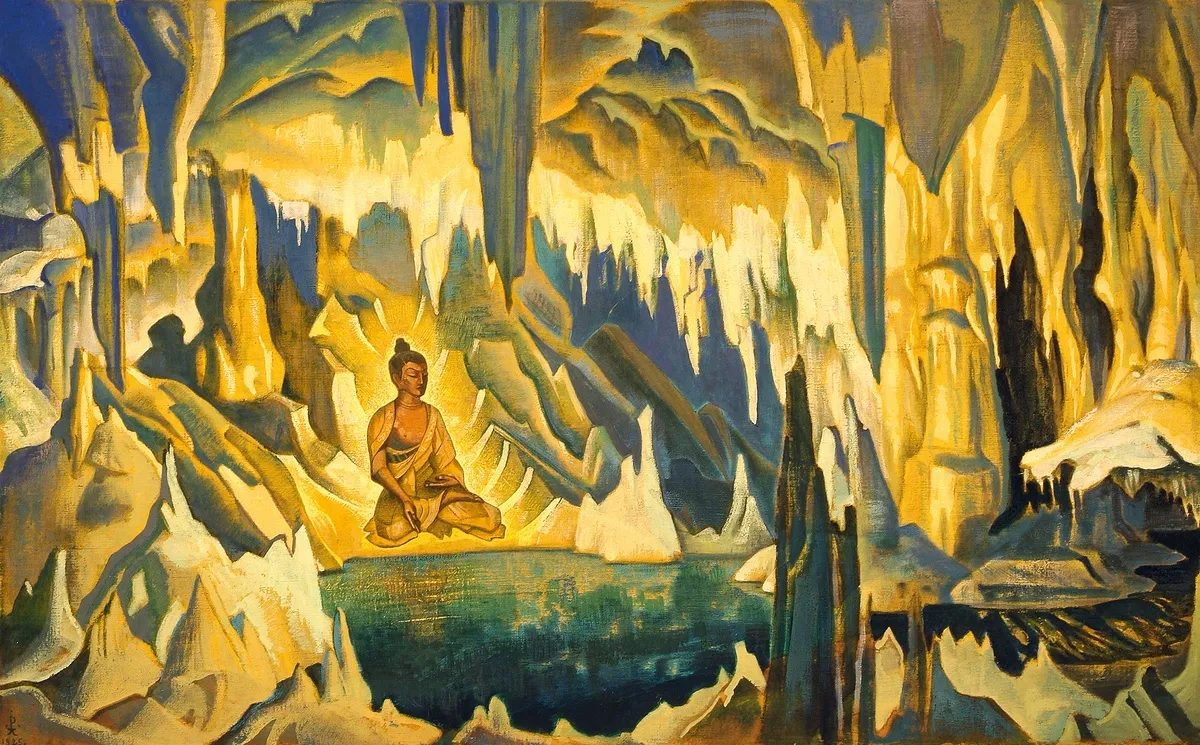
"Buddha the Conqueror" by Nicholas Roerich / Wikimedia Commons (Public domain).
Siddhartha Gautama, known as the Buddha, founded one of the world’s major religions in ancient India during the 6th century BCE. Born around 563 BCE in Lumbini, near the Himalayan foothills, Siddhartha was raised as a prince in the powerful Shakya kingdom. His early life was marked by luxury and comfort, but he became troubled by the suffering he observed outside his palace walls. This marked the beginning of his quest to understand the true nature of human suffering and the path to inner peace.
According to early Buddhist texts and archaeological sites such as Lumbini and Bodh Gaya, Siddhartha encountered four sights that changed his life: an old man, a sick person, a corpse, and a wandering holy man. These experiences led him to leave his royal family and adopt an ascetic lifestyle, giving up all material possessions. He traveled across the Ganges River valley, practicing extreme self-denial in the hope of achieving spiritual truth. However, after years of harsh discipline, Siddhartha realized that neither luxury nor severe asceticism brought him closer to understanding suffering.
At Bodh Gaya, under a sacred Bodhi tree, Siddhartha meditated for many days. Through deep meditation, he attained enlightenment, or complete understanding of life’s truths. He discovered the Four Noble Truths: that life is suffering, suffering is caused by desire, ending desire ends suffering, and the way to end desire is by following the Eightfold Path. These principles became the foundation of Buddhism. Siddhartha, now called the Buddha, began teaching these ideas to others in places like Sarnath, where he gave his first sermon. His teachings challenged traditional social hierarchy in India by welcoming people of all castes and backgrounds.
The spread of Buddhism had a lasting impact on Indian society and across Asia. Buddhist ideas about compassion, ethical living, and meditation influenced daily life and art. Monastic communities developed, and many followers traveled to sacred sites such as Sarnath and Bodh Gaya. Archaeological evidence, such as ancient stupas and inscriptions, shows how Buddhism changed over time and adapted to different regions. Today, millions of people still follow the path the Buddha began more than 2,500 years ago.
The Buddha’s search for enlightenment connects to broader themes in world history, such as the development of major religious traditions, the influence of geography on belief systems, and social change over time.
Interesting Fact: The Bodhi tree at Bodh Gaya, where the Buddha is said to have attained enlightenment, is considered one of the most important pilgrimage sites in the world for Buddhists.
Where was Siddhartha Gautama born?
LumbiniSarnathBodh GayaVaranasi
What did Siddhartha see that changed his life?
A festivalFour sightsA warA palace
Where did Siddhartha attain enlightenment?
Under a Bodhi treeAt a templeIn his palaceOn a mountain
Why did Siddhartha leave his royal family?
To find spiritual truthTo become a kingTo travel for funTo build a temple
What are the Four Noble Truths about?
Suffering and its endHow to farmMaking lawsBuilding palaces
How did Buddhism challenge social hierarchy?
Welcomed all castesBuilt more palacesIgnored poor peopleMade new kings
The Buddha gave his first sermon at Sarnath.
TrueFalse
What does 'ascetic' mean?
Self-denial for spiritual reasonsBuilding palacesMaking lawsHaving luxury
Perfect For:
👩🏫 Teachers
• Reading comprehension practice
• Auto-graded assessments
• Literacy skill development
👨👩👧👦 Parents
• Reading practice at home
• Comprehension improvement
• Educational reading time
🏠 Homeschoolers
• Reading curriculum support
• Independent reading practice
• Progress monitoring
Reading Features:
📖
Reading Passage
Engaging fiction or nonfiction text
❓
Comprehension Quiz
Auto-graded questions
📊
Instant Feedback
Immediate results and scoring
📄
Printable Version
Download for offline reading
🔊
Read Aloud
Voice-over with word highlighting
Reviews & Ratings
No reviews yet. Be the first to share your experience!
Related Content
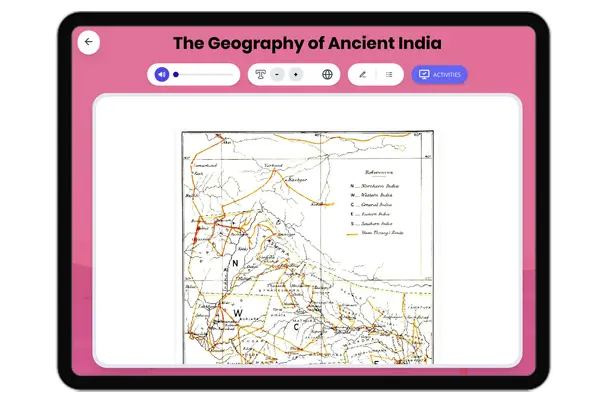
Geography of Ancient India
This passage explores the geography of Ancient India and its impact on the rise of civilization along the Indus River. L...
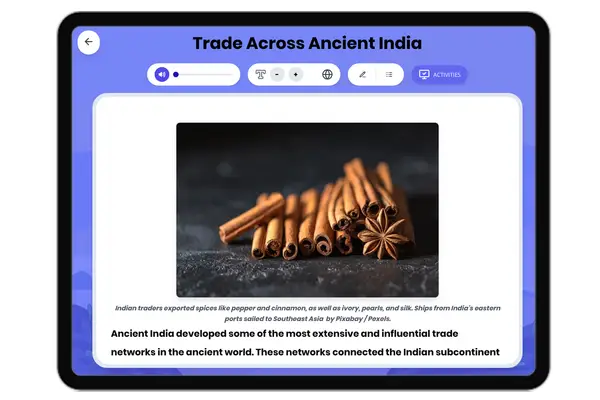
Trade Across Ancient India
This history reading passage explores Ancient India's trade networks and their impact on global connections. Students wi...
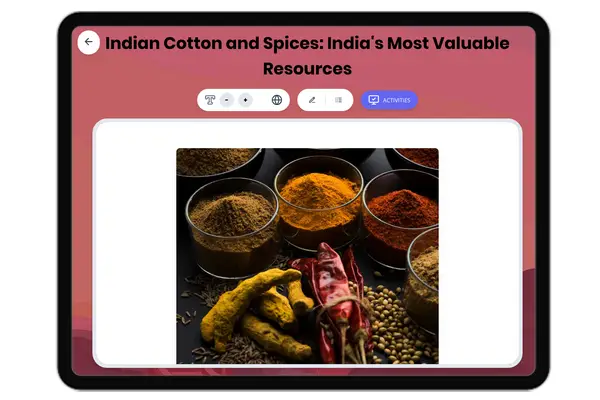
Cotton and Spices of Ancient India
This detailed passage explores the significance of cotton and spices as two of ancient India's most valuable resources. ...
The Caste System in Ancient India
This passage explores the origins, structure, and impact of the caste system in Ancient India, a hierarchical social ord...
The Vedas: Ancient Texts
This passage explores the Vedas, ancient texts from India that form the foundation of Hinduism. Students will learn abou...
Sanskrit and Indian Literature
This engaging passage explores Sanskrit, the classical language of ancient India, and its impact on culture, literature,...
Evidence in Ancient History
This engaging history reading passage investigates how archaeologists and historians discover clues about how ancient pe...
Ashoka the Great: India's Emperor
This passage explores the life and legacy of Ashoka the Great, emperor of the Mauryan Empire in ancient India. Discover ...
Indian Mathematician Invent Zero
This engaging history reading passage explores the invention of zero by ancient Indian mathematicians, focusing on the c...
Indian Science, Math, and Art
This engaging history reading passage explores the enduring achievements of Ancient India in science, mathematics, and a...
Ancient Literature
This passage explores the importance of ancient stories and poems from civilizations such as Greece, India, and Israel. ...
Ancient Philosophy
This reading passage takes students on a journey through the philosophical traditions of ancient Greece, India, and Chin...
The Delhi Sultanate and Islam in India
Explore the rise of the Delhi Sultanate and the arrival of Islam in India with this engaging history reading passage. St...
The Chola Empire Rules Southern India
This passage explores the achievements and legacy of the Chola Empire, which ruled Southern India from the 9th to 13th c...
Ancient Theocracy
This engaging history reading passage explores the concept of theocracy in ancient civilizations, where priests and reli...
Ancient Canaan
This educational passage explores the land of Canaan, the historical homeland of the ancient Israelites. Students will l...
Ancient Science and Medicine
This comprehensive reading passage explores the development of science and medicine in ancient civilizations, including ...
Geography of Ancient Israel
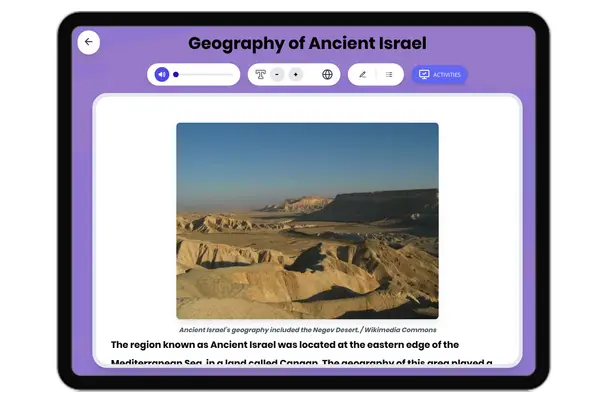
This passage explores the rich geography of Ancient Israel, focusing on how landforms, climate, and natural resources sh...
Ancient Writing Systems
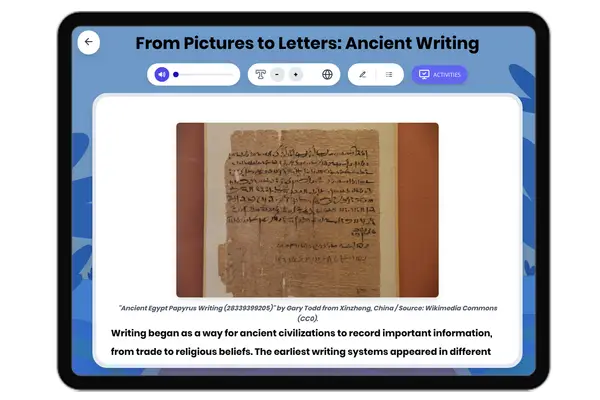
This engaging history reading passage explores the origins and evolution of ancient writing systems, including cuneiform...
Ancient Agriculture Farming
This passage explores the transformative impact of farming on ancient societies, examining how the Neolithic Revolution ...