This learning resource is available in interactive and printable formats. The interactive worksheet can be played online and assigned to students. The Printable PDF version can be downloaded and printed for completion by hand.
This engaging history reading passage explores the world of California mining camps during the Gold Rush, aligning with HSS 4.4.2 and RH.6-8.2 standards. Students will learn about the diverse and often lawless communities that formed as people flocked west in search of gold. The passage details how mining camps sprang up rapidly, how miners used various techniques to search for gold, and how they created their own rules and systems of justice, including vigilante groups. Vocabulary words are embedded to build academic language, and the resource includes a glossary, Spanish translation, and differentiated version for accessibility. Comprehension and writing activities, as well as graphic organizers and a timeline, help students analyze the impact of mining camps on California's history. With read aloud audio and proven literacy supports, this passage is perfect for building historical thinking and ELA skills. A public domain image and coloring page prompt add visual engagement to the learning experience.
CONTENT PREVIEW
Expand content preview
[Gold miners, El Dorado, California]. Source: Library of Congress
California mining camps grew quickly during the Gold Rush. People from all over the world traveled to California in the late 1840s and early 1850s. They dreamed of finding gold and becoming rich. These hopeful miners built temporary towns called boomtowns near rivers and streams where gold was found.
Life in the mining camps was not easy. The camps were crowded, loud, and often dirty. Many people lived in tents or wooden shacks. There was little law or order. With so many people arriving so quickly, there were not enough police or judges. Miners created their own rules to help keep peace. They held meetings to decide how to solve problems. Sometimes, groups called vigilantes formed to stop crime and punish lawbreakers. This was called vigilante justice.
The miners came from many backgrounds. People from the United States, China, Mexico, Europe, and South America all worked side by side. Life was dangerous. Accidents and sickness were common. Some miners struck it rich, but most did not find much gold. Still, they kept trying new techniques to find gold, like using pans, rockers, and water to separate gold from dirt.
Mining camps had shops, places to eat, and even theaters for entertainment. Sometimes, fights broke out over gold or land. The camps changed quickly. If a place ran out of gold, people packed up and moved to the next boomtown. Some camps became real towns, but many disappeared after the gold was gone.
The miners’ hard work and bravery helped shape California. They built roads, schools, and new communities. Their efforts brought new people, ideas, and cultures to the West. The Gold Rush and its mining camps played a big role in the growth of California and the United States.
Interesting Fact: Some mining camps became famous cities, like San Francisco, which started as a tiny settlement during the Gold Rush.
What was a boomtown?
A fast-growing mining townA type of gold panA famous riverA mining technique
Where did miners build camps?
Near rivers and streamsIn big citiesOn mountain topsIn deep forests
Who were vigilantes?
Miners from ChinaUnofficial police in campsShop ownersGold traders
Why did miners create their own rules?
There were no policeThey wanted to be richTo find more goldTo build schools
What happened when gold ran out?
People moved awayMore gold was foundCamps got biggerMiners became farmers
How did mining camps help California grow?
They brought people and ideasThey made new riversThey stopped farmingThey built gold statues
Mining camps were always safe. True or false?
TrueFalse
What does 'techniques' mean?
Ways of doing somethingGold coinsCamp namesPolice officers
Perfect For:
👩🏫 Teachers
• Reading comprehension practice
• Auto-graded assessments
• Literacy skill development
👨👩👧👦 Parents
• Reading practice at home
• Comprehension improvement
• Educational reading time
🏠 Homeschoolers
• Reading curriculum support
• Independent reading practice
• Progress monitoring
Reading Features:
📖
Reading Passage
Engaging fiction or nonfiction text
❓
Comprehension Quiz
Auto-graded questions
📊
Instant Feedback
Immediate results and scoring
📄
Printable Version
Download for offline reading
🔊
Read Aloud
Voice-over with word highlighting
Reviews & Ratings
No reviews yet. Be the first to share your experience!
Related Content
California Forty-Niners
This history reading passage explores the story of the California Forty-Niners, who rushed to California in 1849 in sear...
HSS 4.4.2RH.6-8.1
Juan Bautista de Anza's Expedition
This reading passage explores the remarkable journey of Juan Bautista de Anza and his expedition from Mexico to Californ...
HSS 4.2.3RH.6-8.2
How Explorers Changed California
This engaging U.S. History reading passage explores how explorers from Europe transformed California through the Columbi...
HSS 4.2.2RH.6-8.2
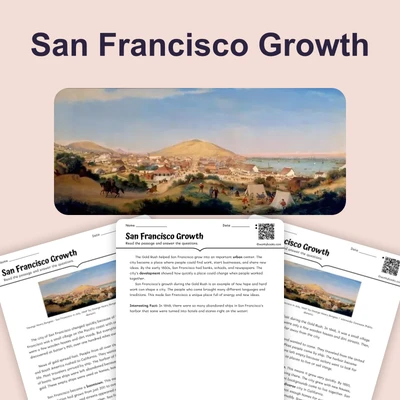
San Francisco Growth
This comprehensive U.S. history passage explores the rapid growth of San Francisco during the California Gold Rush. Stud...
HSS 4.4.3RH.6-8.2
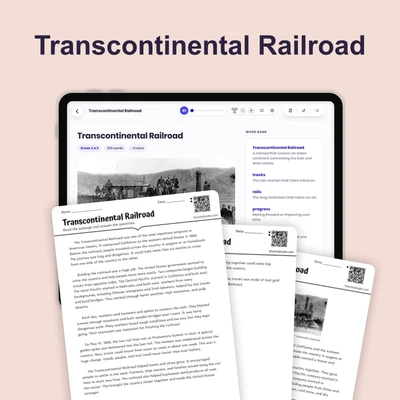
Transcontinental Railroad
This reading passage explores the history and importance of the Transcontinental Railroad, which was completed in 1869. ...
HSS 4.4.1RH.6-8.2
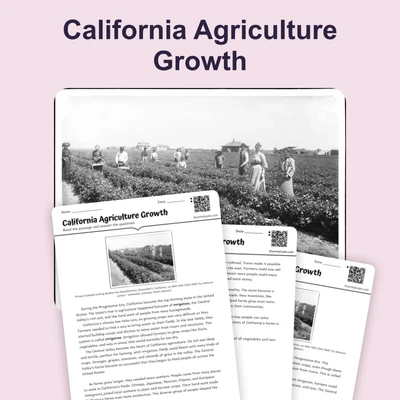
California Agriculture Growth
This passage explores the remarkable growth of California's agriculture during the Progressive Era, focusing on how the ...
HSS 4.4.6RH.6-8.2
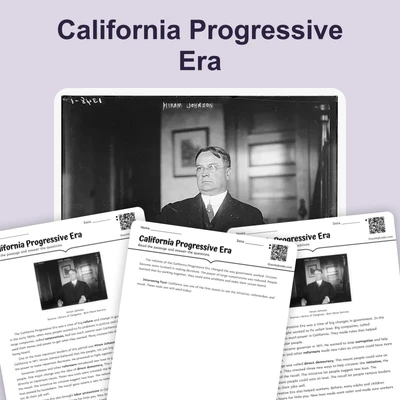
California Progressive Era
This engaging reading passage explores the California Progressive Era, a crucial period in U.S. history when reformers l...
HSS 4.5.2RH.6-8.2
California Citizen Participation
This engaging U.S. History reading passage explores California citizen participation, focusing on how ordinary people he...
HSS 4.5.5RH.6-8.2
Meroë: Capital of Kush
This passage explores the rise and significance of Meroë, once the capital of the Kingdom of Kush in ancient Africa. Loc...
CA HSS 6.2.6RH.6-8.1RH.6-8.2WHST.6-8.2
New Kingdom Egypt
This engaging history reading passage explores the rise of Ancient Egypt during the New Kingdom, when Egypt became a pow...
CA HSS 6.2RH.6-8.2WHST.6-8.2
First Humans
This engaging history reading passage explores the evolution of early humans, tracing the journey from the earliest homi...
CA HSS 6.1RH.6-8.1RH.6-8.2W.6.2
Han Dynasty: Wheelbarrow
This passage explores the invention and historical significance of the wheelbarrow during the Han dynasty in ancient Chi...
CA HSS 6.6CCSS RH.6-8.1RH.6-8.2RH.6-8.4
Han Dynasty: Seismograph
Discover the groundbreaking invention of the seismograph during the Han dynasty in ancient China in this engaging histor...
HSS 6.6.7RH.6-8.1RH.6-8.2WHST.6-8.2
Early Human Migration
This comprehensive history reading passage explores the Out of Africa movement and how early humans migrated across cont...
CA HSS 6.1.1CCSS RH.6-8.1RH.6-8.2RH.6-8.4
Paleolithic Migration by Land and Sea
This passage explores the migration of Paleolithic humans from Africa to the rest of the world, focusing on the routes t...
6.1RH.6-8.1RH.6-8.2RH.6-8.4
Origins of Social Classes
This engaging history reading passage explores how the rise of farming and the spread of pastoral nomads across the Eura...