This learning resource is available in interactive and printable formats. The interactive worksheet can be played online and assigned to students. The Printable PDF version can be downloaded and printed for completion by hand.
This engaging U.S. History reading passage guides students through the dramatic transformation of San Francisco during the Gold Rush era (1848-1850s). Aligned with C3 Framework and Common Core standards, the passage uses clear narrative and chronological structure to explain how the discovery of gold sparked rapid growth, innovation, and diversity in California. Students will learn about key events, figures, and the cause-and-effect chain that turned a sleepy village into a booming city. Activities include a multiple-choice quiz, writing prompts, a timeline, and a graphic organizer for deeper understanding. Glossary support helps build vocabulary. The resource also features a Spanish translation and read aloud audio, making it accessible for diverse learners. Ideal for teaching the significance of Westward Expansion, economic opportunity, and community change in U.S. history classrooms.
CONTENT PREVIEW
Expand content preview
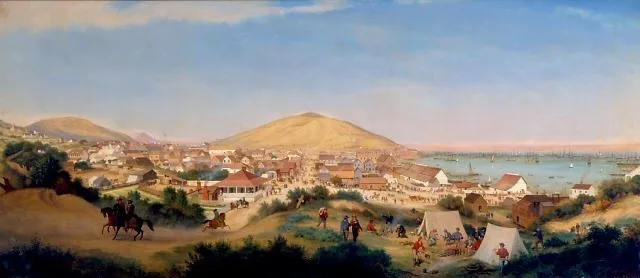
"George Henry Burgess - San Francisco in July, 1849" by George Henry Burgess / Wikimedia Commons (Public domain).
The city of San Francisco changed quickly because of the Gold Rush. In 1848, San Francisco was a small village on the Pacific coast with only about 200 people. There were a few wooden houses and dirt roads. But everything changed when gold was discovered at Sutter’s Mill, over one hundred miles away.
News of gold spread fast. People from all over the United States, Europe, Asia, and South America rushed to California. They wanted to find gold and build a better life. Most travelers arrived by ship. The harbor of San Francisco filled with hundreds of boats. Some ships were left abandoned because their crews went to search for gold. These empty ships were used as homes, hotels, or shops.
San Francisco became a boomtown. This means the town grew very fast. By 1850, the population had grown from just 200 to over 36,000 people. The city was crowded. New buildings, shops, and streets appeared almost overnight. People from many different backgrounds lived together. San Francisco became California’s largest and most diverse city.
Life in the boomtown was exciting but also hard. There were not enough homes or supplies for everyone. Prices for food and goods were very high. Streets were often muddy and crowded. Fires sometimes destroyed buildings because many were made of wood. Still, people worked hard to solve these problems. They built new homes, formed fire brigades, and created better roads.
The Gold Rush helped San Francisco grow into an important urban center. The city became a place where people could find work, start businesses, and share new ideas. By the early 1850s, San Francisco had banks, schools, and newspapers. The city’s development showed how quickly a place could change when people worked together.
San Francisco’s growth during the Gold Rush is an example of how hope and hard work can shape a city. The people who came brought many different languages and traditions. This made San Francisco a unique place full of energy and new ideas.
Interesting Fact: In 1849, there were so many abandoned ships in San Francisco’s harbor that some were turned into hotels and stores right on the water!
What caused San Francisco to grow fast?
Gold RushA big fireA new railroadA new school
How many people lived in San Francisco in 1848?
About 200About 2,000About 36,000About 100,000
Where did most people arrive from?
By shipBy trainBy wagonBy horseback
What does 'boomtown' mean?
A slow cityA city that grows fastA city with no peopleA quiet village
Why were some ships abandoned?
Crew went to find goldStorms sank themThey were too oldThey were broken
What problem did people face?
Not enough homesToo much rainToo many parksEmpty streets
San Francisco grew slowly during the Gold Rush.
TrueFalse
What is 'diverse'?
Having many backgroundsVery smallOnly one kindA new building
Perfect For:
👩🏫 Teachers
• Reading comprehension practice
• Auto-graded assessments
• Literacy skill development
👨👩👧👦 Parents
• Reading practice at home
• Comprehension improvement
• Educational reading time
🏠 Homeschoolers
• Reading curriculum support
• Independent reading practice
• Progress monitoring
Reading Features:
📖
Reading Passage
Engaging fiction or nonfiction text
❓
Comprehension Quiz
Auto-graded questions
📊
Instant Feedback
Immediate results and scoring
📄
Printable Version
Download for offline reading
🔊
Read Aloud
Voice-over with word highlighting
Reviews & Ratings
No reviews yet. Be the first to share your experience!
Related Content
Native American Tribes Across America
This engaging history reading passage introduces students to Native American tribes across America, focusing on their da...
D2.HIS.1.3-5D2.HIS.2.3-5RI.4.1RI.4.2
Teepees: Homes on the Great Plains
This engaging history reading passage introduces students to teepees, the unique homes of Native American tribes on the ...
D2.HIS.2.3-5D2.HIS.14.3-5RI.4.1RI.4.2RI.4.4
Traditional Native American Clothing
This engaging history passage explores traditional Native American clothing and how it reflected the environment, values...
D2.HIS.2.3-5D2.HIS.3.3-5RI.4.3RI.4.4
The Iroquois Confederacy: A System of Peace
This engaging U.S. History reading passage introduces students to the Iroquois Confederacy, a powerful alliance of Nativ...
D2.HIS.2.3-5D2.HIS.3.3-5RI.4.3RI.4.4
The Cherokee Nation: History and Culture
This reading passage explores the rich history and culture of the Cherokee Nation, one of the largest Native American tr...
D2.HIS.2.3-5D2.HIS.14.3-5RI.4.3RI.4.4RI.4.10
The Sioux: Warriors and Tribal Leaders
This history reading passage explores the Sioux Nation, focusing on their roles as warriors and tribal leaders. Students...
D2.HIS.1.3-5D2.HIS.2.3-5RI.4.1RI.4.3
Native American Respect for Nature
This engaging history reading passage explores Native American respect for nature, emphasizing the close relationship be...
D2.HIS.2.3-5D2.HIS.3.3-5RI.4.3RI.4.4
The Mayflower and the Pilgrims
This engaging history passage introduces students to the remarkable journey of the Mayflower and the Pilgrims. Aligned t...
D2.HIS.2.3-5D2.HIS.14.3-5RI.4.1RI.4.3RI.4.4
Jamestown: The First Permanent English Colony
This engaging history passage explores the founding of Jamestown, the first permanent English colony in America. Aligned...
D2.HIS.1.3-5D2.HIS.2.3-5RI.4.3RI.4.4
Pocahontas and the Powhatan People
This engaging reading passage explores the life of Pocahontas and the Powhatan people and their important role in early ...
D2.HIS.1.3-5D2.HIS.2.3-5RI.4.1RI.4.3
Colonial Children: School and Chores
This reading passage explores the daily lives of colonial children, focusing on their experiences at school and their ma...
D2.HIS.2.3-5D2.HIS.3.3-5RI.4.1RI.4.2RI.4.4
Colonial Clothing and Homemade Goods
This engaging U.S. history passage explores the daily life of early American colonists with a focus on colonial clothing...
D2.HIS.2.3-5RI.4.3RI.4.4
Colonial Jobs: Blacksmiths, Bakers, and Craftsmen
This engaging history reading passage explores the vital roles of blacksmiths, bakers, and craftsmen in colonial America...
D2.HIS.2.3-5D2.HIS.3.3-5RI.4.3RI.4.4
Colonial Towns and Village Life
This engaging history reading passage explores the daily life, work, and unity found in colonial towns and villages. Ali...
D2.HIS.1.3-5D2.HIS.2.3-5RI.4.3RI.4.4
Colonial Trade with England and Africa
This history reading passage explores colonial trade between the American colonies, England, and Africa, focusing on the...
D2.HIS.2.3-5D2.HIS.14.3-5RI.4.3RI.4.4
Benjamin Franklin: Printer, Inventor, and Leader
This history reading passage explores the life and achievements of Benjamin Franklin, one of America's most important ea...
D2.HIS.2.3-5D2.HIS.3.3-5RI.4.1RI.4.3
George Washington Leads the Army
This engaging history reading passage explores how George Washington bravely led the Continental Army during the America...
D2.HIS.1.3-5D2.HIS.2.3-5RI.4.3RI.4.4
Women and Children During the Revolutionary War
This reading passage explores the important roles women and children played during the Revolutionary War. Students will ...
D2.HIS.2.3-5RI.4.3RI.5.3
African Americans Fight for Freedom
This educational passage explores the brave and inspiring story of how African Americans fought for freedom in the Unite...
D2.HIS.2.3-5D2.HIS.3.3-5RI.4.3RI.4.4
The Battle of Yorktown Ends War
This engaging U.S. history reading passage explores the Battle of Yorktown, a key event that ended the American Revoluti...