California Progressive Era — Reading Comprehension
Rate this
Premium Resource
Present
Present in classroom. No work saved
Assign
Classroom with student accounts, Track progress
Quick Play
No student accounts, assign with a link
Grades
3
4
5
Standards
HSS 4.5.2
RH.6-8.2
PRINT+DIGITAL RESOURCE
This learning resource is available in interactive and printable formats. The interactive worksheet can be played online and assigned to students. The Printable PDF version can be downloaded and printed for completion by hand.
This engaging reading passage explores the California Progressive Era, a crucial period in U.S. history when reformers like Hiram Johnson led efforts to give more power to citizens, protect workers, and reduce the influence of big corporations in politics. The passage explains how new laws like direct democracy tools—such as initiatives, referendums, and recalls—changed the way Californians participated in government. Students will learn about the causes and effects of these reforms, the bravery of those who fought for change, and the lasting impact on California's government. Activities and resources align with HSS 4.5.2 and RH.6-8.2, supporting literacy and critical thinking. The resource includes a glossary, timeline, multiple-choice quiz, writing prompts, and graphic organizers. A read aloud and Spanish translation are available to support all learners. This comprehensive U.S. history reading passage is perfect for building foundational knowledge of American democracy and reform.
CONTENT PREVIEW
Expand content preview
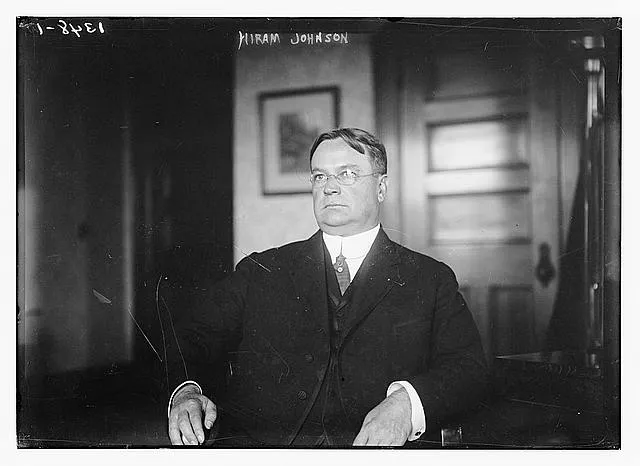
Hiram Johnson Source: Library of Congress - Bain News Service
The California Progressive Era was a time of big reform and change in government. It started in the early 1900s, when many people wanted to fix problems in politics and society. At that time, large companies, called corporations, had too much control over California's government. They used their money and power to get what they wanted. Many citizens felt their voices were not being heard.
One of the most important leaders of this period was Hiram Johnson. He became governor of California in 1911. Hiram Johnson believed that the people, not just big companies, should have the power to make important decisions. He promised to fight against corruption and unfair laws.
Governor Johnson and other reformers introduced new laws to give more power to the people. One major change was the idea of direct democracy. This meant that citizens could vote directly on important issues. Three new tools were created: the initiative, the referendum, and the recall. The initiative let citizens suggest new laws. The referendum allowed people to vote on laws passed by lawmakers. The recall gave voters a way to remove elected officials if they did not do their job well.
The Progressive Era also brought labor protections to California. Many workers, including women and children, worked long hours for little pay. New laws set limits on working hours, improved safety, and made sure workers were treated more fairly. These changes helped families live better lives and made workplaces safer.
The reforms of the California Progressive Era changed the way government worked. Citizens became more involved in making decisions. The power of large corporations was reduced. People learned that by working together, they could solve problems and make their voices heard.
Interesting Fact: California was one of the first states to use the initiative, referendum, and recall. These tools are still used today!
Who became California's governor in 1911?
Hiram JohnsonTheodore RooseveltJane AddamsSusan B. Anthony
What did the initiative allow citizens to do?
Suggest new lawsElect the governorBuild factoriesBecome mayor
What were corporations doing before the reforms?
Controlling government decisionsMaking laws fairerHelping citizens voteBuilding schools
Why did reformers want direct democracy?
To give people more powerTo help corporationsTo stop votingTo build factories
How did labor laws help workers?
Made work saferRaised pricesHired more childrenClosed schools
What was the effect of recalls?
Voters could remove bad officialsCorporations gained powerMore hours for workersCitizens lost their jobs
The initiative is a direct democracy tool. True or false?
TrueFalse
What does 'reform' mean?
Change to improveTo build roadsTo become richTo give up
Perfect For:
👩🏫 Teachers
• Reading comprehension practice
• Auto-graded assessments
• Literacy skill development
👨👩👧👦 Parents
• Reading practice at home
• Comprehension improvement
• Educational reading time
🏠 Homeschoolers
• Reading curriculum support
• Independent reading practice
• Progress monitoring
Reading Features:
📖
Reading Passage
Engaging fiction or nonfiction text
❓
Comprehension Quiz
Auto-graded questions
📊
Instant Feedback
Immediate results and scoring
📄
Printable Version
Download for offline reading
🔊
Read Aloud
Voice-over with word highlighting
Reviews & Ratings
No reviews yet. Be the first to share your experience!
Related Content
California Labor Reform
This engaging history reading passage explores the story of California labor reform during the Progressive Era. Students...
HSS 4.5.2RH.6-8.3
Juan Bautista de Anza's Expedition
This reading passage explores the remarkable journey of Juan Bautista de Anza and his expedition from Mexico to Californ...
HSS 4.2.3RH.6-8.2
How Explorers Changed California
This engaging U.S. History reading passage explores how explorers from Europe transformed California through the Columbi...
HSS 4.2.2RH.6-8.2
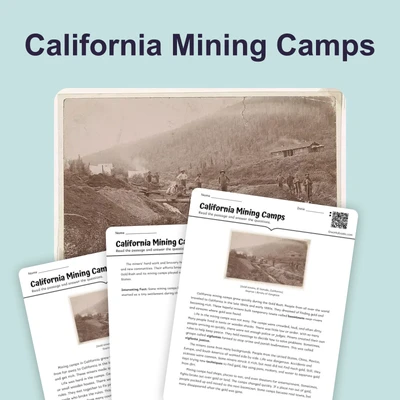
California Mining Camps
This engaging history reading passage explores the world of California mining camps during the Gold Rush, aligning with ...
HSS 4.4.2RH.6-8.2
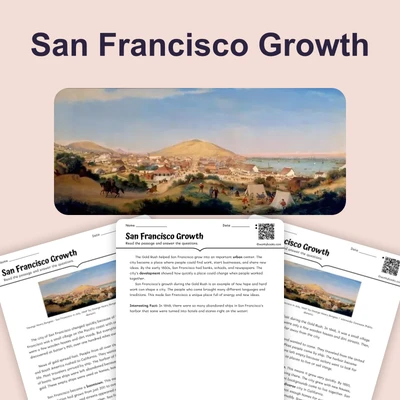
San Francisco Growth
This comprehensive U.S. history passage explores the rapid growth of San Francisco during the California Gold Rush. Stud...
HSS 4.4.3RH.6-8.2
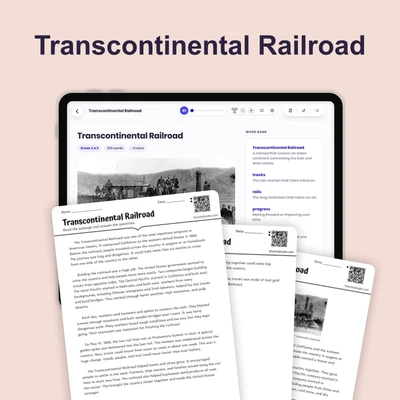
Transcontinental Railroad
This reading passage explores the history and importance of the Transcontinental Railroad, which was completed in 1869. ...
HSS 4.4.1RH.6-8.2
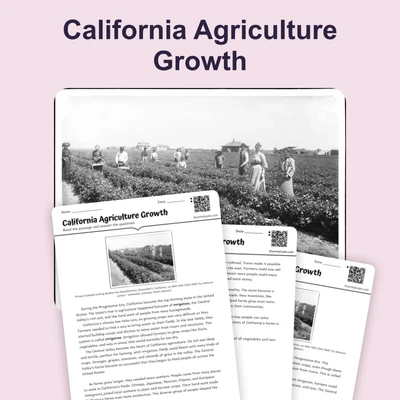
California Agriculture Growth
This passage explores the remarkable growth of California's agriculture during the Progressive Era, focusing on how the ...
HSS 4.4.6RH.6-8.2
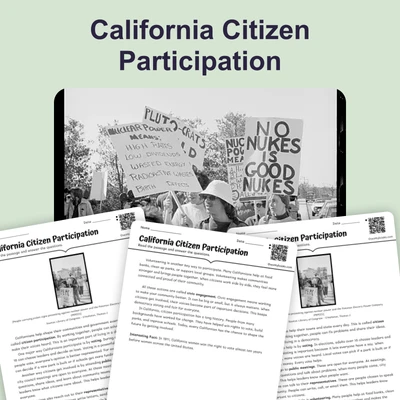
California Citizen Participation
This engaging U.S. History reading passage explores California citizen participation, focusing on how ordinary people he...
HSS 4.5.5RH.6-8.2
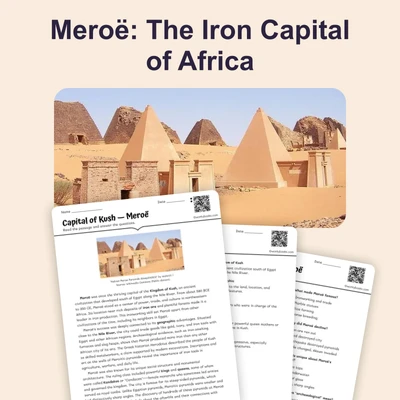
Meroë: Capital of Kush
This passage explores the rise and significance of Meroë, once the capital of the Kingdom of Kush in ancient Africa. Loc...
CA HSS 6.2.6RH.6-8.1RH.6-8.2WHST.6-8.2
New Kingdom Egypt
This engaging history reading passage explores the rise of Ancient Egypt during the New Kingdom, when Egypt became a pow...
CA HSS 6.2RH.6-8.2WHST.6-8.2
First Humans
This engaging history reading passage explores the evolution of early humans, tracing the journey from the earliest homi...
CA HSS 6.1RH.6-8.1RH.6-8.2W.6.2
Han Dynasty: Wheelbarrow
This passage explores the invention and historical significance of the wheelbarrow during the Han dynasty in ancient Chi...
CA HSS 6.6CCSS RH.6-8.1RH.6-8.2RH.6-8.4
Han Dynasty: Seismograph
Discover the groundbreaking invention of the seismograph during the Han dynasty in ancient China in this engaging histor...
HSS 6.6.7RH.6-8.1RH.6-8.2WHST.6-8.2
Early Human Migration
This comprehensive history reading passage explores the Out of Africa movement and how early humans migrated across cont...
CA HSS 6.1.1CCSS RH.6-8.1RH.6-8.2RH.6-8.4
Paleolithic Migration by Land and Sea
This passage explores the migration of Paleolithic humans from Africa to the rest of the world, focusing on the routes t...
6.1RH.6-8.1RH.6-8.2RH.6-8.4
Origins of Social Classes
This engaging history reading passage explores how the rise of farming and the spread of pastoral nomads across the Eura...