This learning resource is available in interactive and printable formats. The interactive worksheet can be played online and assigned to students. The Printable PDF version can be downloaded and printed for completion by hand.
This reading passage explores the history and importance of the Transcontinental Railroad, which was completed in 1869. Students will discover how this major achievement united California with the eastern United States, reducing travel time from months to just one week. The passage highlights key events, brave workers, and the positive effects of connecting the nation. Aligned with HSS 4.4.1 and RH.6-8.2, the resource supports foundational literacy and history standards. The content includes a glossary of key terms, multiple-choice questions, writing prompts, a timeline, differentiated and Spanish versions, and graphic organizers. With read aloud audio and a Spanish translation, this passage is ideal for students learning about the transportation revolution and westward expansion. Teachers can use this resource to guide students in understanding cause and effect relationships, analyzing how innovation shapes society, and connecting past events to the present.
CONTENT PREVIEW
Expand content preview
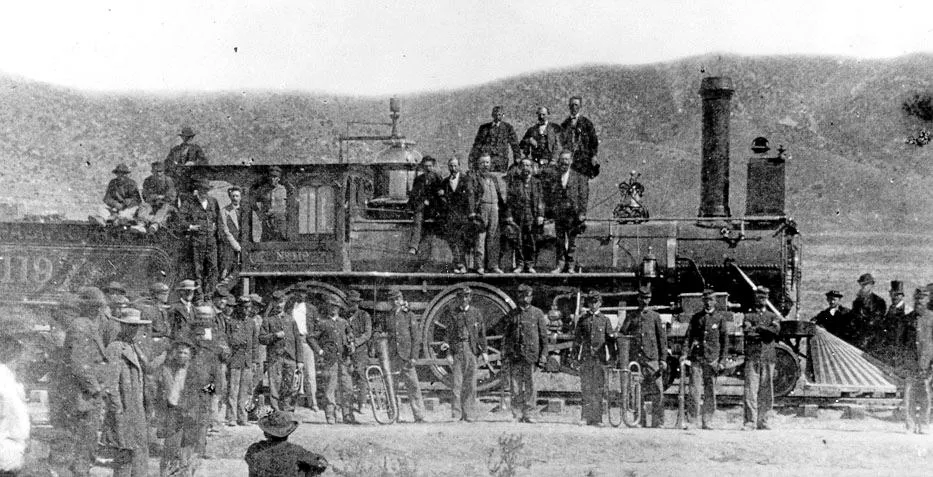
Union Pacific No 119 with US 21st Infantry Band / Wikimedia Commons
The Transcontinental Railroad was one of the most important projects in American history. It connected California to the eastern United States in 1869. Before the railroad, people traveled across the country in wagons or on horseback. The journey was long and dangerous. It could take more than six months to cross from one side of the country to the other.
Building the railroad was a huge job. The United States government wanted to unite the country and help people move more easily. Two companies began building tracks from opposite sides. The Central Pacific started in California and built east. The Union Pacific started in Nebraska and built west. Workers from many backgrounds, including Chinese immigrants and Irish laborers, helped lay the tracks and build bridges. They worked through harsh weather, high mountains, and wide deserts.
Each day, workers used hammers and spikes to connect the rails. They blasted tunnels through mountains and built wooden bridges over rivers. It was hard, dangerous work. Many workers faced tough conditions and low pay, but they kept going. Their teamwork was important for finishing the railroad.
On May 10, 1869, the two rail lines met at Promontory Summit in Utah. A special golden spike was hammered into the last rail. This moment was celebrated across the country. Now, trains could travel from coast to coast in about one week. This was a huge change. Goods, people, and mail could move faster than ever before.
The Transcontinental Railroad helped towns and cities grow. It encouraged people to settle in the West. Farmers, shop owners, and families moved along the rail lines to start new lives. The railroad also helped businesses send products all over the nation. This brought the country closer together and made the United States stronger.
The railroad’s success showed that people working together could solve big problems. It was a symbol of progress and unity for the country.
Interesting Fact: The final golden spike that joined the tracks was made of real gold and became a famous symbol of the Transcontinental Railroad.
When was the Transcontinental Railroad finished?
1869184919001776
Where did the two rail lines meet?
Promontory SummitSacramentoOmahaChicago
What was hammered into the last rail?
Golden spikeSilver hammerWooden boardIron bar
Why did people want the railroad?
Travel was slow and dangerousTo build more wagonsTo find goldTo make new laws
How did the railroad change the country?
Made travel fasterMade food cheaperStopped westward expansionDestroyed all towns
Who helped build the railroad?
Chinese and Irish workersOnly local farmersOnly government officialsOnly children
The railroad was finished in 1869. True or False?
TrueFalse
What does 'unity' mean?
Working togetherBuilding housesTraveling alonePlanting crops
Perfect For:
👩🏫 Teachers
• Reading comprehension practice
• Auto-graded assessments
• Literacy skill development
👨👩👧👦 Parents
• Reading practice at home
• Comprehension improvement
• Educational reading time
🏠 Homeschoolers
• Reading curriculum support
• Independent reading practice
• Progress monitoring
Reading Features:
📖
Reading Passage
Engaging fiction or nonfiction text
❓
Comprehension Quiz
Auto-graded questions
📊
Instant Feedback
Immediate results and scoring
📄
Printable Version
Download for offline reading
🔊
Read Aloud
Voice-over with word highlighting
Reviews & Ratings
No reviews yet. Be the first to share your experience!
Related Content
Routes to California
This reading passage explores the three main routes people took to reach California during the Gold Rush: overland trail...
HSS 4.4.1RH.6-8.3
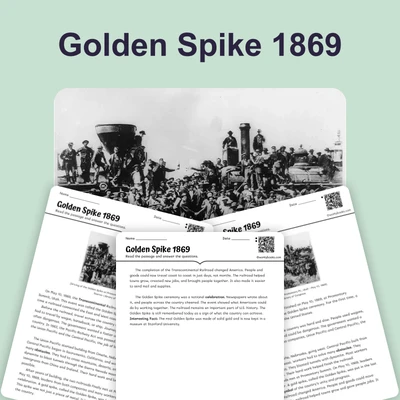
Golden Spike 1869
This history reading passage explores the 1869 Golden Spike event that marked the completion of America's Transcontinent...
HSS 4.4.1RH.6-8.1
Juan Bautista de Anza's Expedition
This reading passage explores the remarkable journey of Juan Bautista de Anza and his expedition from Mexico to Californ...
HSS 4.2.3RH.6-8.2
How Explorers Changed California
This engaging U.S. History reading passage explores how explorers from Europe transformed California through the Columbi...
HSS 4.2.2RH.6-8.2
California Mining Camps
This engaging history reading passage explores the world of California mining camps during the Gold Rush, aligning with ...
HSS 4.4.2RH.6-8.2
San Francisco Growth
This comprehensive U.S. history passage explores the rapid growth of San Francisco during the California Gold Rush. Stud...
HSS 4.4.3RH.6-8.2
California Agriculture Growth
This passage explores the remarkable growth of California's agriculture during the Progressive Era, focusing on how the ...
HSS 4.4.6RH.6-8.2
California Progressive Era
This engaging reading passage explores the California Progressive Era, a crucial period in U.S. history when reformers l...
HSS 4.5.2RH.6-8.2
California Citizen Participation
This engaging U.S. History reading passage explores California citizen participation, focusing on how ordinary people he...
HSS 4.5.5RH.6-8.2
Meroë: Capital of Kush
This passage explores the rise and significance of Meroë, once the capital of the Kingdom of Kush in ancient Africa. Loc...
CA HSS 6.2.6RH.6-8.1RH.6-8.2WHST.6-8.2
New Kingdom Egypt
This engaging history reading passage explores the rise of Ancient Egypt during the New Kingdom, when Egypt became a pow...
CA HSS 6.2RH.6-8.2WHST.6-8.2
First Humans
This engaging history reading passage explores the evolution of early humans, tracing the journey from the earliest homi...
CA HSS 6.1RH.6-8.1RH.6-8.2W.6.2
Han Dynasty: Wheelbarrow
This passage explores the invention and historical significance of the wheelbarrow during the Han dynasty in ancient Chi...
CA HSS 6.6CCSS RH.6-8.1RH.6-8.2RH.6-8.4
Han Dynasty: Seismograph
Discover the groundbreaking invention of the seismograph during the Han dynasty in ancient China in this engaging histor...
HSS 6.6.7RH.6-8.1RH.6-8.2WHST.6-8.2
Early Human Migration
This comprehensive history reading passage explores the Out of Africa movement and how early humans migrated across cont...
CA HSS 6.1.1CCSS RH.6-8.1RH.6-8.2RH.6-8.4
Paleolithic Migration by Land and Sea
This passage explores the migration of Paleolithic humans from Africa to the rest of the world, focusing on the routes t...
6.1RH.6-8.1RH.6-8.2RH.6-8.4
Origins of Social Classes
This engaging history reading passage explores how the rise of farming and the spread of pastoral nomads across the Eura...