Conditions for Germination
Interactive passage with audio narration, comprehension questions, and printable PDF.
By completing this purchase you agree to our Terms of Use and Privacy Policy. Your subscription renews automatically until you cancel. You can cancel anytime from your account settings. All sales are final and non-refundable. Digital content is available for download in your account immediately upon purchase.
What's included
Conditions for Germination preview and details
About this printable Conditions for Germination science reading passage, NGSS-aligned (Grade 6)
Sample passage and quiz from Conditions for Germination
Reading passage and comprehension quiz preview
Conditions for Germination
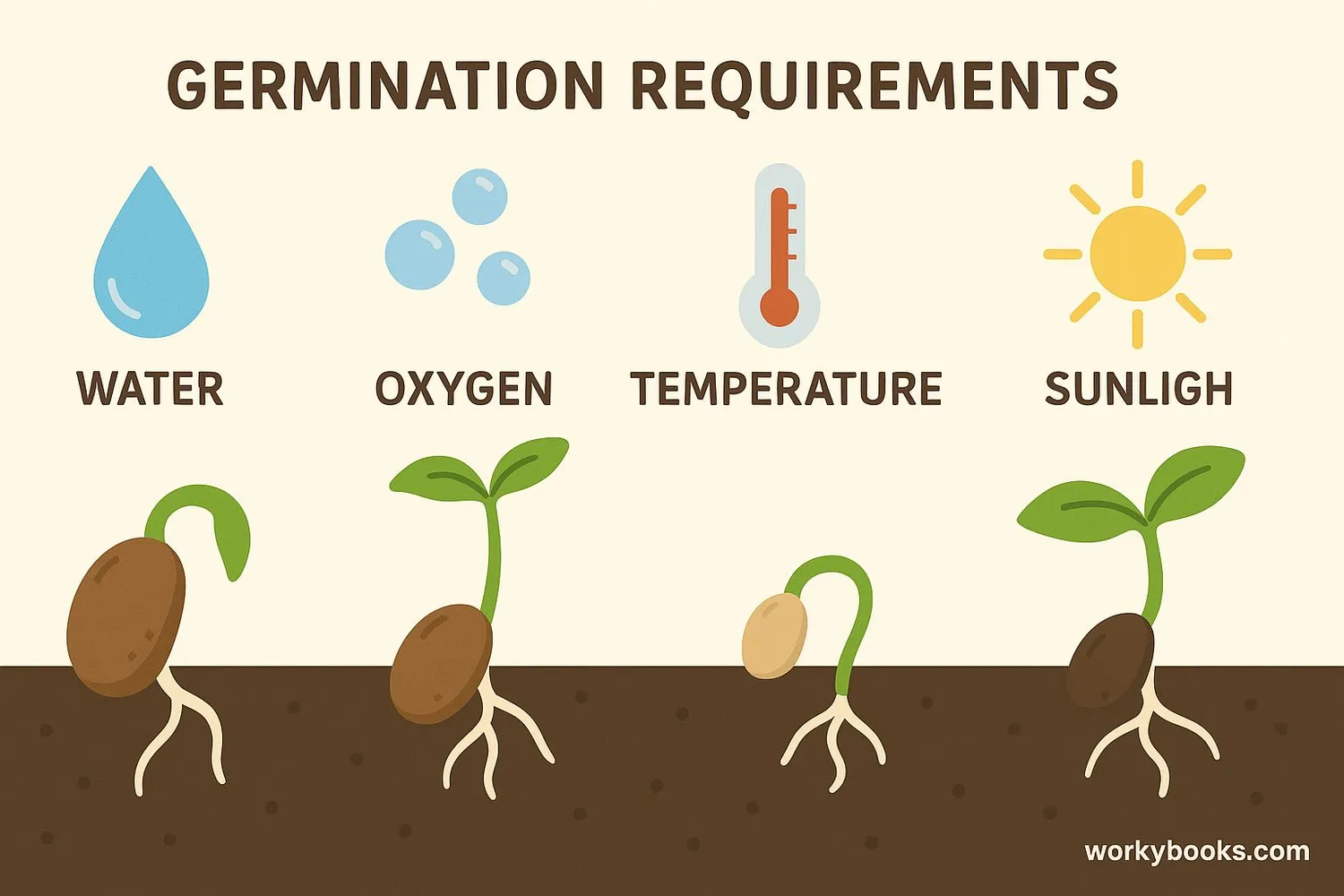
Seeds are like natural time capsules, carrying the potential for new life inside them. Within each seed lies an embryo—the beginning of a new plant—along with stored nutrients to support its early growth. The process by which a seed begins to sprout and develop into a seedling is called germination. However, germination does not occur randomly; it requires specific environmental conditions such as water, oxygen, and the right temperature to trigger the seed’s growth..
One of the most important factors for successful seed germination is water. Think of water as the alarm clock for the seed. When a seed absorbs enough water, it swells up, and this absorption triggers many chemical reactions inside. Water softens the seed coat, making it easier for the tiny root to break through. It also helps transport nutrients stored within the seed to the developing plant embryo, fueling its initial growth.
Another crucial condition is oxygen. Just like animals, seeds need oxygen to breathe. This process is called respiration, and it releases energy from the stored food inside the seed. This energy is vital for the young plant to grow and develop its first roots and shoots. If a seed is buried too deep in the soil or if the soil is waterlogged, it might not get enough oxygen, preventing germination.
Finally, temperature plays a huge role. Every type of seed has an ideal temperature range for germination. Some seeds prefer cool temperatures, while others need warmth. If the temperature is too cold, the chemical reactions inside the seed slow down too much, and it won't germinate. If it's too hot, it can also damage the delicate structures within the seed. Farmers and gardeners carefully choose planting times based on the expected soil temperature to ensure good seedling growth.
In summary, for a seed to germinate and grow into a healthy plant, it relies on these key environmental factors: adequate water, sufficient oxygen, and the correct temperature. These conditions are interdependent, meaning they all work together to support the beginning of plant life and ensure successful plant growth. Understanding these conditions helps us better appreciate the natural world and how plants thrive.
Interesting Fact: Some seeds need to pass through an animal's digestive system or endure a forest fire before they can germinate, a process known as dormancy breaking!
Comprehension quiz (10 questions)
1. Which is NOT an environmental factor for germination?
2. What is the process of a seed sprouting called?
3. Why is water important for germination?
4. What happens if a seed lacks oxygen?
5. How does temperature affect germination?
6. Why is energy from respiration vital?
7. If soil is waterlogged, what might happen?
8. Which condition is like an 'alarm clock'?
9. The availability of resources limits organism growth.
10. What does 'respiration' mean in the passage?
Perfect for the way you teach
- Build comprehension skills
- Auto-graded quiz
- Differentiated reading
- Read together at home
- Improve fluency
- Quiet reading time
- Reading curriculum support
- Independent practice
- Track Lexile growth