Dating Ancient Artifacts
Interactive passage with audio narration, comprehension questions, and printable PDF.
By completing this purchase you agree to our Terms of Use and Privacy Policy. Your subscription renews automatically until you cancel. You can cancel anytime from your account settings. All sales are final and non-refundable. Digital content is available for download in your account immediately upon purchase.
What's included
Part of this bundle

Dating Ancient Artifacts preview and details
About this printable Dating Ancient Artifacts reading passage (Grades 5-8)
Sample passage and quiz from Dating Ancient Artifacts
Reading passage and comprehension quiz preview
Dating Ancient Artifacts
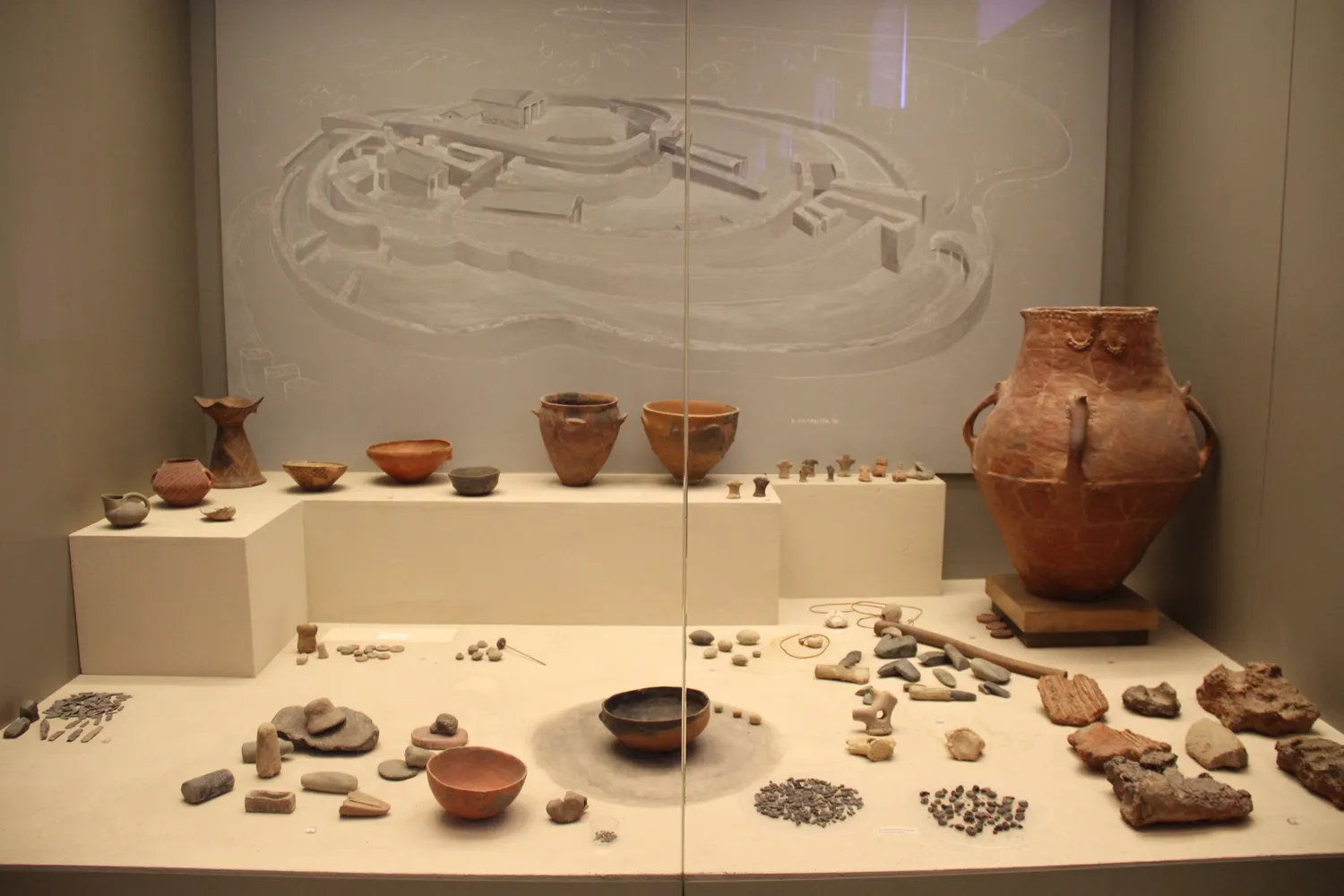
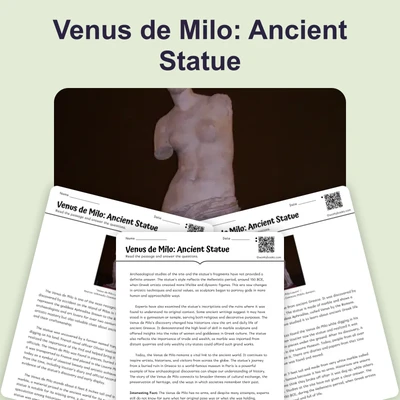
"Ancient Greece Neolithic Pottery & Stone Artifacts" by Gary Todd / Wikimedia Commons (CC0).
Archaeologists use scientific methods to determine the age of artifacts and sites from ancient history. Knowing when an object was made helps historians build accurate timelines and understand how societies changed over time. By combining techniques such as radiocarbon dating, stratigraphy, and typology, scientists can often pinpoint when artifacts were used or created.
One of the most important methods is radiocarbon dating. This technique measures the amount of radioactive carbon-14 left in organic materials like wood, bone, or cloth. Because carbon-14 decays at a steady rate, scientists can calculate how many years have passed since the organism died. For example, the famous "Ötzi the Iceman" mummy, found in the Alps, was dated using radiocarbon analysis. The results showed that Ötzi lived around 3300 BCE, over 5,000 years ago. Radiocarbon dating is reliable for items up to about 50,000 years old, but it cannot be used on stone tools or metals.
Another key method is stratigraphy, which studies the layers of soil and rock where artifacts are found. In undisturbed sites, the oldest layers are usually at the bottom and the youngest at the top. Archaeologists record the depth and position of each artifact to reconstruct the sequence of events at a site. For instance, at the ancient city of Troy, different layers revealed nine separate cities built one on top of another, each from a different era. Stratigraphy helps show how places changed and developed over time.
Scientists also use typology, which compares the shape and decoration of artifacts. Pottery styles, for example, change in predictable ways over centuries. By matching a pot’s style to examples from known periods, archaeologists can estimate its age. This method was used in Egypt to date the earliest dynasty tombs by comparing pottery designs to a sequence established by early excavators.
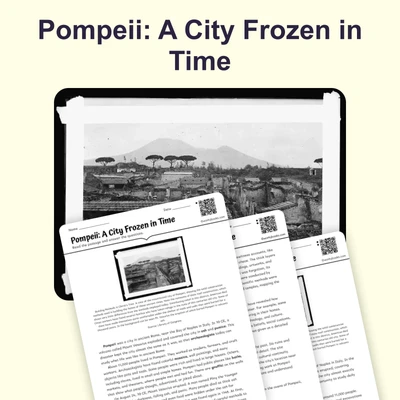
Dating artifacts is essential for understanding the development of ancient civilizations. It reveals when people invented new technologies, migrated, or experienced disasters. For example, radiocarbon dating helped show when farming spread across Europe, while stratigraphy at Pompeii revealed details about the eruption of Mount Vesuvius in 79 CE. Knowing the age of artifacts lets historians create cause-and-effect relationships and place events within a larger historical context.
These methods are not perfect; sometimes, results from different techniques disagree, or evidence is missing. Archaeologists must interpret their findings carefully and consider multiple possibilities. Still, combining scientific dating with written records and other clues allows historians to build a clearer picture of the past.
Dating the past connects to the broader themes of change, continuity, and human achievement in world history, showing how science and history work together to reveal our shared story.
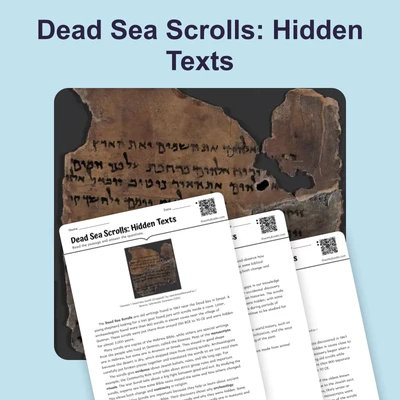
Interesting Fact: The Dead Sea Scrolls, ancient Jewish texts found in caves, were dated to around 200 BCE using radiocarbon dating and paleography, helping scholars understand early religious history.
Comprehension quiz (8 questions)
1. What does radiocarbon dating measure?
2. Where was Ötzi the Iceman found?
3. What event did stratigraphy at Pompeii help explain?
4. What is stratigraphy?
5. Why is dating artifacts important?
6. What is typology used for?
7. Radiocarbon dating can be used on stone tools. True or false?
8. What does 'artifact' mean?
Perfect for the way you teach
- Build comprehension skills
- Auto-graded quiz
- Differentiated reading
- Read together at home
- Improve fluency
- Quiet reading time
- Reading curriculum support
- Independent practice
- Track Lexile growth