Discovery of Rosetta stone — Reading Comprehension
Rate this
Premium Resource
Present
Present in classroom. No work saved
Assign
Classroom with student accounts, Track progress
Quick Play
No student accounts, assign with a link
Grades
6
7
8
PRINT+DIGITAL RESOURCE
This learning resource is available in interactive and printable formats. The interactive worksheet can be played online and assigned to students. The Printable PDF version can be downloaded and printed for completion by hand.
This engaging history reading passage explores the remarkable discovery of the Rosetta Stone and its impact on the study of ancient Egypt. Students will learn about the circumstances of its finding, its unique features, and the breakthrough in translating ancient Egyptian hieroglyphics. The passage includes key primary sources, cause-and-effect analysis, and connections to broader themes in archaeology and world history. Activities include a multiple-choice quiz, writing prompts, graphic organizers, and a Spanish translation. The lesson aligns with CA HSS 6.2 and 7.1 as well as Common Core RI.6.1–8.4 standards. Also includes a read aloud audio and an accessible version for all learners. This resource is ideal for developing historical thinking, analyzing evidence, and building academic vocabulary.
CONTENT PREVIEW
Expand content preview
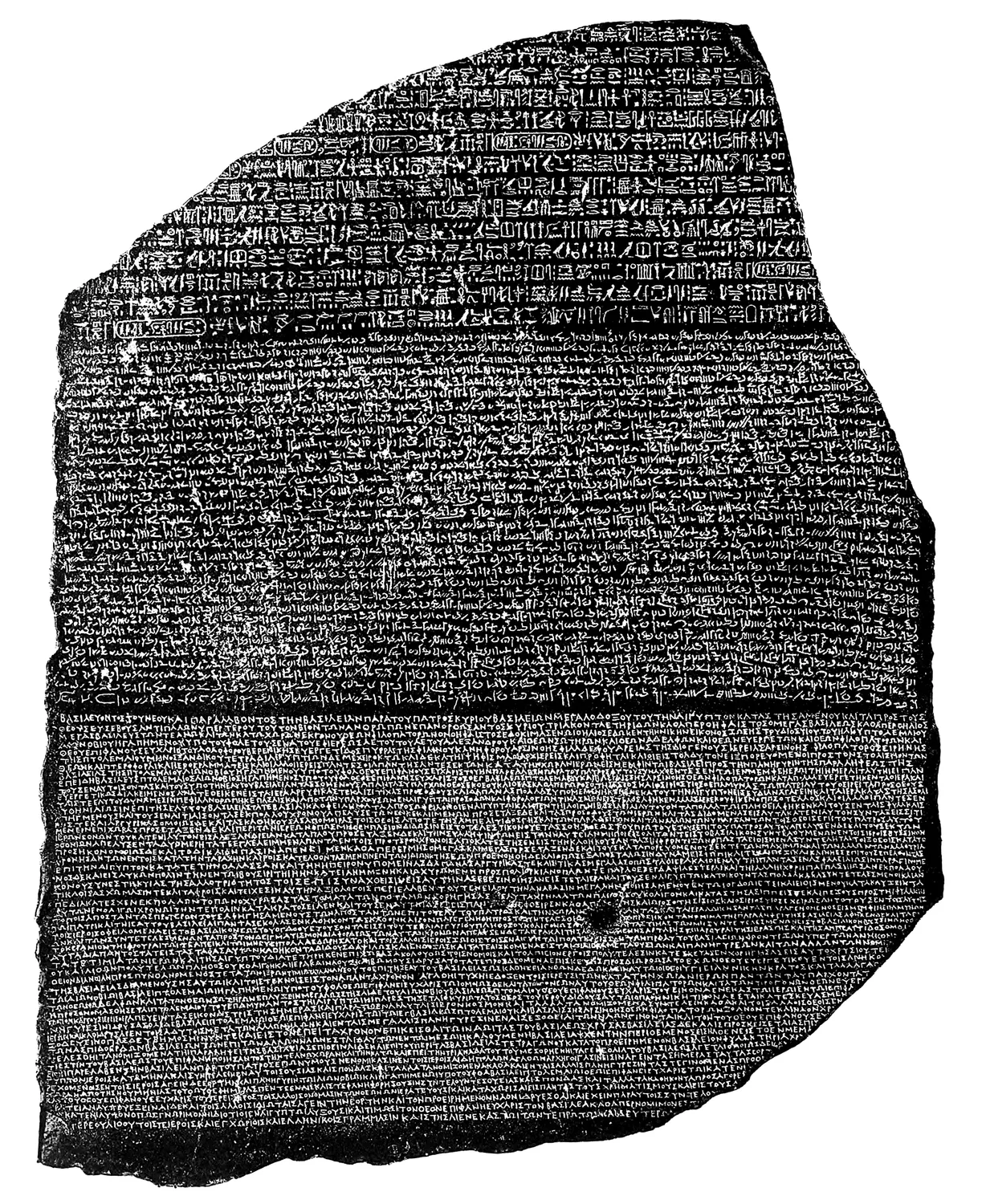
"The Rosetta Stone" by Book: Sir Ernest Alfred Wallis (1857-1934)Photo: Donald Macbeth / Source: Wikimedia Commons (Public domain).
The Rosetta Stone is one of the most significant artifacts in world history. It was discovered in 1799 by French soldiers during Napoleon Bonaparte’s Egyptian campaign. The stone was found near the town of Rosetta (now Rashid), close to the Nile Delta in Egypt. This discovery changed the way historians and archaeologists studied ancient Egypt, because it provided the key to understanding Egyptian hieroglyphics, a written language that had remained a mystery for centuries.
The Rosetta Stone is a large, black slab made of granodiorite, a type of hard stone. The stone measures about 114 centimeters (45 inches) high and 72 centimeters (28 inches) wide. What made it so special was its unique inscription. The same message was written on the stone in three different scripts: Ancient Egyptian hieroglyphics, Demotic (a later Egyptian script), and Ancient Greek. Because scholars could already understand Ancient Greek, they could use this knowledge to finally decode the meaning of hieroglyphics.
The discovery of the Rosetta Stone was not an accident. French engineers were rebuilding a fort near Rosetta when Lieutenant Pierre-François Bouchard noticed the stone with strange writing on it. Recognizing its potential importance, Bouchard ensured the stone was sent to scholars for further study. After the British defeated the French in Egypt, the stone was taken to Britain and became part of the British Museum’s collection in 1802. The translation work was difficult and took many years. Finally, in 1822, the French scholar Jean-François Champollion announced that he had successfully deciphered Egyptian hieroglyphics, using the Greek text as a guide. This accomplishment opened a window into the civilization of ancient Egypt, allowing historians to read royal decrees, religious texts, and records of daily life.
The Rosetta Stone’s three scripts show the multicultural nature of ancient Egypt under foreign rule. The Greek language reflected the power of the ruling Ptolemaic dynasty, while Demotic was the everyday script of Egyptian people. The hieroglyphics were used for sacred and official purposes. The stone’s message itself was a royal decree issued in 196 BCE to honor the pharaoh Ptolemy V. The Rosetta Stone not only demonstrates the connections between different cultures, but also the importance of language in shaping history and society.
The discovery and decoding of the Rosetta Stone had a lasting impact on archaeology and the study of ancient civilizations. It was a breakthrough that allowed scholars to reconstruct the history, beliefs, and achievements of one of the world’s oldest and most fascinating societies. The Rosetta Stone remains a symbol of the power of knowledge and the value of careful observation in historical discovery.
The ability to decode the past through artifacts like the Rosetta Stone connects to the broader theme of how evidence and inquiry help us understand ancient cultures and their influence on our world today.
Interesting Fact: The Rosetta Stone was only a fragment of a much larger slab, and its top and right sides are missing.
Who found the Rosetta Stone?
French soldiersBritish sailorsEgyptian farmersGreek merchants
Where was the Rosetta Stone discovered?
Nile Delta near RosettaGiza pyramidsAlexandria harborSahara desert
In what year was the Rosetta Stone found?
17991822196 BCE1802
Why was the Rosetta Stone important for historians?
It helped decode hieroglyphicsIt was used for farmingIt provided goldIt showed Greek art