What is Archaeology?
Interactive passage with audio narration, comprehension questions, and printable PDF.
By completing this purchase you agree to our Terms of Use and Privacy Policy. Your subscription renews automatically until you cancel. You can cancel anytime from your account settings. All sales are final and non-refundable. Digital content is available for download in your account immediately upon purchase.
What's included
Part of this bundle

What is Archaeology? preview and details
About this printable What is Archaeology? reading passage (Grades 5-8)
Sample passage and quiz from What is Archaeology?
Reading passage and comprehension quiz preview
What is Archaeology? How Scientists Learn About Early Humans
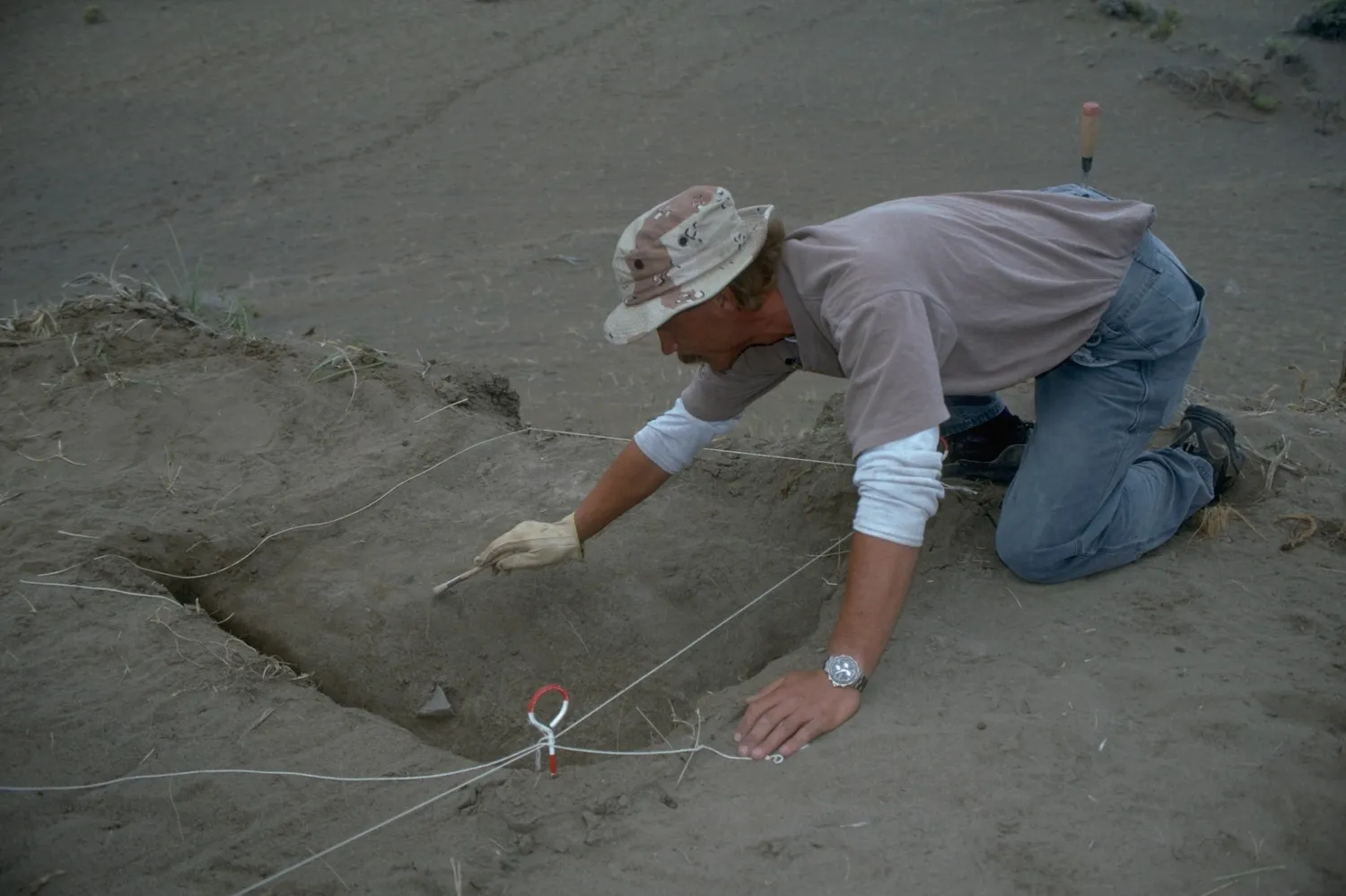
Archaeology is the scientific study of past human life through the examination of physical remains, or artifacts. Archaeologists uncover clues about early humans and ancient societies by carefully excavating sites around the world. By analyzing evidence such as tools, bones, and pottery, they reconstruct how people lived thousands of years ago. This process requires patience, special methods, and an understanding of geography and history.
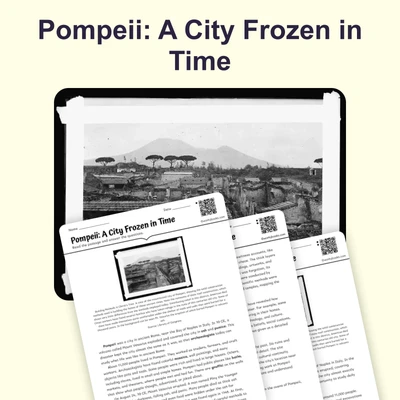
One of the most famous archaeological discoveries is the skeleton known as Lucy. In 1974, in the Afar region of Ethiopia, Donald Johanson and his team found bones that were over 3 million years old. Lucy belonged to a species called Australopithecus afarensis, and her remains gave scientists new insights into human evolution. By studying her bones, archaeologists learned that early humans walked upright long before they developed complex tools or writing. Another important site is Pompeii in Italy. When Mount Vesuvius erupted in 79 CE, ash covered the city, preserving houses, streets, and even food. Archaeologists have used these remains to understand Roman daily life, from social hierarchy to clothing and diet.
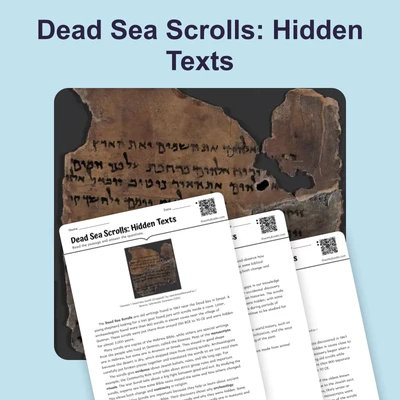
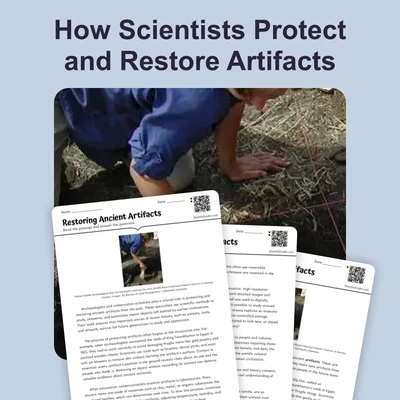
Archaeologists use a range of methods to investigate the past. They conduct excavations, which means digging carefully in layers to reveal objects and structures. Precise dating techniques, such as radiocarbon dating, help determine the age of artifacts. Sometimes, primary sources—like ancient writings, cave paintings, or inscriptions—are also found and studied. Archaeologists must record their findings in detail so that others can analyze and interpret the evidence. Debates often arise about the meaning of certain discoveries, especially when evidence is limited or incomplete.
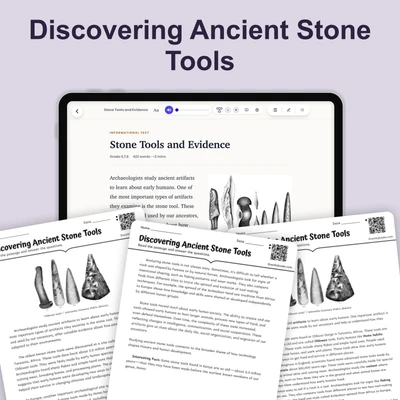
The significance of archaeology is immense. These discoveries explain the continuity and change in human societies over time. For example, by comparing stone tools from Africa, Asia, and Europe, archaeologists can trace how early humans migrated, adapted, and innovated. Artifacts reveal how people interacted with their environment, developed technology, and built communities. The study of archaeology connects us to our shared past and helps us understand the foundations of modern civilizations.
In the broader themes of ancient history, archaeology provides a bridge between the present and the distant past, showing how evidence from the ground shapes our understanding of humanity.
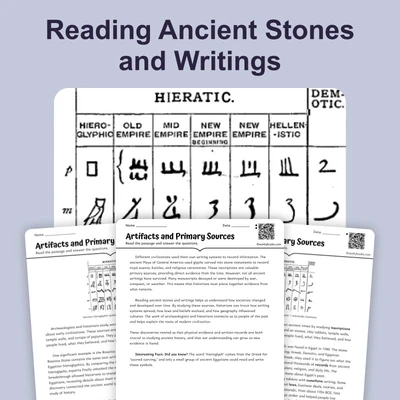
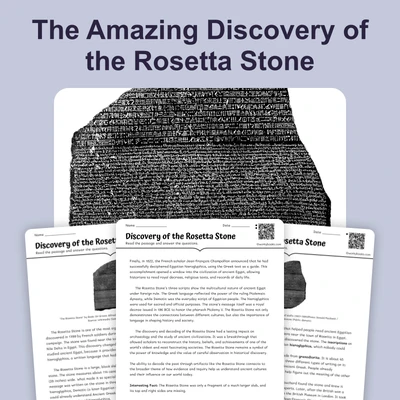
Interesting Fact: The Rosetta Stone, discovered in 1799 in Egypt, helped archaeologists decode ancient Egyptian writing called hieroglyphics.
Comprehension quiz (8 questions)
1. Who discovered Lucy?
2. Where was the Rosetta Stone found?
3. What covered Pompeii in 79 CE?
4. Why is Lucy important?
5. How do archaeologists know the age of artifacts?
6. What is one reason archaeologists disagree?
7. Archaeology connects us to our shared past. True or False?
8. What does 'hierarchy' mean?
Perfect for the way you teach
- Build comprehension skills
- Auto-graded quiz
- Differentiated reading
- Read together at home
- Improve fluency
- Quiet reading time
- Reading curriculum support
- Independent practice
- Track Lexile growth