Howard Carter and the Tomb of King Tut — Reading Comprehension
Rate this
Premium Resource
Present
Present in classroom. No work saved
Assign
Classroom with student accounts, Track progress
Quick Play
No student accounts, assign with a link
Grades
5
6
7
8
PRINT+DIGITAL RESOURCE
This learning resource is available in interactive and printable formats. The interactive worksheet can be played online and assigned to students. The Printable PDF version can be downloaded and printed for completion by hand.
This detailed history reading passage explores the remarkable discovery of King Tutankhamun's tomb by Howard Carter in 1922, providing insight into the world of ancient Egyptian archaeology. Students will learn about the challenges and significance of Carter's work, the advanced methods used, and the astonishing artifacts uncovered. The passage is designed to support critical thinking and historical analysis, using primary sources and academic vocabulary. Aligned with CA HSS 6.2.9 and CCSS RH.6-8.1, this resource includes a Spanish translation, read aloud audio, and activities such as a multiple-choice quiz, writing prompts, graphic organizers, and a timeline. This lesson helps students connect archaeological discoveries to broader themes in world history, such as social hierarchy, the role of geography, and the lasting impact of ancient civilizations.
CONTENT PREVIEW
Expand content preview
[Howard Carter, 1873-1939, with magnifying glass, leaning over mummy of King Tutankhamen as the first incision was made in the mummy wrappings, Feb. 1926]. Source: Library of Congress
Archaeologist Howard Carter became world-famous after he discovered the tomb of Tutankhamun, often called King Tut, in Egypt’s Valley of the Kings in 1922. This discovery was one of the most important in the history of archaeology and changed what historians knew about ancient Egypt’s pharaohs and their burial practices.
For years, Carter searched the Valley of the Kings, a royal cemetery on the west bank of the Nile River near Luxor. He worked under the patronage of Lord Carnarvon, who funded his work. Many experts believed all the major tombs had already been found. However, Carter remained convinced a hidden tomb still waited. He studied old tomb artifacts and early maps, noticing clues others had missed. On November 4, 1922, Carter’s team discovered a step cut into the rock. Further digging revealed a sealed doorway marked with the royal cartouche of Tutankhamun, a relatively unknown pharaoh who ruled during the 18th Dynasty (around 1332–1323 BCE).
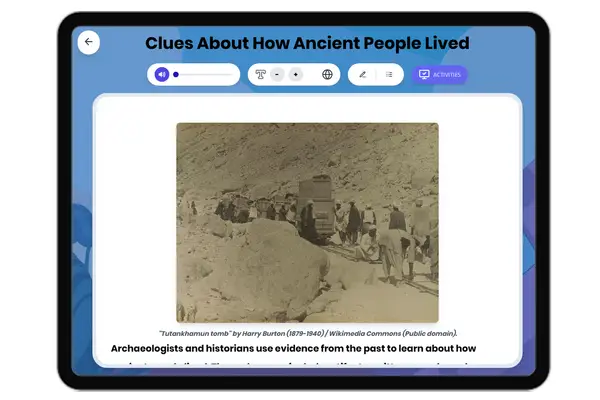
When Carter and Lord Carnarvon entered the tomb on November 26, 1922, they saw dazzling treasures—golden statues, chariots, jewelry, and furniture—all untouched for over 3,000 years. The tomb’s four rooms were packed with more than 5,000 objects. Most remarkably, the sarcophagus and mummy of King Tut himself were found in the burial chamber. Carter’s detailed notes, photographs, and careful excavation methods became a model for scientific documentation in archaeology. Primary sources like Carter’s journals and Harry Burton’s photographs provide firsthand evidence of the tomb’s condition and contents.
The discovery of King Tut’s tomb had major effects. It taught historians about ancient Egyptian funerary rituals, social hierarchy, and daily life. The tomb’s art and objects show the power of the pharaoh and the skilled work of Egyptian craftsmen. Since the tomb was mostly intact, it offered a rare view into the beliefs and technology of the time. The global excitement sparked a renewed interest in Egyptology and inspired future archaeological research. Some people believed the tomb was “cursed” because several people involved died soon after its opening, but historians agree this was likely coincidence.
Howard Carter’s discovery connects to broader themes in world history, such as the importance of geography in ancient civilizations, the development of science and archaeology, and the impact of preserving cultural heritage for future generations.
Interesting Fact: The famous gold mask of King Tut, uncovered by Carter, remains one of the most recognized symbols of ancient Egypt around the world.
Who discovered King Tut’s tomb?
Howard CarterHarry BurtonLord CarnarvonJean-François Champollion
Where was King Tut’s tomb found?
Giza PlateauValley of the KingsAlexandriaCairo
In what year was the tomb discovered?
1912192219321942
Why was the tomb’s discovery significant?
It proved mummies were realIt showed ancient trade routesIt was mostly untouched, revealing many artifactsIt found the oldest pyramid
What did Carter do differently from earlier archaeologists?
Used careful documentationDestroyed artifactsIgnored local workersLeft tomb unopened
What caused excitement about ancient Egypt worldwide?
Discovery of King Tut’s tombBuilding new pyramidsFinding Roman coinsTranslating cuneiform
The tomb was found by accident. True or false?
TrueFalse
What does 'hierarchy' mean?
System of ranking peopleType of ancient writingA royal burial siteA kind of treasure
Perfect For:
👩🏫 Teachers
• Reading comprehension practice
• Auto-graded assessments
• Literacy skill development
👨👩👧👦 Parents
• Reading practice at home
• Comprehension improvement
• Educational reading time
🏠 Homeschoolers
• Reading curriculum support
• Independent reading practice
• Progress monitoring
Reading Features:
📖
Reading Passage
Engaging fiction or nonfiction text
❓
Comprehension Quiz
Auto-graded questions
📊
Instant Feedback
Immediate results and scoring
📄
Printable Version
Download for offline reading
🔊
Read Aloud
Voice-over with word highlighting
Reviews & Ratings
No reviews yet. Be the first to share your experience!
Related Content
Underwater Archaeology: Discovering Shipwrecks
This engaging passage explores the field of underwater archaeology, focusing on the discovery and study of ancient shipw...
What is Archaeology?
This engaging passage introduces students to the science of archaeology and how it helps us understand early humans and ...
Evidence in Ancient History
This engaging history reading passage investigates how archaeologists and historians discover clues about how ancient pe...
Protecting and Restoring Ancient Artifacts
This engaging passage explores how scientists, especially archaeologists and conservators, protect and restore artifacts...
Dating Ancient Artifacts
This passage explores the scientific methods used by archaeologists to determine the age of artifacts, such as radiocarb...
Terracotta Army China
This passage examines the remarkable discovery of China’s Terracotta Army, one of the world’s most famous archaeological...
Dead Sea Scrolls: Hidden Texts
This passage explores the remarkable discovery of the Dead Sea Scrolls, one of history’s most significant archaeological...
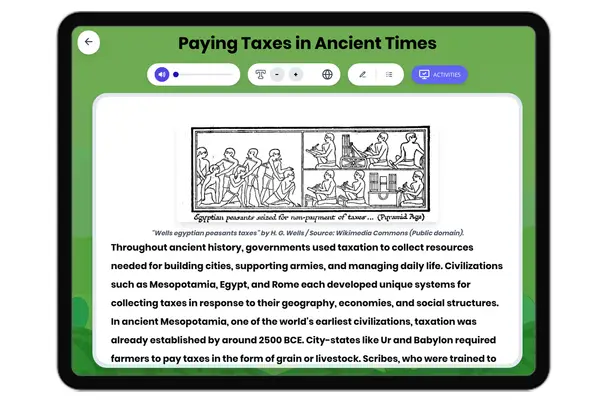
Paying Taxes in Ancient Times
This reading passage explores the origins and practices of taxation in ancient civilizations, focusing on how early gove...
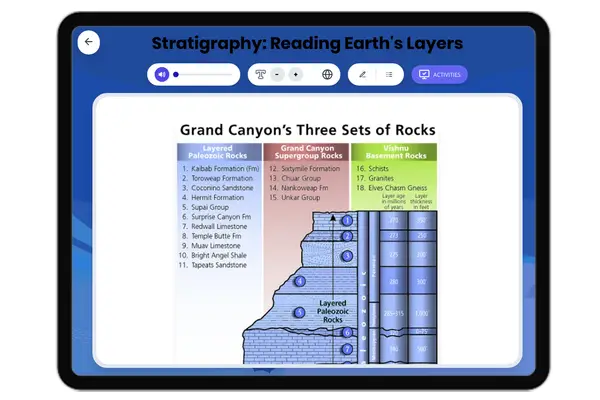
Stratigraphy: Reading Earth's Layers
This passage introduces students to the science of stratigraphy, a key archaeological method for studying the layers of ...
Ancient Theocracy
This engaging history reading passage explores the concept of theocracy in ancient civilizations, where priests and reli...
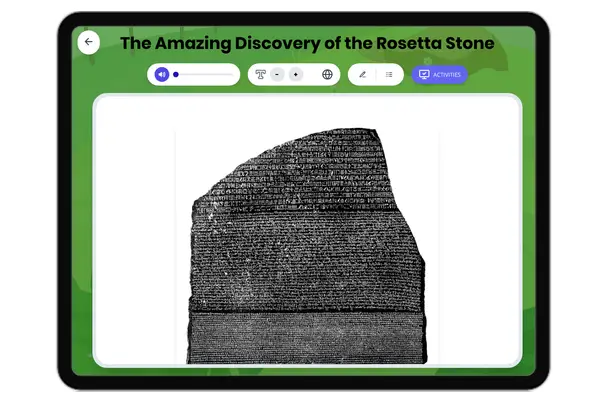
Discovery of Rosetta stone
This engaging history reading passage explores the remarkable discovery of the Rosetta Stone and its impact on the study...
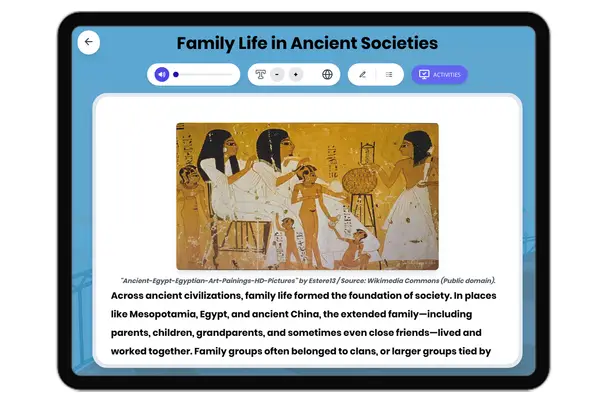
Social structures in Ancient World
This passage explores the organization and significance of family life in ancient societies, focusing on how extended fa...
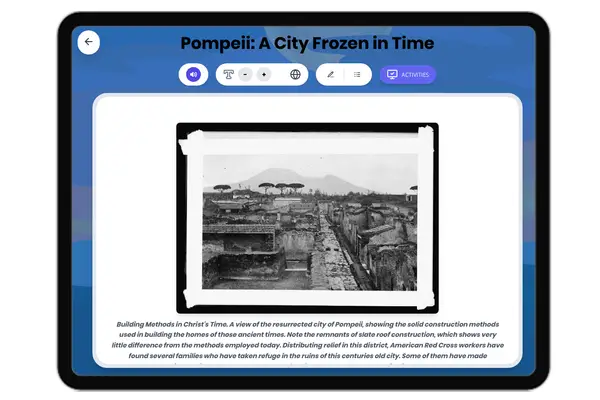
Pompeii: A City Frozen in Time
This engaging passage explores the ancient Roman city of Pompeii, which was buried by the eruption of Mount Vesuvius in ...
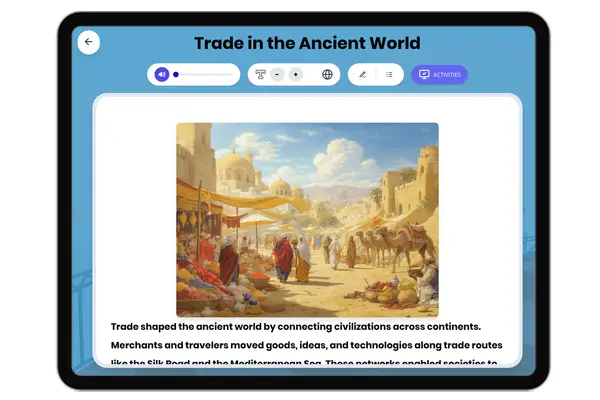
Trade in the Ancient World
This reading passage delves into the dynamic world of trade among ancient civilizations, focusing on the Silk Road, Medi...
Ancient Canaan
This educational passage explores the land of Canaan, the historical homeland of the ancient Israelites. Students will l...
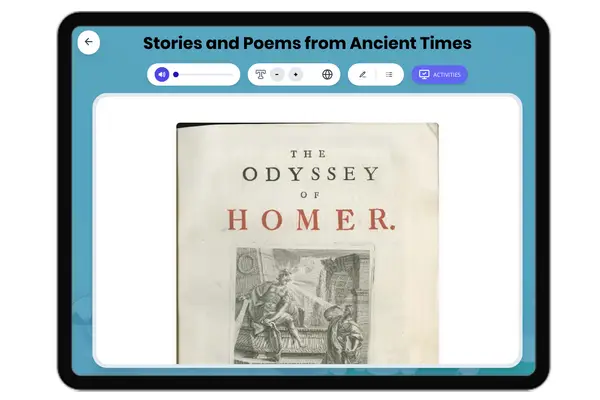
Ancient Literature
This passage explores the importance of ancient stories and poems from civilizations such as Greece, India, and Israel. ...
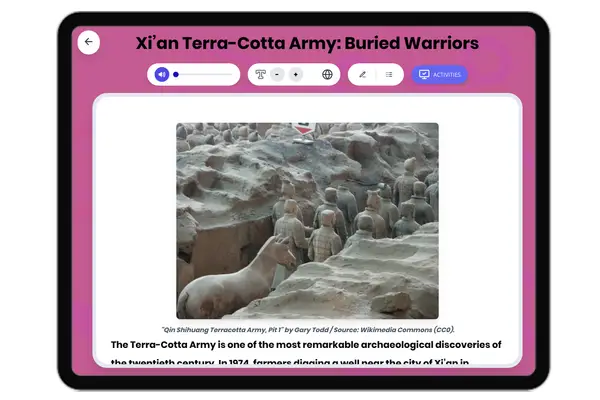
Terracotta Army
This passage explores the fascinating discovery of the Terra-Cotta Army near Xi’an, China, and its significance in ancie...
Geography of Ancient Israel
This passage explores the rich geography of Ancient Israel, focusing on how landforms, climate, and natural resources sh...
Ancient Writing Systems
This engaging history reading passage explores the origins and evolution of ancient writing systems, including cuneiform...