Trade in the Ancient World — Reading Comprehension
Rate this
Premium Resource
Present
Present in classroom. No work saved
Assign
Classroom with student accounts, Track progress
Quick Play
No student accounts, assign with a link
Grades
6
7
8
PRINT+DIGITAL RESOURCE
This learning resource is available in interactive and printable formats. The interactive worksheet can be played online and assigned to students. The Printable PDF version can be downloaded and printed for completion by hand.
This reading passage delves into the dynamic world of trade among ancient civilizations, focusing on the Silk Road, Mediterranean sea routes, and their profound effects on cultural and economic exchange. Students will learn how merchants, city-states, and empires such as Rome, Han China, and Egypt connected distant lands through networks of commerce. The text integrates primary archaeological evidence, explores cause-and-effect relationships, and highlights change and continuity over time. Aligned with CA HSS 6.2 and CCSS RH.6-8.2, it challenges students to analyze the significance of trade in shaping social hierarchies, daily life, and world history. The passage is supported with a glossary, a timeline, multiple-choice quiz, writing prompts, graphic organizers, and Spanish translation. Read aloud audio is available. Ideal for deepening knowledge of ancient history and developing critical reading skills.
CONTENT PREVIEW
Expand content preview
Trade shaped the ancient world by connecting civilizations across continents. Merchants and travelers moved goods, ideas, and technologies along trade routes like the Silk Road and the Mediterranean Sea. These networks enabled societies to exchange not only products such as silk, spices, and gold, but also beliefs, inventions, and languages. The development of trade deeply affected economies, cultures, and even the rise and fall of empires.
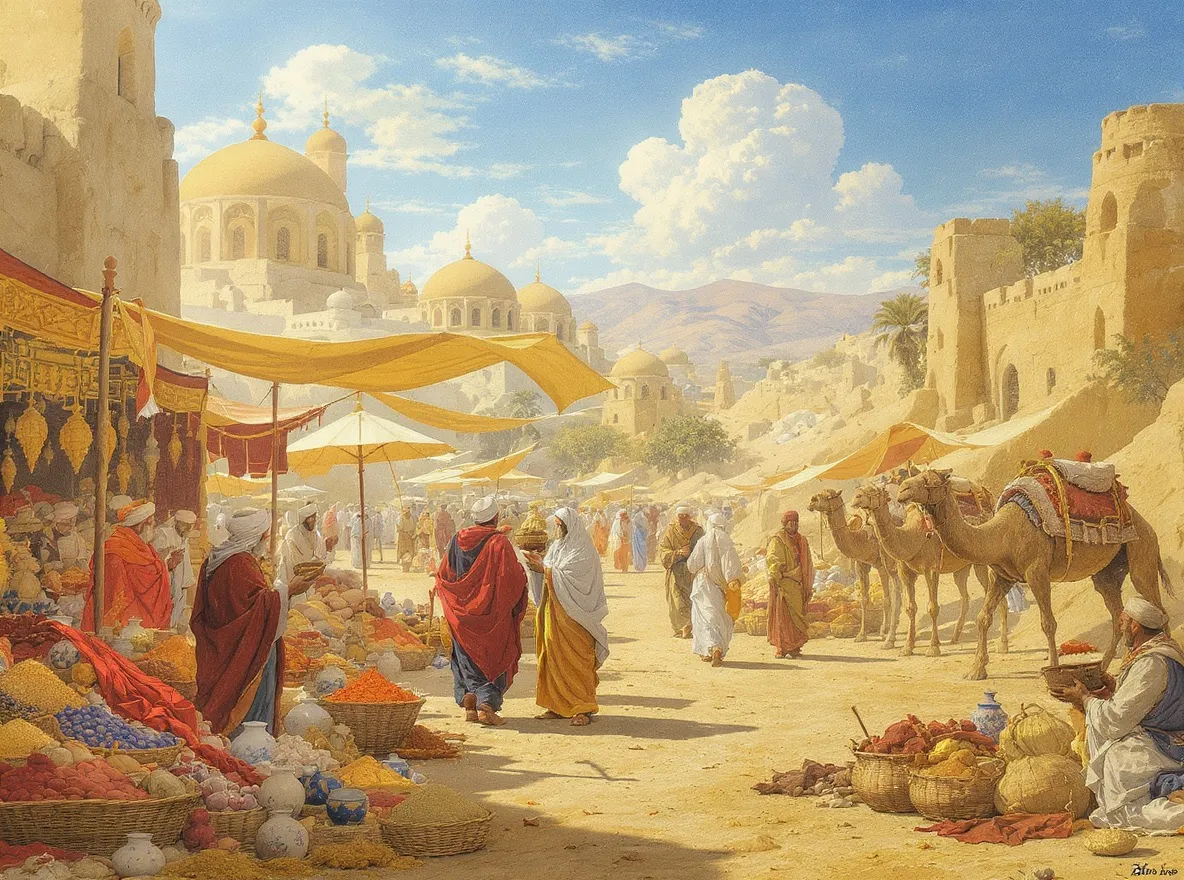
The Silk Road was a vast network of overland routes stretching more than 4,000 miles across Asia, from China to the Mediterranean. By the 2nd century BCE, Chinese merchants were exporting silk, a valuable fabric, westward. Archaeological evidence from tombs in Central Asia reveals silk fragments, confirming its importance as a luxury good. Along the way, traders encountered people from many regions—Persians, Greeks, and nomadic groups—exchanging not only goods but also knowledge about astronomy and medicine. Caravans of camels carried spices, glassware, and precious stones. Some merchants traveled only short distances while others crossed entire continents, demonstrating both diversity and risk in ancient trade.
At the same time, the Mediterranean Sea served as a major highway for commerce. City-states such as Athens and Carthage, and later the Roman Empire, built fleets of ships to move grain, olive oil, and wine. The famous Uluburun shipwreck, discovered off the coast of Turkey and dated to the late 14th century BCE, contained goods from Egypt, Cyprus, and Mycenae, showing the wide reach of maritime trade. Control of trade routes often brought wealth and power. For example, Rome's dominance of the Mediterranean allowed it to collect taxes and tributes from conquered territories, strengthening its empire.
Trade was not only an economic activity; it transformed societies. In market towns along the Silk Road, people of different backgrounds mingled, leading to the spread of Buddhism from India into China. Social classes evolved as merchants gained influence, sometimes challenging traditional hierarchies based on birth or military power. However, trade could also spread diseases, such as the plague, highlighting both positive and negative effects. Over centuries, these networks grew more complex, but the basic patterns of exchange and cultural contact continued.
In conclusion, ancient trade routes like the Silk Road and Mediterranean Sea lanes played a crucial role in shaping world history. They connected distant peoples, fostered new ideas, and changed societies in lasting ways. Understanding ancient trade helps explain how geography, technology, and human ambition drive historical change.
This study of ancient trade links to broader themes of economic development, cultural diffusion, and the impact of geography on civilizations.
Interesting Fact: The word "silk" comes from the ancient Chinese word "si," and for centuries, only China knew how to make silk, making it one of the world's most closely guarded secrets.
What was the Silk Road?
A network of ancient trade routesA single sea routeA Roman military roadA mountain in China
Which sea was key for ancient trade?
Black SeaMediterranean SeaRed SeaCaspian Sea
What did the Uluburun shipwreck reveal?
Early farming toolsLuxury goods from many landsRoman coins onlyBuddhist statues
Trade routes helped spread which religion?
HinduismBuddhismJudaismChristianity
Why did Rome want to control trade?
To collect taxes and gain powerTo find new farming landTo spread ChristianityTo escape enemies
What was a negative effect of trade?
Spread of diseaseFaster travelMore goldBetter ships
Only China knew how to make silk. True or false?
TrueFalse
What is 'cultural diffusion'?
Spread of beliefs and ideasBuilding stone wallsFarming along riversMaking weapons
Perfect For:
👩🏫 Teachers
• Reading comprehension practice
• Auto-graded assessments
• Literacy skill development
👨👩👧👦 Parents
• Reading practice at home
• Comprehension improvement
• Educational reading time
🏠 Homeschoolers
• Reading curriculum support
• Independent reading practice
• Progress monitoring
Reading Features:
📖
Reading Passage
Engaging fiction or nonfiction text
❓
Comprehension Quiz
Auto-graded questions
📊
Instant Feedback
Immediate results and scoring
📄
Printable Version
Download for offline reading
🔊
Read Aloud
Voice-over with word highlighting
Reviews & Ratings
No reviews yet. Be the first to share your experience!
Related Content
Ancient Civilizations and the Environment
This engaging history reading passage explores how ancient civilizations such as Mesopotamia, Egypt, and the Maya adapte...
Gender Roles in Ancient Civilizations
This engaging history reading passage explores the roles of men and women in various ancient civilizations, including Me...
Writing Prompts Ancient Civilizations
Step into the shoes of an archaeologist with this engaging worksheet focused on ancient civilizations. Students will be ...
W.5.2.A-2W.5.1.CW.5.1.D
Power and Authority in Ancient Civilizations
This passage explores the roles of men in positions of power within ancient civilizations, focusing on their authority i...
Evidence in Ancient History
This engaging history reading passage investigates how archaeologists and historians discover clues about how ancient pe...
Ancient Monarchy
This reading passage explores the concept of monarchy in ancient civilizations, focusing on the origins, structure, and ...
Ancient Theocracy
This engaging history reading passage explores the concept of theocracy in ancient civilizations, where priests and reli...
Ancient Mathematics
This passage explores the essential role of mathematics in ancient civilizations, including Mesopotamia, Egypt, Greece, ...
Ancient Canaan
This educational passage explores the land of Canaan, the historical homeland of the ancient Israelites. Students will l...
Ancient Money Barter
This passage explores the fascinating evolution from barter to the earliest coins in ancient civilizations, focusing on ...
Ancient Science and Medicine
This comprehensive reading passage explores the development of science and medicine in ancient civilizations, including ...
Ancient Literature
This passage explores the importance of ancient stories and poems from civilizations such as Greece, India, and Israel. ...
Ancient Agriculture Farming
This passage explores the transformative impact of farming on ancient societies, examining how the Neolithic Revolution ...
Ancient Writing Systems
This engaging history reading passage explores the origins and evolution of ancient writing systems, including cuneiform...
Geography of Ancient Israel
This passage explores the rich geography of Ancient Israel, focusing on how landforms, climate, and natural resources sh...
Slavery Across Civilizations
This detailed history reading passage explores the role and impact of slavery across several ancient civilizations, incl...
Social Classes in Ancient Societies
This passage explores the concept of social hierarchies in ancient civilizations, focusing on why societies such as Meso...
Social structures in Ancient World
This passage explores the organization and significance of family life in ancient societies, focusing on how extended fa...
Polytheism and Monotheism in Ancient Times
This passage explores the religious beliefs of ancient civilizations, focusing on the differences and similarities betwe...
Women in Ancient Societies
This reading passage explores the complex roles of women in the ancient world, focusing on civilizations such as Mesopot...