This learning resource is available in interactive and printable formats. The interactive worksheet can be played online and assigned to students. The Printable PDF version can be downloaded and printed for completion by hand.
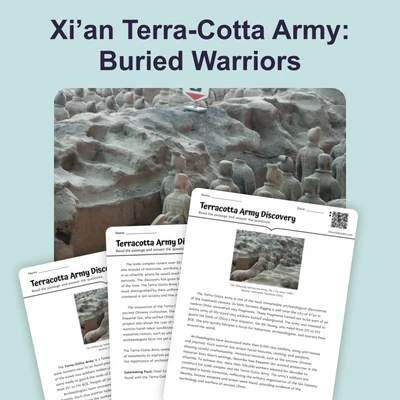
This passage examines the remarkable discovery of China’s Terracotta Army, one of the world’s most famous archaeological finds. Students learn about the life of Qin Shi Huang, the first emperor of a unified China, and the purpose and construction of the vast underground clay army that was meant to guard him in the afterlife. The text highlights primary archaeological evidence, such as the thousands of life-sized soldiers and artifacts found near Xi’an, and explores the significance of this discovery for understanding ancient Chinese beliefs, social hierarchy, and craftsmanship. This passage is aligned with CA HSS 6.6 and TEKS 113.18, offering a rigorous, standards-based approach to world history. Activities include a read aloud, Spanish translation, comprehension questions, writing prompts, graphic organizers, and a timeline, making it ideal for classroom use or independent study.
CONTENT PREVIEW
Expand content preview
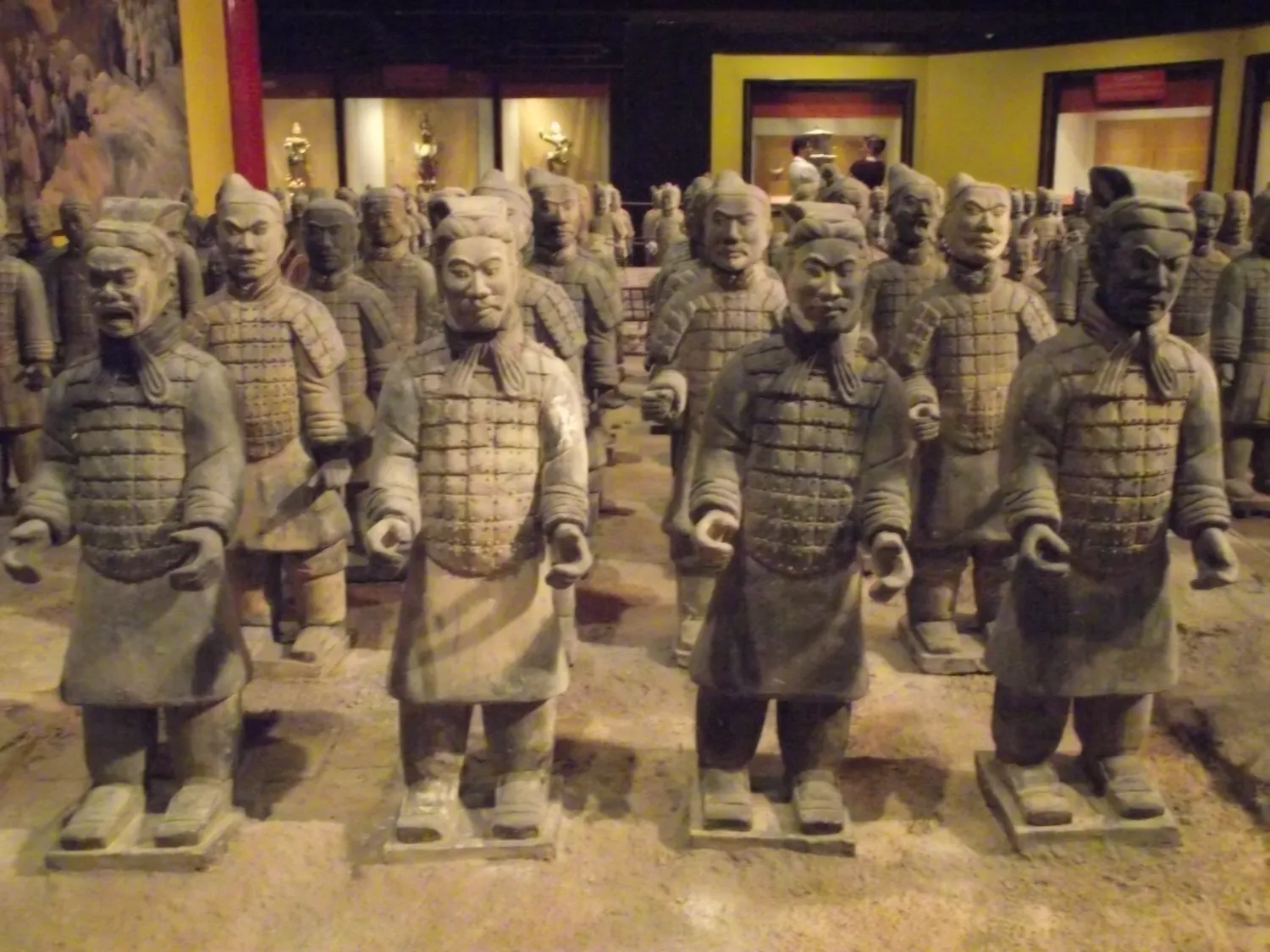
Terracotta Army China, Epcot.JPG Source: Wikimedia Commons - Eliedion
The Terracotta Army is one of the most extraordinary archaeological discoveries in the world. In 1974, farmers digging a well near Xi’an, China, uncovered life-sized clay soldiers buried underground. These clay figures were created to guard the tomb of China’s first emperor, Qin Shi Huang, who unified China in 221 BCE.
Qin Shi Huang was the founder of the Qin dynasty and ruled from 221 to 210 BCE. He became famous for unifying different states, building the first version of the Great Wall, and establishing a standardized system of writing and currency. Historians believe that the emperor was obsessed with immortality. Hoping to rule even after death, he ordered the construction of a massive underground mausoleum—a grand tomb complex filled with thousands of clay soldiers, horses, and chariots.
The Terracotta Army is made up of more than 8,000 soldiers, 670 horses, and 130 chariots, all arranged in battle formation. Each clay soldier is unique, with different facial expressions, hairstyles, and armor, reflecting the social hierarchy and military ranks of Qin society. Archaeologists have also found bronze weapons, such as swords and crossbows, that were placed with the army to make it ready for combat. The site is divided into several pits, with Pit 1 being the largest and most impressive. Historical records, such as those by the ancient historian Sima Qian, support the evidence found at the site, but there are still mysteries about how the army was made and what lies within the emperor’s unopened tomb chamber.
The construction of the Terracotta Army required thousands of workers and advanced craftsmanship. Artisans used local clay and fired the figures in kilns, then assembled them in the vast underground chambers. The project took nearly 40 years and likely involved forced labor. The discovery of the army has helped historians understand ancient Chinese beliefs about the afterlife, the power of the emperor, and the importance of military strength for the Qin dynasty. It also shows continuity in Chinese funerary practices and the value placed on protecting rulers in death as in life.
The Terracotta Army remains a symbol of China’s rich cultural heritage and continues to attract researchers and visitors worldwide. It offers insight into the technological skills, social organization, and religious beliefs of ancient China. The preservation and study of this site connect us to broader themes of world history, such as the rise of empires, the use of art for political purposes, and the role of archaeology in uncovering the past.
Interesting Fact: Some of the clay soldiers still have traces of bright paint, showing that the army was once colorfully decorated.
Who was the first emperor of China?
Qin Shi HuangSima QianHan WudiSun Tzu
When was the Terracotta Army discovered?
1974210 BCE221 BCE1492
Where is the Terracotta Army located?
Near Xi’anBeijingShanghaiChengdu
Why did Qin Shi Huang build the Terracotta Army?
To protect his tombTo invade other landsTo store foodTo trade with neighbors
What do unique clay soldiers show?
Social hierarchyTrade routesReligionClimate
What is one reason the Terracotta Army is important?
It helps us learn about ancient ChinaIt is made of goldIt was built by RomansIt is the oldest tomb in the world
The Terracotta Army was built over 40 years.
TrueFalse
What does 'mausoleum' mean?
A grand tombA battle strategyA kind of armorA clay soldier
Perfect For:
👩🏫 Teachers
• Reading comprehension practice
• Auto-graded assessments
• Literacy skill development
👨👩👧👦 Parents
• Reading practice at home
• Comprehension improvement
• Educational reading time
🏠 Homeschoolers
• Reading curriculum support
• Independent reading practice
• Progress monitoring
Reading Features:
📖
Reading Passage
Engaging fiction or nonfiction text
❓
Comprehension Quiz
Auto-graded questions
📊
Instant Feedback
Immediate results and scoring
📄
Printable Version
Download for offline reading
🔊
Read Aloud
Voice-over with word highlighting
Reviews & Ratings
No reviews yet. Be the first to share your experience!
Related Content
Underwater Archaeology: Discovering Shipwrecks
This engaging passage explores the field of underwater archaeology, focusing on the discovery and study of ancient shipw...
What is Archaeology?
This engaging passage introduces students to the science of archaeology and how it helps us understand early humans and ...
Evidence in Ancient History
This engaging history reading passage investigates how archaeologists and historians discover clues about how ancient pe...
Protecting and Restoring Ancient Artifacts
This engaging passage explores how scientists, especially archaeologists and conservators, protect and restore artifacts...
Dating Ancient Artifacts
This passage explores the scientific methods used by archaeologists to determine the age of artifacts, such as radiocarb...
Dead Sea Scrolls: Hidden Texts
This passage explores the remarkable discovery of the Dead Sea Scrolls, one of history’s most significant archaeological...
Paying Taxes in Ancient Times
This reading passage explores the origins and practices of taxation in ancient civilizations, focusing on how early gove...
Stratigraphy: Reading Earth's Layers
This passage introduces students to the science of stratigraphy, a key archaeological method for studying the layers of ...
Ancient Theocracy
This engaging history reading passage explores the concept of theocracy in ancient civilizations, where priests and reli...
Discovery of Rosetta stone
This engaging history reading passage explores the remarkable discovery of the Rosetta Stone and its impact on the study...
Social structures in Ancient World
This passage explores the organization and significance of family life in ancient societies, focusing on how extended fa...
Pompeii: A City Frozen in Time
This engaging passage explores the ancient Roman city of Pompeii, which was buried by the eruption of Mount Vesuvius in ...
Trade in the Ancient World
This reading passage delves into the dynamic world of trade among ancient civilizations, focusing on the Silk Road, Medi...
Ancient Canaan
This educational passage explores the land of Canaan, the historical homeland of the ancient Israelites. Students will l...
Ancient Literature
This passage explores the importance of ancient stories and poems from civilizations such as Greece, India, and Israel. ...
Terracotta Army
This passage explores the fascinating discovery of the Terra-Cotta Army near Xi’an, China, and its significance in ancie...
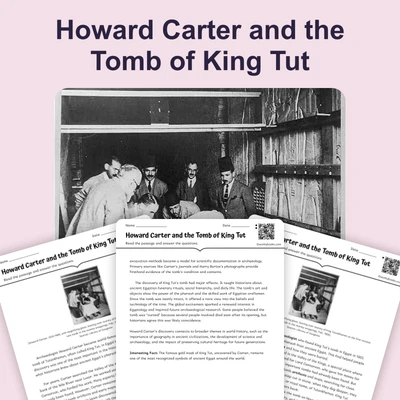
Howard Carter and the Tomb of King Tut
This detailed history reading passage explores the remarkable discovery of King Tutankhamun's tomb by Howard Carter in 1...
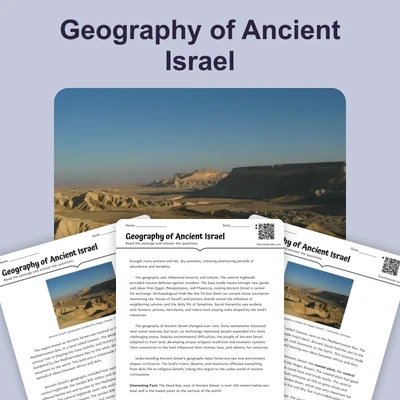
Geography of Ancient Israel
This passage explores the rich geography of Ancient Israel, focusing on how landforms, climate, and natural resources sh...
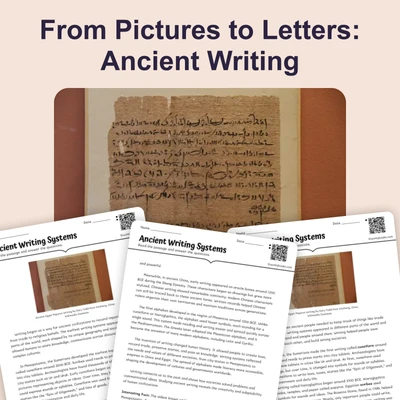
Ancient Writing Systems
This engaging history reading passage explores the origins and evolution of ancient writing systems, including cuneiform...