Dead Sea Scrolls: Hidden Texts — Reading Comprehension
Rate this
Premium Resource
Present
Present in classroom. No work saved
Assign
Classroom with student accounts, Track progress
Quick Play
No student accounts, assign with a link
Grades
6
7
8
PRINT+DIGITAL RESOURCE
This learning resource is available in interactive and printable formats. The interactive worksheet can be played online and assigned to students. The Printable PDF version can be downloaded and printed for completion by hand.
This passage explores the remarkable discovery of the Dead Sea Scrolls, one of history’s most significant archaeological finds. Students will learn about the circumstances of their accidental discovery in 1947 near the Dead Sea, the ancient community that preserved them, and their impact on our understanding of early Judaism and the Hebrew Bible. The passage addresses cause and effect, change over time, and human significance within the context of the ancient world. Key academic vocabulary is woven throughout to support historical inquiry, and activities align with CA HSS 6.1 and CCSS RI.6.1, RI.6.3. This resource features a reading passage, glossary, timeline, graphic organizers, and multiple assessment activities, plus read aloud audio and Spanish translation options, to support diverse learners. It is ideal for engaging students in thinking like historians and exploring the links between archaeology and written history.
CONTENT PREVIEW
Expand content preview
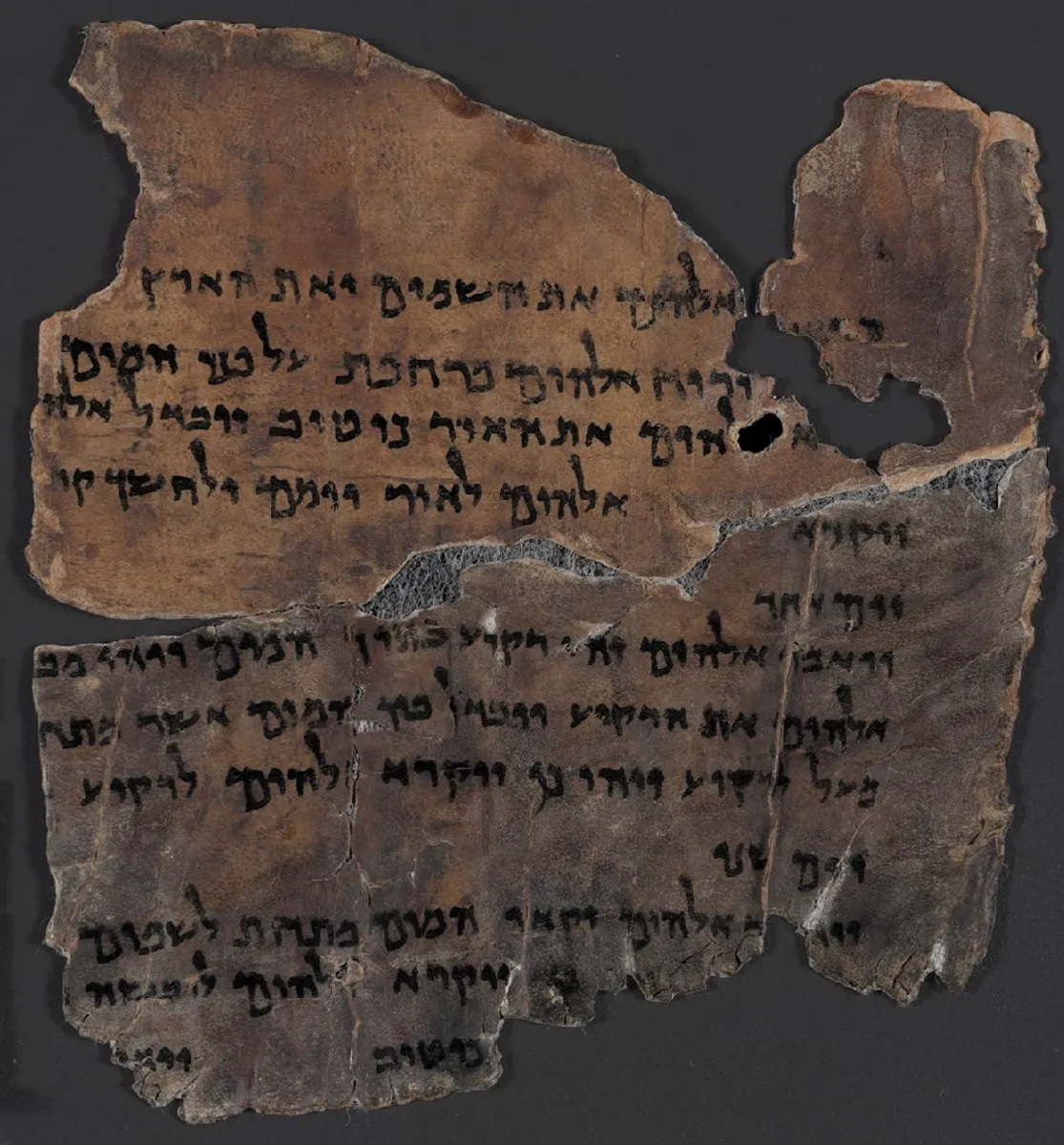
"Genesis 1 Dead Sea Scroll (Cropped)" by User:KetefHinnomFan / Source: Wikimedia Commons (CC0).
The Dead Sea Scrolls are a collection of ancient manuscripts discovered in 1947 near the Dead Sea in present-day Israel. These scrolls were hidden in caves close to the site of Qumran, a settlement in the Judean Desert. The discovery began when a young Bedouin shepherd accidentally found clay jars containing old scrolls while searching for a lost goat. Archaeologists later uncovered more than 900 separate documents across eleven caves, dating from about 250 BCE to 70 CE.
The scrolls contain a wide range of texts, including some of the oldest known copies of the Hebrew Bible, as well as religious writings unique to the Jewish sect that lived at Qumran. This group, sometimes called the Essenes, likely wrote or collected these texts as part of their religious practices. The manuscripts were written mainly in Hebrew, but some are in Aramaic and Greek. Many of the scrolls were well preserved because the dry desert climate slowed their decay. Archaeologists used advanced techniques to piece together fragile fragments and translate the ancient text.
The contents of the scrolls have provided historians with valuable evidence about Jewish beliefs, daily life, and social structure during the Second Temple period. For example, one scroll known as the Community Rule describes strict rules for membership, showing the importance of rituals and discipline. Another, the War Scroll, tells of a future battle between the "Sons of Light" and "Sons of Darkness." These scrolls help scholars compare biblical texts over time and observe how religious ideas developed. Their discovery also confirmed that some biblical passages remained almost unchanged for centuries, revealing both change and continuity in religious traditions.
The Dead Sea Scrolls are significant because they bridge gaps in our knowledge of ancient Judaism and the origins of the Hebrew Bible. Their accidental discovery demonstrates the importance of archaeology in uncovering lost histories. The scrolls have sparked debates about who wrote them and why they were hidden, with some scholars suggesting they were protected from Roman soldiers during periods of conflict. Today, the scrolls are preserved in museums and continue to be studied for new insights into ancient societies.
The story of the Dead Sea Scrolls connects to wider themes in world history, such as the preservation of knowledge, the impact of geography on civilization, and the ways in which accidental discoveries can change our understanding of the past.
Interesting Fact: Some of the scrolls are written on parchment made from animal skins, while others are on papyrus, and even copper.
Where were the Dead Sea Scrolls found?
Near the Dead SeaIn EgyptIn GreeceIn Rome
Who first discovered the scrolls?
A Bedouin shepherdA Roman soldierA priestA museum curator
What language were most scrolls written in?
HebrewLatinFrenchEnglish
Why are the Dead Sea Scrolls important?
They reveal ancient Jewish lifeThey are made of goldThey are written in LatinThey show how to build cities
What is a "ritual" according to the passage?
A religious or ceremonial actionA type of foodA desert animalA famous writer
How did the desert climate affect the scrolls?
It preserved themIt destroyed themIt made them wetIt turned them to stone
The scrolls are kept in museums today. True or false?
TrueFalse
What does "continuity" mean in this passage?
Staying the same over timeA sudden changeBeing lost foreverA type of scroll
Perfect For:
👩🏫 Teachers
• Reading comprehension practice
• Auto-graded assessments
• Literacy skill development
👨👩👧👦 Parents
• Reading practice at home
• Comprehension improvement
• Educational reading time
🏠 Homeschoolers
• Reading curriculum support
• Independent reading practice
• Progress monitoring
Reading Features:
📖
Reading Passage
Engaging fiction or nonfiction text
❓
Comprehension Quiz
Auto-graded questions
📊
Instant Feedback
Immediate results and scoring
📄
Printable Version
Download for offline reading
🔊
Read Aloud
Voice-over with word highlighting
Reviews & Ratings
No reviews yet. Be the first to share your experience!
Related Content
Underwater Archaeology: Discovering Shipwrecks
This engaging passage explores the field of underwater archaeology, focusing on the discovery and study of ancient shipw...
What is Archaeology?
This engaging passage introduces students to the science of archaeology and how it helps us understand early humans and ...
Evidence in Ancient History
This engaging history reading passage investigates how archaeologists and historians discover clues about how ancient pe...
Protecting and Restoring Ancient Artifacts
This engaging passage explores how scientists, especially archaeologists and conservators, protect and restore artifacts...
Dating Ancient Artifacts
This passage explores the scientific methods used by archaeologists to determine the age of artifacts, such as radiocarb...
Terracotta Army China
This passage examines the remarkable discovery of China’s Terracotta Army, one of the world’s most famous archaeological...
Paying Taxes in Ancient Times
This reading passage explores the origins and practices of taxation in ancient civilizations, focusing on how early gove...
Stratigraphy: Reading Earth's Layers
This passage introduces students to the science of stratigraphy, a key archaeological method for studying the layers of ...
Ancient Theocracy
This engaging history reading passage explores the concept of theocracy in ancient civilizations, where priests and reli...
Discovery of Rosetta stone
This engaging history reading passage explores the remarkable discovery of the Rosetta Stone and its impact on the study...
Social structures in Ancient World
This passage explores the organization and significance of family life in ancient societies, focusing on how extended fa...
Pompeii: A City Frozen in Time
This engaging passage explores the ancient Roman city of Pompeii, which was buried by the eruption of Mount Vesuvius in ...
Trade in the Ancient World
This reading passage delves into the dynamic world of trade among ancient civilizations, focusing on the Silk Road, Medi...
Ancient Canaan
This educational passage explores the land of Canaan, the historical homeland of the ancient Israelites. Students will l...
Ancient Literature
This passage explores the importance of ancient stories and poems from civilizations such as Greece, India, and Israel. ...
Terracotta Army
This passage explores the fascinating discovery of the Terra-Cotta Army near Xi’an, China, and its significance in ancie...
Howard Carter and the Tomb of King Tut
This detailed history reading passage explores the remarkable discovery of King Tutankhamun's tomb by Howard Carter in 1...
Geography of Ancient Israel
This passage explores the rich geography of Ancient Israel, focusing on how landforms, climate, and natural resources sh...
Ancient Writing Systems
This engaging history reading passage explores the origins and evolution of ancient writing systems, including cuneiform...