Protecting and Restoring Ancient Artifacts — Reading Comprehension
Rate this
Premium Resource
Present
Present in classroom. No work saved
Assign
Classroom with student accounts, Track progress
Quick Play
No student accounts, assign with a link
Grades
5
6
7
8
PRINT+DIGITAL RESOURCE
This learning resource is available in interactive and printable formats. The interactive worksheet can be played online and assigned to students. The Printable PDF version can be downloaded and printed for completion by hand.
This engaging passage explores how scientists, especially archaeologists and conservators, protect and restore artifacts from ancient civilizations. Students will learn about the scientific processes, tools, and ethical considerations involved in uncovering and preserving historical objects, such as pottery from Egypt, Roman mosaics, and cuneiform tablets from Mesopotamia. The passage highlights the importance of context, primary sources, and careful documentation. It also explains how technology, like 3D scanning, is changing the field of artifact conservation. Designed to align with California History-Social Science Standard 6.1 and Common Core RI.6.1, this lesson includes a glossary, a Spanish translation, a differentiated version for accessibility, reading comprehension questions, writing prompts, and graphic organizers. Audio support is provided for all reading selections. This resource helps students analyze evidence, understand cause and effect, and connect archaeology to broader themes in world history. Ideal for classroom or independent study.
CONTENT PREVIEW
Expand content preview
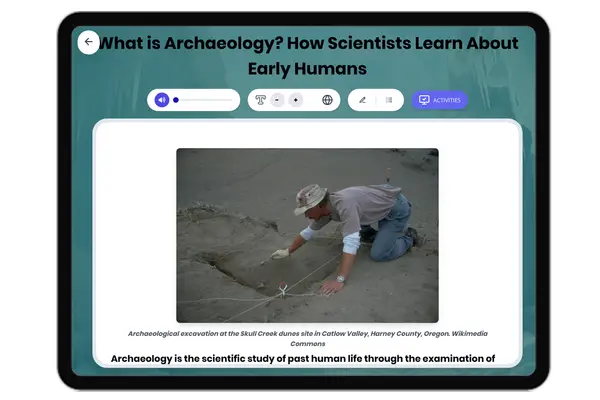
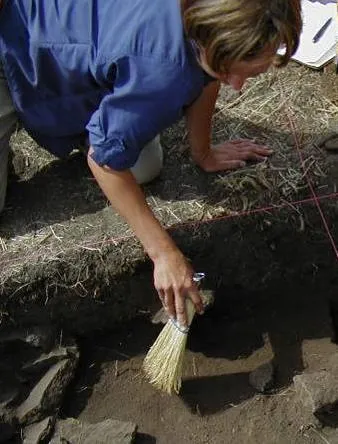
Mortar Riddle Archeological Site (archeologist working the site), Riddle Ranch National Historic District in Harney County, Oregon by Bureau of Land Management / Wikimedia Commons
Archaeologists and conservation scientists play a crucial role in protecting and restoring ancient artifacts from the past. These specialists use scientific methods to study, preserve, and sometimes repair objects left behind by earlier civilizations. Their work ensures that important pieces of human history, such as pottery, tools, and artwork, survive for future generations to study and appreciate.
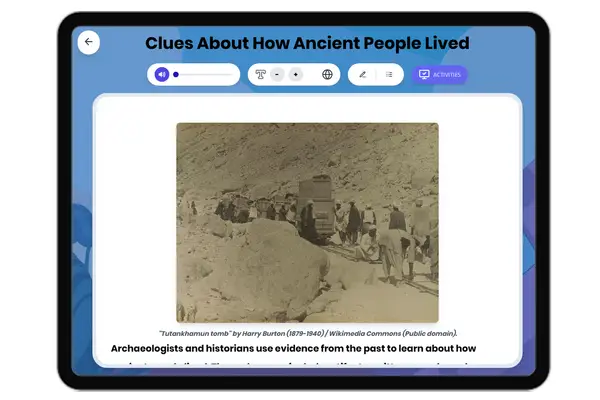
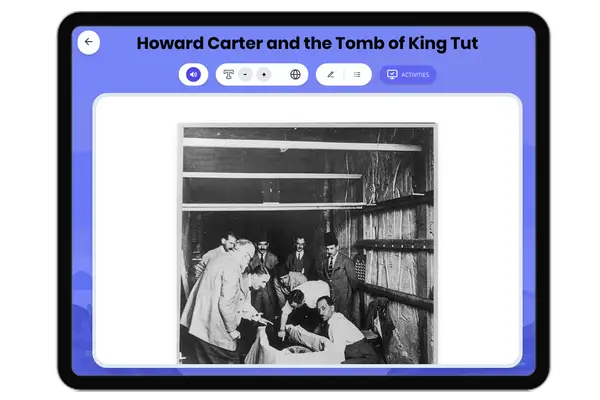
The process of protecting artifacts often begins at the excavation site. For example, when archaeologists uncovered the tomb of King Tutankhamun in Egypt in 1922, they had to work carefully to avoid damaging fragile items like gold jewelry and painted wooden chests. Scientists use tools such as brushes, dental picks, and even soft air blowers to remove dirt without harming the artifact’s surface. Context is essential: every artifact’s position in the ground reveals clues about its use and the people who made it. Removing an object without recording its context can destroy valuable evidence about ancient societies.
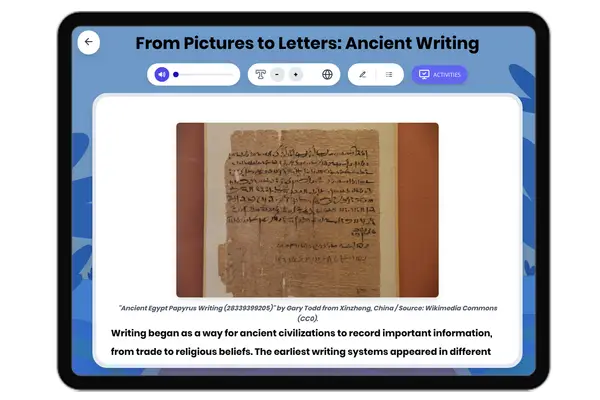
After excavation, conservationists examine artifacts in laboratories. Many ancient items are made of materials such as clay, metal, or organic substances like wood and textiles, which can deteriorate over time. To slow this process, scientists control the environment around the artifacts, adjusting temperature, humidity, and light. For fragile items, like the clay tablets inscribed with cuneiform from Mesopotamia, conservators may use gentle cleaning and chemical treatments to stabilize them. When restoring Roman mosaics, experts often use reversible adhesives so that repairs can be undone if better techniques are invented in the future.
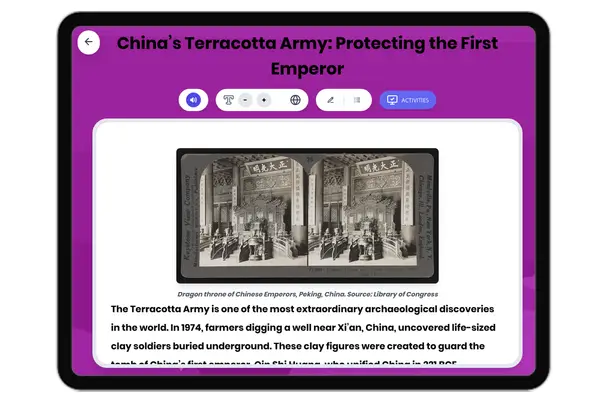
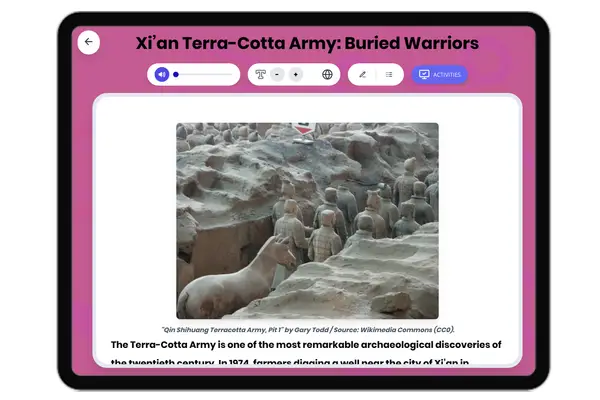
New technologies have transformed artifact conservation. High-resolution photography and 3D scanning allow researchers to record detailed images and measurements without touching the artifact. This method was used to digitally preserve the famous Terracotta Army in China, making it possible to study statues that are too delicate to move. In some cases, scientists create replicas so museums can display copies while protecting the originals in climate-controlled storage. However, ethical questions arise: should artifacts be restored to look new, or should their age and damage remain visible as part of their history?
The protection and restoration of artifacts connect us to people and cultures from long ago. By carefully documenting, preserving, and sometimes repairing these objects, scientists help us understand ancient societies, their beliefs, and daily life. This work highlights the shared responsibility to safeguard the world’s cultural heritage and teaches us about changes and continuities in human civilization.
Archaeology’s careful approach to artifacts shows how science and history connect, and how discoveries from one part of the world can influence our understanding of global history.
Interesting Fact: Some ancient artifacts, like Egyptian papyrus scrolls, are so delicate that scientists use X-rays and digital imaging to read them without ever unrolling the original document!