This learning resource is available in interactive and printable formats. The interactive worksheet can be played online and assigned to students. The Printable PDF version can be downloaded and printed for completion by hand.
This passage introduces students to the science of stratigraphy, a key archaeological method for studying the layers of the Earth to uncover human history. Students will learn how archaeologists use stratigraphy to date artifacts, reconstruct ancient civilizations, and understand how human activity has changed over time. Specific examples from sites such as Troy and Egypt’s Valley of the Kings illustrate how stratigraphic methods reveal the past. The passage is written at a rigorous, accessible level, integrates academic vocabulary, and aligns with CA HSS 6.1, Common Core RH.6-8.1–4, and TEKS 113.18. Activities include a glossary, multiple-choice quiz, writing prompts, graphic organizers, and timeline. Read aloud audio and a Spanish translation support all learners. This resource helps students analyze history like a historian while mastering key ELA skills.
CONTENT PREVIEW
Expand content preview
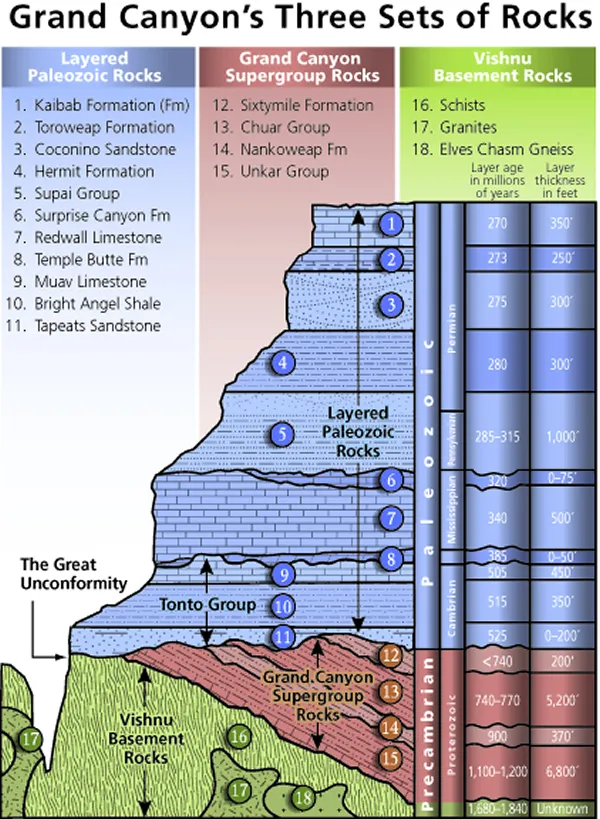
"Stratigraphy of the Grand Canyon" by Mathis, A. 2006. Grand Canyon Association, Grand Canyon, Arizona, USA. / Wikimedia Commons
Stratigraphy is the scientific method archaeologists use to study the layers of soil and rock beneath the Earth’s surface. Each layer, or stratum, contains clues about the people and environments of the past. By examining these layers, archaeologists can reconstruct the sequence of events that took place at a site, such as how a city was built, destroyed, and rebuilt over time.
The study of stratigraphy became central to archaeology in the 19th century, especially after the famous excavations at Troy by Heinrich Schliemann in the 1870s. Schliemann noticed the city had been built and rebuilt many times. By slicing through the earth and recording each layer, he identified nine distinct cities built on top of one another. This method, called relative dating, helps archaeologists determine which objects or events are older or younger, even if they do not know the exact date. For example, if a clay pot is found in a deeper layer than a stone tool, the pot is likely older.
Stratigraphy also provides evidence for change over time and human impact on the environment. In ancient Egypt’s Valley of the Kings, archaeologists found layers of tombs, tools, and even traces of floods. Each layer tells a story: some show periods of wealth and powerful rulers, while others reveal times of decline or disaster. These patterns show how civilizations rise and fall and how their actions, like building large monuments or changing the landscape, leave lasting marks in the earth.
Interpreting stratigraphy is not always simple. Natural events like earthquakes or floods can mix layers. People sometimes dig pits or build wells, disturbing older soils. Archaeologists must carefully record the context of each find, noting its exact position and relationship to other objects. Technology such as radiocarbon dating and digital mapping helps experts confirm their interpretations. Sometimes, debates occur when scholars disagree about what the layers mean or which came first. New discoveries and better methods often lead to revised conclusions.
Stratigraphy connects geography and history. The location of a site and its layers reveal how humans adapted to their environment, managed resources, and responded to challenges. Archaeological sites like Troy, Pompeii, and the Valley of the Kings demonstrate that understanding the earth’s layers is essential to uncovering our shared human story.
This method has shaped the way archaeologists study the past, revealing social hierarchy, daily life, and the long-term effects of human activity. By reading the earth’s layers, we gain insight into how people lived, worked, and faced challenges across thousands of years. Stratigraphy continues to be a powerful tool for connecting evidence from the ground with the broader themes of ancient history and human development.
Interesting Fact: The word “stratigraphy” comes from the Latin “stratum,” meaning “layer,” and “-graphy,” meaning “writing” or “recording,” because it records the history of the Earth in layers.
What is stratigraphy?
Study of earth’s layersMaking mapsBuilding citiesWriting stories
Who excavated Troy in the 1870s?
Heinrich SchliemannHoward CarterJane GoodallLeonardo da Vinci
Where did archaeologists find layers of tombs?
Valley of the KingsPompeiiStonehengeGreat Wall of China
What does relative dating help with?
Telling older or younger objectsBuilding pyramidsGrowing cropsMaking laws
Why can interpreting layers be difficult?
Natural events mix layersAll layers look the sameTools are missingLayers are small
What does stratigraphy reveal about ancient peoples?
Social hierarchy and daily lifeModern citiesAnimal migrationCurrent technology
Stratigraphy only studies animals. True or false?
TrueFalse
What is a stratum?
A layer of earthA type of artifactA digging toolA city wall
Perfect For:
👩🏫 Teachers
• Reading comprehension practice
• Auto-graded assessments
• Literacy skill development
👨👩👧👦 Parents
• Reading practice at home
• Comprehension improvement
• Educational reading time
🏠 Homeschoolers
• Reading curriculum support
• Independent reading practice
• Progress monitoring
Reading Features:
📖
Reading Passage
Engaging fiction or nonfiction text
❓
Comprehension Quiz
Auto-graded questions
📊
Instant Feedback
Immediate results and scoring
📄
Printable Version
Download for offline reading
🔊
Read Aloud
Voice-over with word highlighting
Reviews & Ratings
No reviews yet. Be the first to share your experience!
Related Content
Underwater Archaeology: Discovering Shipwrecks
This engaging passage explores the field of underwater archaeology, focusing on the discovery and study of ancient shipw...
What is Archaeology?
This engaging passage introduces students to the science of archaeology and how it helps us understand early humans and ...
Evidence in Ancient History
This engaging history reading passage investigates how archaeologists and historians discover clues about how ancient pe...
Protecting and Restoring Ancient Artifacts
This engaging passage explores how scientists, especially archaeologists and conservators, protect and restore artifacts...
Dating Ancient Artifacts
This passage explores the scientific methods used by archaeologists to determine the age of artifacts, such as radiocarb...
Terracotta Army China
This passage examines the remarkable discovery of China’s Terracotta Army, one of the world’s most famous archaeological...
Dead Sea Scrolls: Hidden Texts
This passage explores the remarkable discovery of the Dead Sea Scrolls, one of history’s most significant archaeological...
Paying Taxes in Ancient Times
This reading passage explores the origins and practices of taxation in ancient civilizations, focusing on how early gove...
Ancient Theocracy
This engaging history reading passage explores the concept of theocracy in ancient civilizations, where priests and reli...
Discovery of Rosetta stone
This engaging history reading passage explores the remarkable discovery of the Rosetta Stone and its impact on the study...
Social structures in Ancient World
This passage explores the organization and significance of family life in ancient societies, focusing on how extended fa...
Pompeii: A City Frozen in Time
This engaging passage explores the ancient Roman city of Pompeii, which was buried by the eruption of Mount Vesuvius in ...
Trade in the Ancient World
This reading passage delves into the dynamic world of trade among ancient civilizations, focusing on the Silk Road, Medi...
Ancient Canaan
This educational passage explores the land of Canaan, the historical homeland of the ancient Israelites. Students will l...
Ancient Literature
This passage explores the importance of ancient stories and poems from civilizations such as Greece, India, and Israel. ...
Terracotta Army
This passage explores the fascinating discovery of the Terra-Cotta Army near Xi’an, China, and its significance in ancie...
Howard Carter and the Tomb of King Tut
This detailed history reading passage explores the remarkable discovery of King Tutankhamun's tomb by Howard Carter in 1...
Geography of Ancient Israel
This passage explores the rich geography of Ancient Israel, focusing on how landforms, climate, and natural resources sh...
Ancient Writing Systems
This engaging history reading passage explores the origins and evolution of ancient writing systems, including cuneiform...