Energy for Living Things
Interactive passage with audio narration, comprehension questions, and printable PDF.
By completing this purchase you agree to our Terms of Use and Privacy Policy. Your subscription renews automatically until you cancel. You can cancel anytime from your account settings. All sales are final and non-refundable. Digital content is available for download in your account immediately upon purchase.
What's included
Energy for Living Things preview and details
About this printable Energy for Living Things science reading passage, NGSS-aligned (Grades 4-6)
Sample passage and quiz from Energy for Living Things
Reading passage and comprehension quiz preview
Energy for Living Things
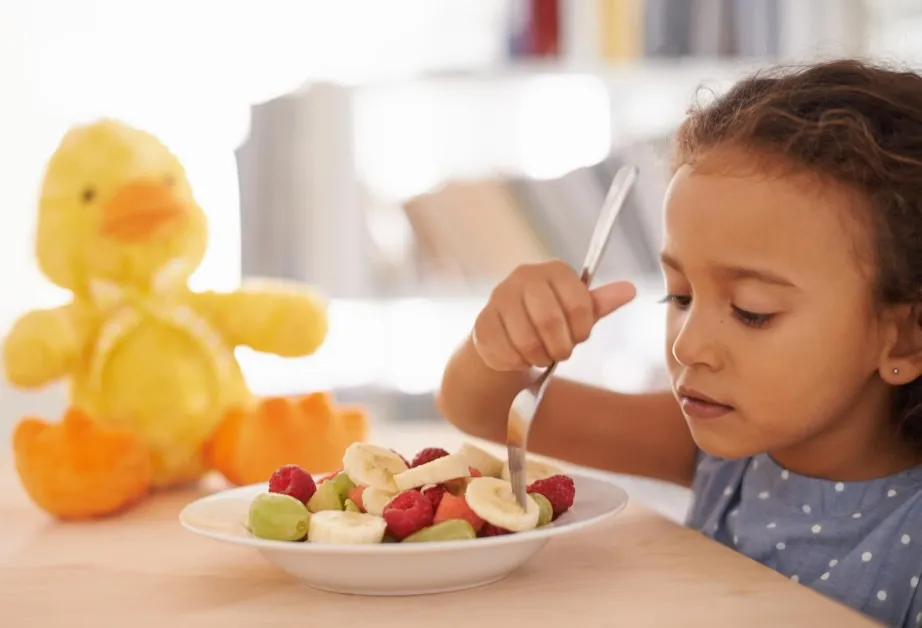
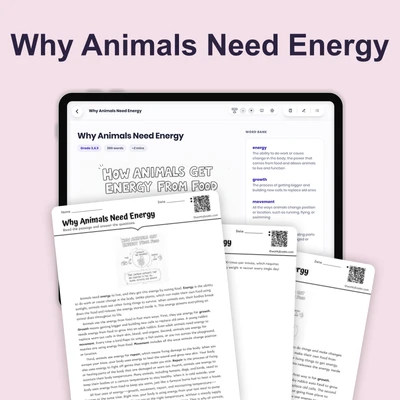
All living things need energy to survive. Energy is the ability to do work or cause change. Without energy, plants, animals, and people cannot grow, move, or stay alive. This energy is essential because it powers everything that happens inside living bodies.
Living things get their energy from food. When you eat an apple, a sandwich, or vegetables, your body breaks down the food into tiny parts called nutrients. Nutrients are substances in food that provide energy and help the body grow and repair itself. Your body uses these nutrients to create the energy it needs for all its activities.
Every part of your body needs energy to work properly. Your heart needs energy to pump blood throughout your body. Your muscles need energy to help you run, jump, and play. Even when you are sitting still or sleeping, your body uses energy to breathe, keep warm, and repair damaged cells. Cells are the smallest living parts that make up all living things. Think of energy like fuel for a car—without fuel, the car cannot run, and without energy, your body cannot function.
Different living things get their energy in different ways. Plants make their own food using sunlight, water, and air in a process that produces the nutrients they need. Animals, including humans, must eat other living things to get energy. A rabbit eats plants, a hawk eats rabbits, and each one gets the energy it needs to survive from its food.
The amount of energy a living thing needs depends on what it does. Active animals that run and hunt need more energy than animals that move slowly. Growing children need more energy than adults because their bodies are building new cells and tissues. Your body is constantly using energy, which is why you need to eat food every day. Without a steady supply of energy from food, living things cannot carry out the basic life functions they need to survive. Life functions are the essential activities that all living things must do, such as growing, moving, and responding to their environment.
Interesting Fact: Your brain uses about 20% of all the energy your body gets from food, even though it only makes up about 2% of your body weight!
Comprehension quiz (8 questions)
1. What is energy?
2. What are nutrients?
3. Where do animals get their energy?
4. Why do growing children need energy?
5. How does your body use energy?
6. What happens without a steady energy supply?
7. Your body uses energy even when sleeping.
8. Cells are:
Perfect for the way you teach
- Build comprehension skills
- Auto-graded quiz
- Differentiated reading
- Read together at home
- Improve fluency
- Quiet reading time
- Reading curriculum support
- Independent practice
- Track Lexile growth