How Consumers Get Food
Interactive passage with audio narration, comprehension questions, and printable PDF.
By completing this purchase you agree to our Terms of Use and Privacy Policy. Your subscription renews automatically until you cancel. You can cancel anytime from your account settings. All sales are final and non-refundable. Digital content is available for download in your account immediately upon purchase.
What's included
How Consumers Get Food preview and details
About this printable How Consumers Get Food science reading passage, NGSS-aligned (Grades 4-6)
Sample passage and quiz from How Consumers Get Food
Reading passage and comprehension quiz preview
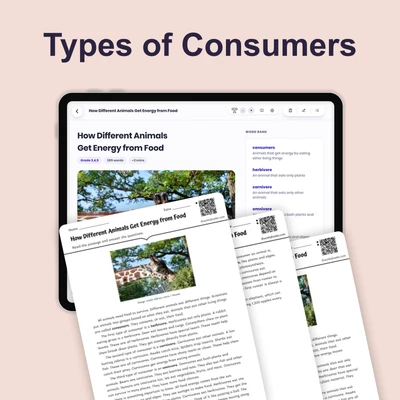
How Consumers Get Food
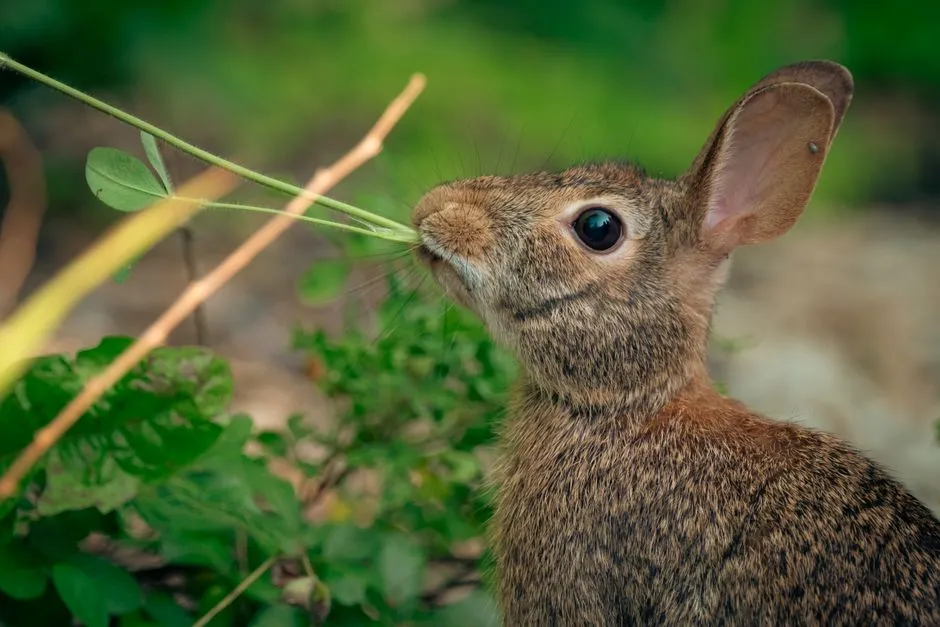
Consumers are animals that cannot make their own food. Unlike plants that use sunlight to create food, consumers must eat other living things to get the energy they need to survive. This matters because every animal on Earth depends on eating other organisms to stay alive and grow.
All consumers need energy to move, grow, and carry out life processes. Energy is the ability to do work or cause change. Animals get this energy by eating plants or other animals. When a deer eats grass, it gets energy that was stored in the grass. When a hawk eats a mouse, it gets energy that was stored in the mouse's body. This transfer of energy from one organism to another is how life continues in nature.
There are different types of consumers based on what they eat. Herbivores are consumers that eat only plants. Rabbits, cows, and caterpillars are herbivores. They get their energy directly from producers, which are organisms like plants that make their own food. Carnivores are consumers that eat only other animals. Lions, hawks, and spiders are carnivores. They get energy that originally came from plants but passed through other animals first.
Some consumers eat both plants and animals. These are called omnivores. Bears, raccoons, and humans are omnivores. This eating pattern gives them more food choices and helps them survive in different environments. Think of omnivores like people at a buffet who can choose from many different foods instead of being limited to just one type.
All consumers depend on producers or other consumers for survival. Without plants making food from sunlight, herbivores would have nothing to eat. Without herbivores, carnivores would have no prey. This connection shows how important each organism is in the flow of energy through nature. Every consumer plays a role in moving energy from one living thing to another, creating a web of life that connects all organisms together.
Interesting Fact: A hummingbird must eat about half its body weight in nectar every day to get enough energy to power its incredibly fast wings, which can beat up to 80 times per second!
Comprehension quiz (8 questions)
1. What are consumers?
2. How do animals get energy?
3. What do herbivores eat?
4. Why do omnivores have better survival?
5. What would happen without producers?
6. How does energy move in nature?
7. Consumers can make their own food.
8. What is energy?
Perfect for the way you teach
- Build comprehension skills
- Auto-graded quiz
- Differentiated reading
- Read together at home
- Improve fluency
- Quiet reading time
- Reading curriculum support
- Independent practice
- Track Lexile growth