What Kind of Energy Is Stored in Food
Interactive passage with audio narration, comprehension questions, and printable PDF.
By completing this purchase you agree to our Terms of Use and Privacy Policy. Your subscription renews automatically until you cancel. You can cancel anytime from your account settings. All sales are final and non-refundable. Digital content is available for download in your account immediately upon purchase.
What's included
What Kind of Energy Is Stored in Food preview and details
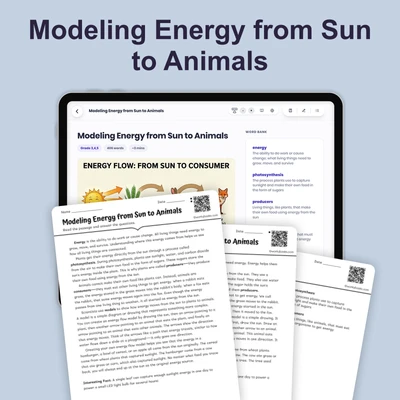
About this printable What Kind of Energy Is Stored in Food science reading passage, NGSS-aligned (Grades 4-6)
Sample passage and quiz from What Kind of Energy Is Stored in Food
Reading passage and comprehension quiz preview
How Food Contains Energy
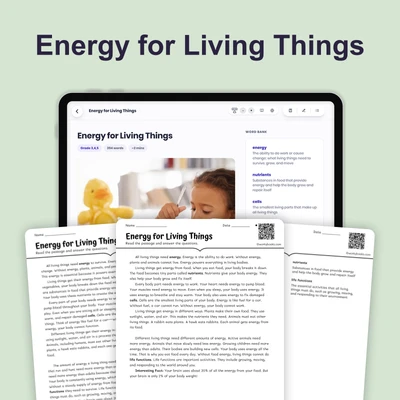
Energy is the ability to do work or cause change. All living things need energy to survive, grow, and move. Food is not just something we eat when we are hungry—it is stored energy that powers our bodies.
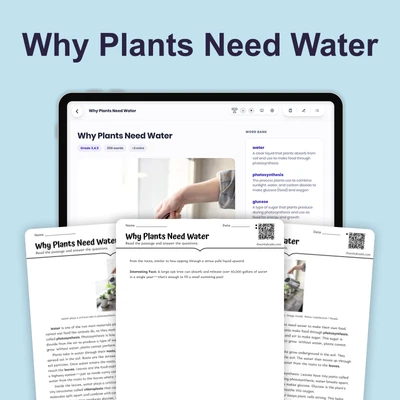
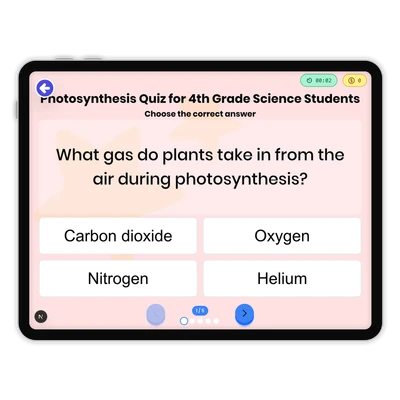
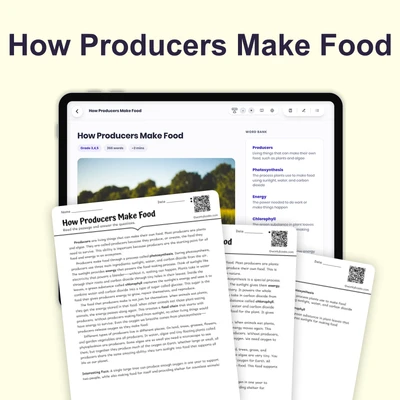
Plants are the starting point for most food energy on Earth. Through a process called photosynthesis, plants use energy from sunlight to make their own food. During photosynthesis, plants take in carbon dioxide from the air and water from the soil. They use the sun's energy to change these materials into a type of sugar called glucose. This glucose stores the sun's energy in a form that can be used later. Plants store this energy in their leaves, stems, roots, and fruits.
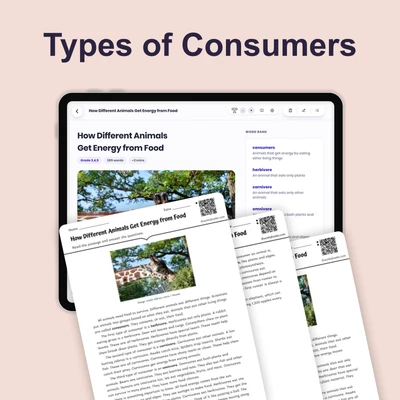
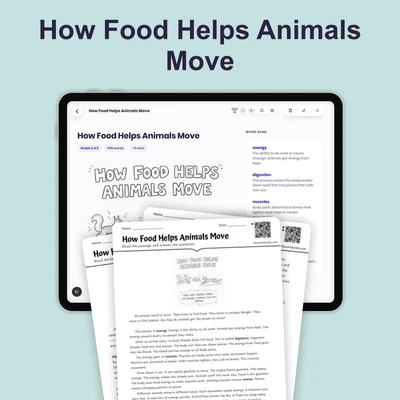
When animals eat plants, they get the stored energy. Inside an animal's body, food is broken down through a process called digestion. When animals digest food, they break it into smaller pieces that can enter their cells. The cells then release the stored energy from the food molecules. This released energy powers everything the animal does—running, breathing, thinking, and growing.
The energy in food is called chemical energy because it is stored in the bonds that hold food molecules together. Think of it like a battery that stores energy until you need it. When you eat breakfast, your body breaks down the food and releases the stored energy, giving you the power to learn and play throughout the school day. Without food, your body would not have the energy it needs to function.
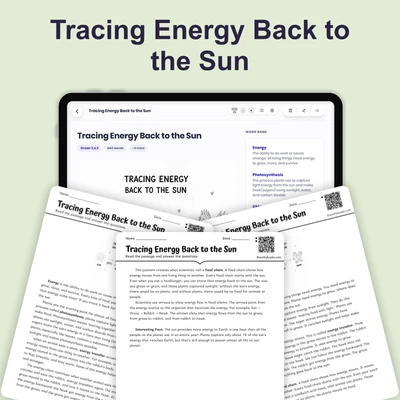
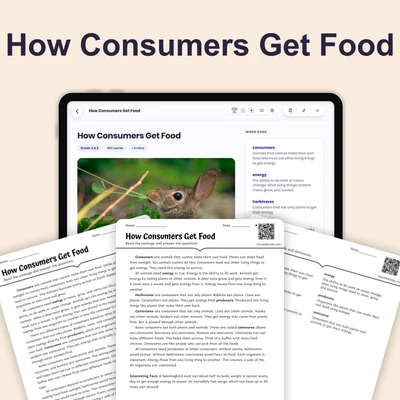
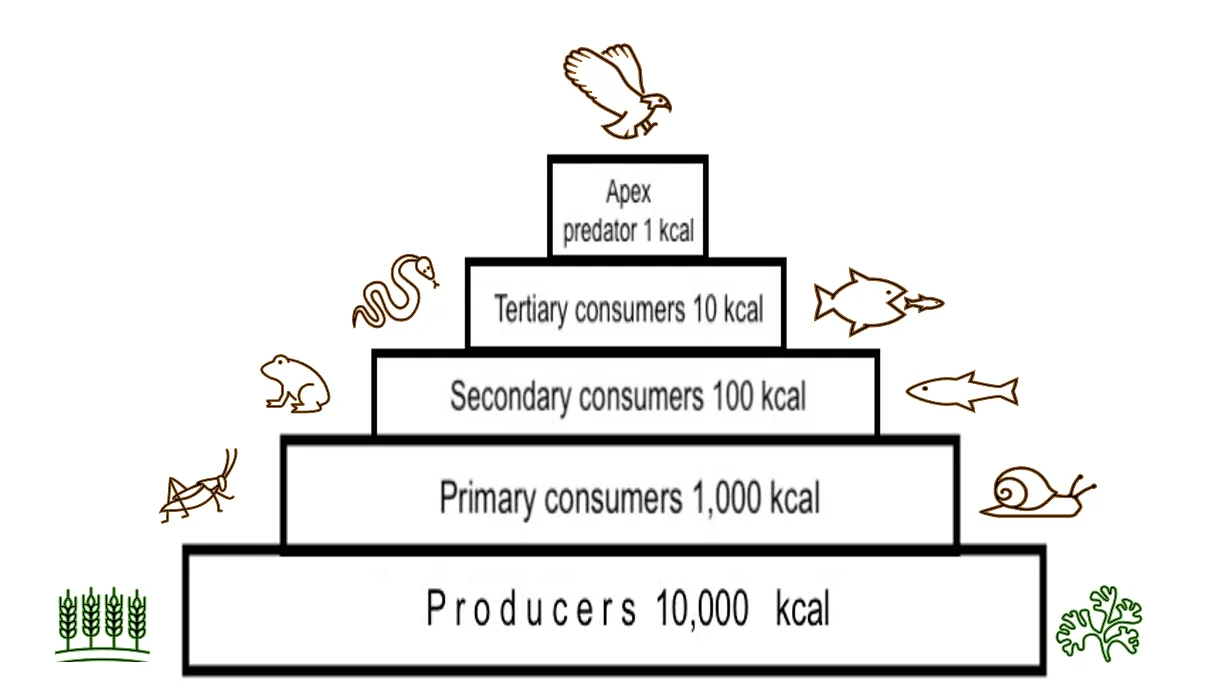
Animals that eat other animals also get their energy from food. However, that energy originally came from plants. A mouse eats seeds and stores the plant's energy in its body. When a hawk eats the mouse, the hawk gets that stored energy. No matter how many steps there are, all food energy can be traced back to the sun and photosynthesis in plants.
Interesting Fact: A single slice of bread contains about 80 calories of energy, which is enough to power your brain for about one hour of thinking!
Comprehension quiz (8 questions)
1. What is energy?
2. What do plants make during photosynthesis?
3. Where do plants store energy?
4. Why does eating breakfast give you energy?
5. How does a hawk get energy?
6. What happens when animals digest food?
7. All food energy originally comes from plants.
8. What is chemical energy?
Perfect for the way you teach
- Build comprehension skills
- Auto-graded quiz
- Differentiated reading
- Read together at home
- Improve fluency
- Quiet reading time
- Reading curriculum support
- Independent practice
- Track Lexile growth