This learning resource is available in interactive and printable formats. The interactive worksheet can be played online and assigned to students. The Printable PDF version can be downloaded and printed for completion by hand.
This engaging non-fiction reading passage explores the fascinating journey from the ancient Celtic festival of Samhain to the modern celebration of Halloween. Students will discover how people marked the end of harvest, honored spirits, and how traditions changed as different cultures blended over centuries. The passage includes a glossary of key terms, a Spanish translation, and a reading comprehension quiz to build foundational literacy and social studies skills. Activities encourage students to explore cultural significance, compare past and present, and understand cause and effect relationships. Also included are a writing prompt and a graphic organizer to deepen understanding. The resource supports ELA standards RI.4.3, RI.4.4, and W.4.2, and features a colorful public domain image, a prompt for a Halloween-themed coloring page, and options for read aloud audio and Spanish translation. Ideal for classrooms studying cultural events and holiday traditions.
CONTENT PREVIEW
Expand content preview
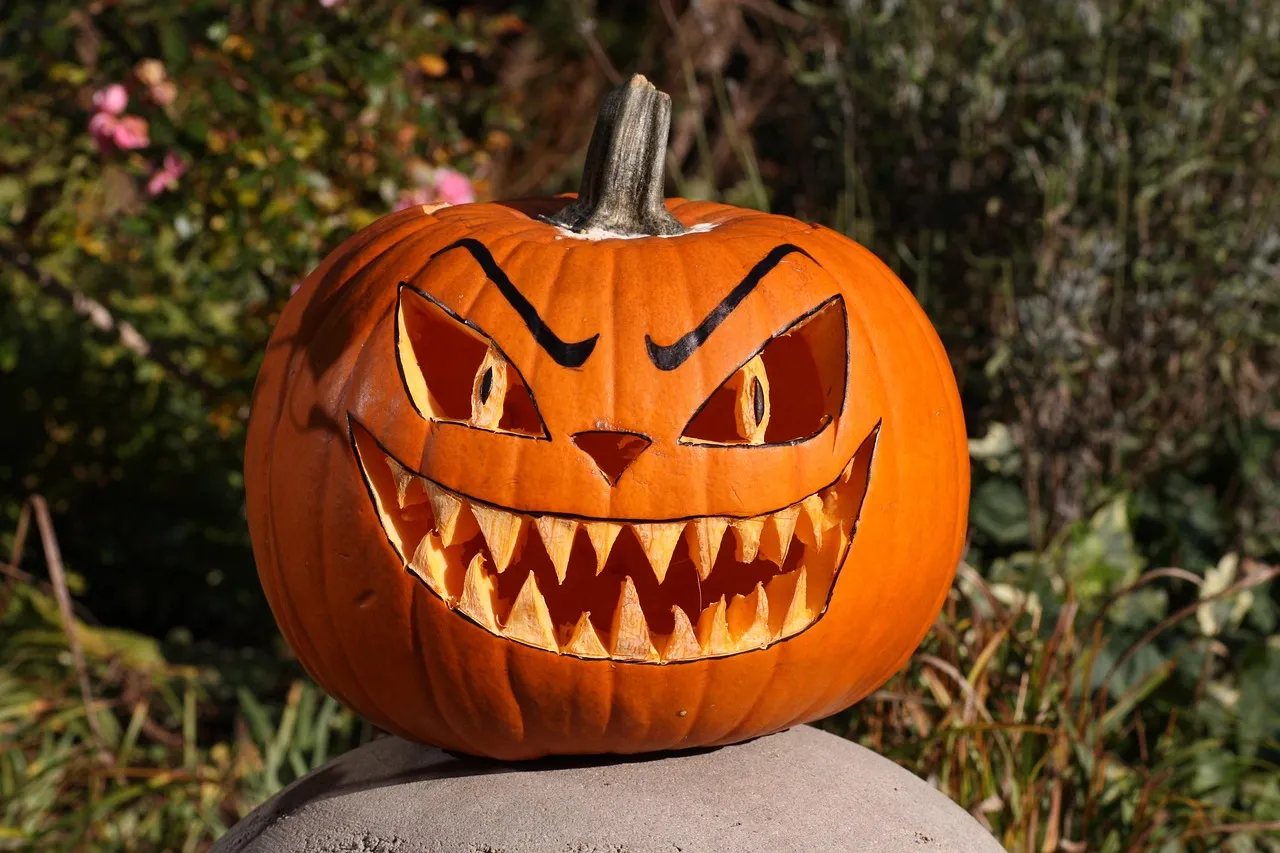
Customs like carving pumpkins into jack-o'-lanterns are popular on Halloween" by mainblick / Pixabay.
Halloween is a popular holiday celebrated in many countries every year on October 31. But did you know Halloween started as an ancient festival called Samhain (pronounced "SOW-in")?
Long ago, the Celts lived in parts of Ireland, Scotland, and England. These people followed the seasons closely. Their year ended with harvest time, when crops were picked and fields were empty. On the night of October 31, the Celts celebrated Samhain. They believed this was a special time when the line between the world of the living and the world of spirits was thin. People thought friendly and unfriendly spirits could visit them on this night.
To keep safe, families would light big bonfires and wear costumes made from animal skins. The costumes helped to fool any spirits. People also left out food for passing spirits, hoping to keep them happy. This was a time for gathering together and sharing stories. It was a way for people to feel safe and connected.
When the Romans came to Celtic lands, they brought their own festivals. One honored Pomona, the goddess of fruit and trees. Over time, Roman and Celtic traditions mixed. Later, the Christian church created All Saints’ Day on November 1 and All Hallows’ Eve on October 31. People still remembered Samhain and mixed old customs with new ones. The name “Halloween” comes from “All Hallows’ Eve.”
As years passed, people moved from Europe to America. They brought their Halloween traditions with them. In America, new customs grew popular, like carving pumpkins into jack-o'-lanterns and going trick-or-treating. Children would dress up in costumes and visit neighbors, asking for treats. Towns held parties and played games, like bobbing for apples. Today, Halloween is a time for fun, creativity, and sharing spooky stories. People decorate their homes, carve faces into pumpkins, and celebrate with friends and family.
Halloween teaches us about change and tradition. It shows how people from different times and places can share ideas. When we celebrate Halloween, we remember both the past and the present. It is a time to enjoy being together and to learn about history.
Interesting Fact: In Ireland, people first carved turnips, not pumpkins, to make lanterns for Samhain.
What was Halloween first called?
SamhainHarvestAll SaintsPomona
Where did the Celts live?
Ireland, Scotland, EnglandAmericaSpainAustralia
When is Halloween celebrated?
October 31November 1December 25March 17
Why did Celts wear costumes?
To fool spiritsTo look prettyFor summerTo play sports
What did Romans bring to Celtic lands?
Their own festivalsCarved pumpkinsToysCandy
How did Halloween change in America?
By adding new customsBy ending the holidayBy making it in summerBy only adults celebrating
The Celts celebrated Samhain in summer. True or false?
TrueFalse
What is a jack-o'-lantern?
A carved pumpkinA type of candyA costumeA spirit
Perfect For:
👩🏫 Teachers
• Reading comprehension practice
• Auto-graded assessments
• Literacy skill development
👨👩👧👦 Parents
• Reading practice at home
• Comprehension improvement
• Educational reading time
🏠 Homeschoolers
• Reading curriculum support
• Independent reading practice
• Progress monitoring
Reading Features:
📖
Reading Passage
Engaging fiction or nonfiction text
❓
Comprehension Quiz
Auto-graded questions
📊
Instant Feedback
Immediate results and scoring
📄
Printable Version
Download for offline reading
🔊
Read Aloud
Voice-over with word highlighting
Reviews & Ratings
No reviews yet. Be the first to share your experience!
Related Content
Informational Text —Healthy Teeth and Gums
RI.4.10RI.4.3RF.4.4RF.4.4.A
Informational Text —Migratory Birds
Engage young minds with this worksheet that delves into the wonders of migratory birds. Learn about their extraordinary ...
RI.4.10RI.4.3RF.4.4RF.4.4.A
Informational Text —All About Dentists
Students read an informational text explaining what dentists do and how they are trained. Aligned to RI.4.3-2
RI.4.10RI.4.3RF.4.4RF.4.4.A
Pollination: A Crucial Ecosystem Service
Explore the vital role of pollination beyond plant reproduction, as it sustains ecosystems by ensuring food security, pr...
RI.4.2RI.4.3RI.4.4RI.5.1
The States of Matter: Solid
Discover the differences between solids, liquids and gases by exploring how their particles are arranged and move. This ...
RI.4.2RI.4.3RI.4.4RI.5.1
What is a Simple Machine
Discover the power of simple machines! This informational text explores how basic tools like levers, pulleys and incline...
RI.4.2RI.4.3RI.4.4RI.5.1
The Role of Pollinators in Nature
Learn about the fascinating world of pollinators and discover their crucial role in the reproductive process of flowerin...
RI.4.2RI.4.3RI.4.4RI.5.1
Seed Dispersal: How Plants Travel
Plants may seem stationary, but their seeds have amazing ways to travel! Explore the fascinating world of seed dispersal...
RI.4.2RI.4.3RI.4.4RI.5.1
What is Milky Way
This engaging passage introduces Grade 4-5 students to the Milky Way, our home galaxy. Students will learn that the Milk...
5-ESS1-15-ESS1-2RI.3.1RI.3.4
Andromeda Galaxy
This engaging science passage introduces Grade 4-5 students to the Andromeda Galaxy, our closest large galactic neighbor...
5-ESS1-15-ESS1-2RI.3.1RI.3.4
Bats in the Night
This informative first-grade reading passage delves into the intriguing world of bats, highlighting their nocturnal natu...
RI.3.1RI.4.4RI.4.3
Malala Yousafzai
This Grade 4-5 science reading passage introduces students to Malala Yousafzai, a courageous young woman from Pakistan w...
NGSSRI.3.1RI.3.2RI.4.3
Understanding Biological Evolution and Diversity
This passage addresses the NGSS standard 3-LS4-2 focusing on biological evolution and the unity and diversity of life. T...
RI.3.3RI.4.3RI.5.33-LS4-2
Early Life Forms and Their Adaptations
This educational passage focuses on early life forms and their basic adaptations, supporting NGSS standard 3-LS4-2 for e...
RI.3.3RI.4.3RI.5.33-LS4-2
Simple Machines: How They Work
Students read an informative paragraph on simple machines and fill in key technical vocabulary terms to demonstrate unde...
RI.4.2RI.4.3RI.4.4RI.5.1
Longhouses of the Eastern Woodlands
This engaging U.S. history reading passage explores the longhouses of the Eastern Woodlands, focusing on the Iroquois an...
D2.HIS.1-6.3-5RI.4.1RI.4.3
Traditional Native American Clothing
This engaging history passage explores traditional Native American clothing and how it reflected the environment, values...
D2.HIS.2.3-5D2.HIS.3.3-5RI.4.3RI.4.4
The Iroquois Confederacy: A System of Peace
This engaging U.S. History reading passage introduces students to the Iroquois Confederacy, a powerful alliance of Nativ...
D2.HIS.2.3-5D2.HIS.3.3-5RI.4.3RI.4.4
Trade and Trading Routes Between Tribes
This engaging history reading passage explores the important role of trade and trading routes between Native American tr...
D2.HIS.1-4.3-5RI.4.1RI.4.3RI.4.4
The Sioux: Warriors and Tribal Leaders
This history reading passage explores the Sioux Nation, focusing on their roles as warriors and tribal leaders. Students...