Government in Mesopotamia and Egypt — Reading Comprehension
Rate this
Premium Resource
Present
Present in classroom. No work saved
Assign
Classroom with student accounts, Track progress
Quick Play
No student accounts, assign with a link
Grades
6
7
8
PRINT+DIGITAL RESOURCE
This learning resource is available in interactive and printable formats. The interactive worksheet can be played online and assigned to students. The Printable PDF version can be downloaded and printed for completion by hand.
This engaging history reading passage explores the question: Who held power in ancient times? Students will discover how power was distributed among nobles, priests, officials, and warriors in ancient civilizations such as Egypt, Mesopotamia, and China. The passage uses archaeological and primary sources to illustrate the roles of these groups and how their influence shaped society and governance. Key vocabulary is integrated and explained for academic rigor. Activities include a quiz, writing prompts, two graphic organizers, and a timeline. The passage is aligned with standards 6.1, 6.2, and RH.6-8.1. A Spanish translation and read aloud audio are provided to support diverse learners. Students will analyze the impact of power structures on daily life and continuity and change over time, strengthening both historical thinking and reading comprehension skills.
CONTENT PREVIEW
Expand content preview
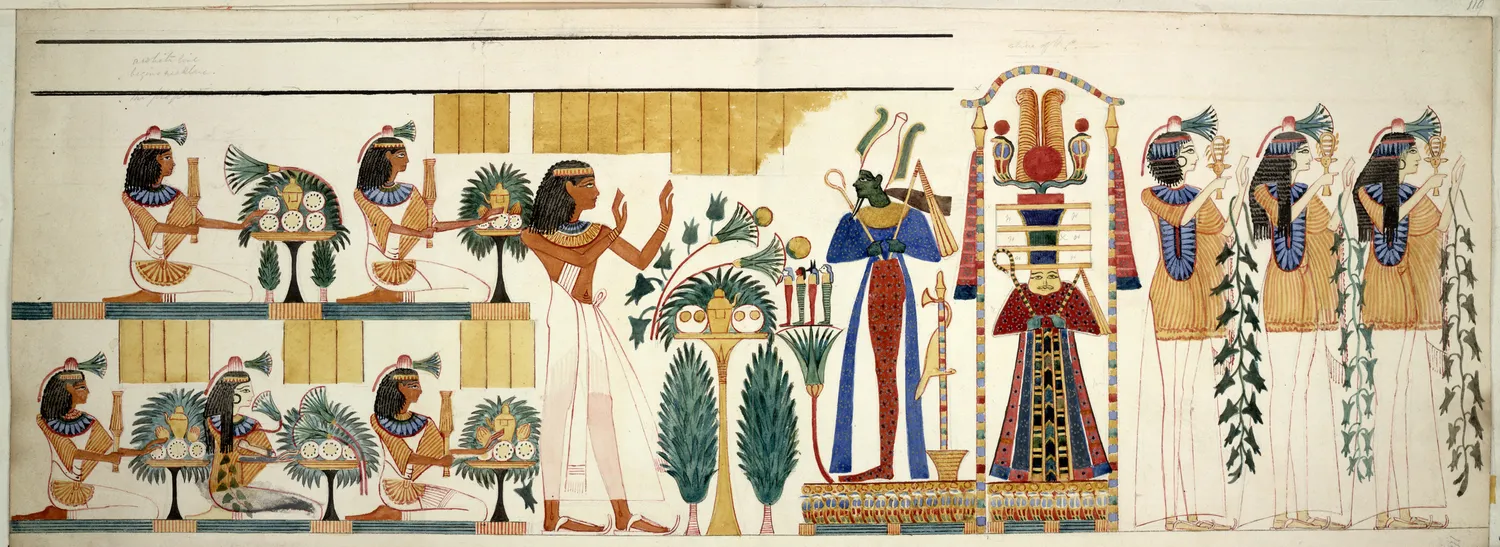
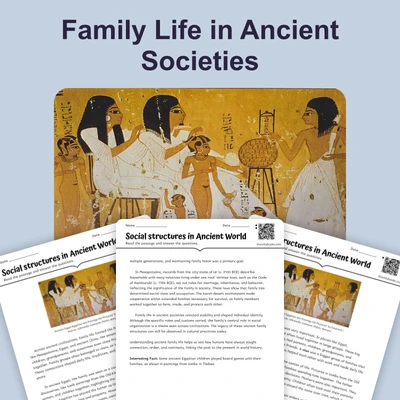
"Egyptian tomb wall-painting - Egyptian Collections, Vol. XI (1826-1838), f.118 - BL Add MS 29822" / Source: Wikimedia Commons (CC0).
Across the ancient world, the power to rule and make major decisions was usually held by a small group of people. In civilizations such as Egypt, Mesopotamia, and ancient China, leaders divided their societies into levels known as a social hierarchy. This hierarchy determined who had authority, who made laws, and who benefited most from society’s resources.
At the very top of the social order stood rulers like pharaohs in Egypt or kings in Mesopotamia. These leaders claimed their right to rule through divine authority, meaning they said the gods had chosen them. Pharaoh Ramses II, for example, ruled Egypt for over 60 years beginning in 1279 BCE and was often depicted in temple carvings as chosen by the gods. Early Chinese emperors, such as those of the Shang Dynasty (about 1600–1046 BCE), also claimed to rule with the Mandate of Heaven, a belief that their power came from a higher spiritual force.
Beneath the rulers were groups who supported and advised them, including nobles, priests, officials, and warriors. Nobles were often landowners who provided military service and resources. Priests played a critical role, especially in Egypt and Mesopotamia, where religion was central to daily life. They led ceremonies, interpreted the gods’ will, and controlled temple wealth. Officials managed day-to-day affairs like collecting taxes and enforcing laws. Warriors protected the civilization and expanded its territory; the Assyrian Empire, for example, became powerful in the first millennium BCE due to its skilled and organized army.
Archaeological records, such as the tomb paintings in Egypt and cuneiform tablets from Mesopotamia, show the importance of these groups. One cuneiform tablet from the city of Ur (about 2100 BCE) records land given by a king to a noble, demonstrating how power and land were closely linked. Despite differences between civilizations, most shared a system where power was concentrated among elites. Over time, some societies saw changes. For example, in ancient Athens, ordinary citizens eventually gained more influence through assemblies and voting, challenging the traditional hierarchy.
These ancient power structures affected daily life, laws, religion, and even what people could eat or wear. Geography also played a role: civilizations with fertile land or rivers, like the Nile or Tigris-Euphrates, could support large populations and complex governments. Understanding who held power helps explain how ancient societies were organized and how their legacies shape our world today.
Interesting Fact: Did you know? In ancient Egypt, priests sometimes became so wealthy and powerful that they rivaled the pharaohs themselves!
Who ruled Egypt for over 60 years?
Ramses IIHammurabiKing TutSargon
What did the Mandate of Heaven justify?
Chinese rulers' powerEgyptian temple designTrade in AthensGreek gods' names
Which group controlled temple wealth?
PriestsWarriorsArtisansFarmers
Why were warriors important?
Protected and expanded territoryBuilt templesWrote lawsTaught religion
What effect did fertile land have?
Allowed large populationsCaused warsCreated mountainsReduced trade
How did Athens change over time?
Gave citizens more powerBanned all votingLost all landEnded religion
Priests sometimes rivaled pharaohs in power. True or false?
TrueFalse
What is a social hierarchy?
A ranking of people by powerA kind of ancient foodA type of riverA farming method
Perfect For:
👩🏫 Teachers
• Reading comprehension practice
• Auto-graded assessments
• Literacy skill development
👨👩👧👦 Parents
• Reading practice at home
• Comprehension improvement
• Educational reading time
🏠 Homeschoolers
• Reading curriculum support
• Independent reading practice
• Progress monitoring
Reading Features:
📖
Reading Passage
Engaging fiction or nonfiction text
❓
Comprehension Quiz
Auto-graded questions
📊
Instant Feedback
Immediate results and scoring
📄
Printable Version
Download for offline reading
🔊
Read Aloud
Voice-over with word highlighting
Reviews & Ratings
No reviews yet. Be the first to share your experience!
Related Content
Ancient Civilizations and the Environment
This engaging history reading passage explores how ancient civilizations such as Mesopotamia, Egypt, and the Maya adapte...
Gender Roles in Ancient Civilizations
This engaging history reading passage explores the roles of men and women in various ancient civilizations, including Me...
Writing Prompts Ancient Civilizations
Step into the shoes of an archaeologist with this engaging worksheet focused on ancient civilizations. Students will be ...
W.5.2.A-2W.5.1.CW.5.1.D
Power and Authority in Ancient Civilizations
This passage explores the roles of men in positions of power within ancient civilizations, focusing on their authority i...
Evidence in Ancient History
This engaging history reading passage investigates how archaeologists and historians discover clues about how ancient pe...
Ancient Monarchy
This reading passage explores the concept of monarchy in ancient civilizations, focusing on the origins, structure, and ...
Ancient Theocracy
This engaging history reading passage explores the concept of theocracy in ancient civilizations, where priests and reli...
Ancient Mathematics
This passage explores the essential role of mathematics in ancient civilizations, including Mesopotamia, Egypt, Greece, ...
Ancient Canaan
This educational passage explores the land of Canaan, the historical homeland of the ancient Israelites. Students will l...
Ancient Money Barter
This passage explores the fascinating evolution from barter to the earliest coins in ancient civilizations, focusing on ...
Ancient Science and Medicine
This comprehensive reading passage explores the development of science and medicine in ancient civilizations, including ...
Ancient Literature
This passage explores the importance of ancient stories and poems from civilizations such as Greece, India, and Israel. ...
Ancient Agriculture Farming
This passage explores the transformative impact of farming on ancient societies, examining how the Neolithic Revolution ...
Ancient Writing Systems
This engaging history reading passage explores the origins and evolution of ancient writing systems, including cuneiform...
Geography of Ancient Israel
This passage explores the rich geography of Ancient Israel, focusing on how landforms, climate, and natural resources sh...
Slavery Across Civilizations
This detailed history reading passage explores the role and impact of slavery across several ancient civilizations, incl...
Social Classes in Ancient Societies
This passage explores the concept of social hierarchies in ancient civilizations, focusing on why societies such as Meso...
Social structures in Ancient World
This passage explores the organization and significance of family life in ancient societies, focusing on how extended fa...
Polytheism and Monotheism in Ancient Times
This passage explores the religious beliefs of ancient civilizations, focusing on the differences and similarities betwe...
Women in Ancient Societies
This reading passage explores the complex roles of women in the ancient world, focusing on civilizations such as Mesopot...