This learning resource is available in interactive and printable formats. The interactive worksheet can be played online and assigned to students. The Printable PDF version can be downloaded and printed for completion by hand.
This engaging passage introduces students to the griots of West Africa, who played a crucial role in preserving history through oral storytelling. Students learn how griots used memory, music, and poetry to record the achievements of empires like Mali and Ghana. The text explores the social status of griots, their training, and their impact on cultural continuity. It includes primary source references, cause-and-effect relationships, and changes over time, aligned to history standards 6.4 and RH.6-8.2. This passage is ideal for students exploring ancient civilizations, social hierarchies, and the importance of oral tradition. Activities include a multiple-choice quiz, writing prompts, and graphic organizers. Read-aloud audio and a Spanish translation are provided for accessibility. The passage encourages critical thinking about how history was recorded and remembered in societies without written language.
CONTENT PREVIEW
Expand content preview
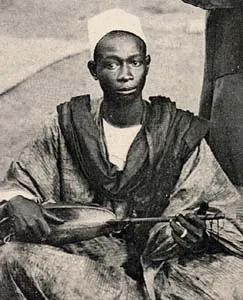
"Griot-africa" by A Wolof xalamkat - Dakar, Senegal / Source: Wikimedia Commons (Public domain).
In West Africa, griots have served as both storytellers and historians for centuries. These unique individuals played a critical role in preserving the heritage of ancient societies such as the Mali and Ghana Empires. Without written records, griots used spoken stories, music, and poetry to pass down knowledge from one generation to the next.
The origins of griots can be traced back as early as the 13th century, during the rise of the Mali Empire. Griots were deeply respected members of society, often attached to royal courts and noble families. They remembered important events, like the reign of King Sundiata Keita, who founded the Mali Empire around 1235 CE. Through epic tales, griots recited the deeds of kings and warriors, as well as the genealogies of families. One famous example comes from the epic of Sundiata, where griots described his journey and battles to establish a powerful empire. These stories helped people remember their past and understand their place in society.
Griots used a variety of oral tradition techniques, including rhythm, repetition, and musical instruments like the kora and balafon. They trained for years, memorizing thousands of names and events. Apprenticeship was common, with younger griots learning from elders. This system ensured that the group's collective memory was preserved even during periods of conflict, migration, or change. Archaeological evidence, such as depictions of musical performances on ancient carvings and artifacts, supports the importance of griots in West African culture.
The griots' role went beyond entertainment. They advised kings, settled disputes, and acted as mediators among communities. Their words could influence important decisions, and their performances marked major ceremonies like births, weddings, and funerals. Although griots were often considered part of a separate social class, their skills granted them respect and influence. Griots were sometimes the only people allowed to speak openly to rulers, making their position both powerful and delicate.
Over time, the griot tradition has shown both continuity and change. While modern griots may also use written texts, their main role as memory keepers and guardians of culture remains vital. Griots help connect present-day West Africans to their ancestors and remind us of the value of oral history in societies across the world.
This study of griots reveals how different societies preserve knowledge and how geography, social structure, and tradition shape history. The griots show that history can be remembered in many ways, not just in books.
Interesting Fact: The word "griot" comes from the French language, but in West African languages, they are also called "jeli" or "djeli."
Who were griots?
Storytellers and historiansFarmers in GhanaKings of MaliMerchants and traders
When did griots first appear?
13th century20th century5th century BCE1700s
Which empire is linked to King Sundiata Keita?
Mali EmpireRoman EmpireGhana EmpireSonghai Empire
How did griots preserve history?
Telling stories and using musicWriting booksTrading goodsBuilding monuments
Why were griots important to kings?
They advised and recorded deedsThey farmed the landThey led armiesThey collected taxes
What is apprenticeship?
Learning by working with an expertRuling a kingdomTrading goldBuilding houses
Griots only used written records. True or False?
TrueFalse
What does 'heritage' mean?
Traditions passed downA type of foodA musical instrumentA building material
Perfect For:
👩🏫 Teachers
• Reading comprehension practice
• Auto-graded assessments
• Literacy skill development
👨👩👧👦 Parents
• Reading practice at home
• Comprehension improvement
• Educational reading time
🏠 Homeschoolers
• Reading curriculum support
• Independent reading practice
• Progress monitoring
Reading Features:
📖
Reading Passage
Engaging fiction or nonfiction text
❓
Comprehension Quiz
Auto-graded questions
📊
Instant Feedback
Immediate results and scoring
📄
Printable Version
Download for offline reading
🔊
Read Aloud
Voice-over with word highlighting
Reviews & Ratings
No reviews yet. Be the first to share your experience!
Related Content
Ancient Civilizations and the Environment
This engaging history reading passage explores how ancient civilizations such as Mesopotamia, Egypt, and the Maya adapte...
Gender Roles in Ancient Civilizations
This engaging history reading passage explores the roles of men and women in various ancient civilizations, including Me...
Writing Prompts Ancient Civilizations
Step into the shoes of an archaeologist with this engaging worksheet focused on ancient civilizations. Students will be ...
W.5.2.A-2W.5.1.CW.5.1.D
Power and Authority in Ancient Civilizations
This passage explores the roles of men in positions of power within ancient civilizations, focusing on their authority i...
Evidence in Ancient History
This engaging history reading passage investigates how archaeologists and historians discover clues about how ancient pe...
Ancient Monarchy
This reading passage explores the concept of monarchy in ancient civilizations, focusing on the origins, structure, and ...
Ancient Theocracy
This engaging history reading passage explores the concept of theocracy in ancient civilizations, where priests and reli...
Ancient Mathematics
This passage explores the essential role of mathematics in ancient civilizations, including Mesopotamia, Egypt, Greece, ...
Ancient Canaan
This educational passage explores the land of Canaan, the historical homeland of the ancient Israelites. Students will l...
Ancient Money Barter
This passage explores the fascinating evolution from barter to the earliest coins in ancient civilizations, focusing on ...
Ancient Science and Medicine
This comprehensive reading passage explores the development of science and medicine in ancient civilizations, including ...
Ancient Literature
This passage explores the importance of ancient stories and poems from civilizations such as Greece, India, and Israel. ...
Ancient Agriculture Farming
This passage explores the transformative impact of farming on ancient societies, examining how the Neolithic Revolution ...
Ancient Writing Systems
This engaging history reading passage explores the origins and evolution of ancient writing systems, including cuneiform...
Geography of Ancient Israel
This passage explores the rich geography of Ancient Israel, focusing on how landforms, climate, and natural resources sh...
Slavery Across Civilizations
This detailed history reading passage explores the role and impact of slavery across several ancient civilizations, incl...
Social Classes in Ancient Societies
This passage explores the concept of social hierarchies in ancient civilizations, focusing on why societies such as Meso...
Social structures in Ancient World
This passage explores the organization and significance of family life in ancient societies, focusing on how extended fa...
Polytheism and Monotheism in Ancient Times
This passage explores the religious beliefs of ancient civilizations, focusing on the differences and similarities betwe...
Women in Ancient Societies
This reading passage explores the complex roles of women in the ancient world, focusing on civilizations such as Mesopot...