This learning resource is available in interactive and printable formats. The interactive worksheet can be played online and assigned to students. The Printable PDF version can be downloaded and printed for completion by hand.
This reading passage explores the fundamental beliefs of Hinduism—dharma, karma, and reincarnation—within the context of ancient India and the Vedas. Students will learn how these beliefs influenced daily life, social hierarchy, and the long-lasting traditions of Indian civilization. The passage references primary sources like the Rigveda and discusses how geography, society, and religion were interconnected. Activities include a glossary, comprehension quiz, writing prompts, and graphic organizers, providing opportunities for deeper historical analysis. The passage is aligned with CA HSS 6.5 and CCSS RH.6-8.2 standards and includes a Spanish translation and read-aloud audio for accessibility. This comprehensive resource supports the development of critical thinking and literacy skills through the lens of ancient Indian history.
CONTENT PREVIEW
Expand content preview
[Images of Hindu cosmogony and gods]. Source: Library of Congress - Winkles, Henry, 1800-approximately 1860
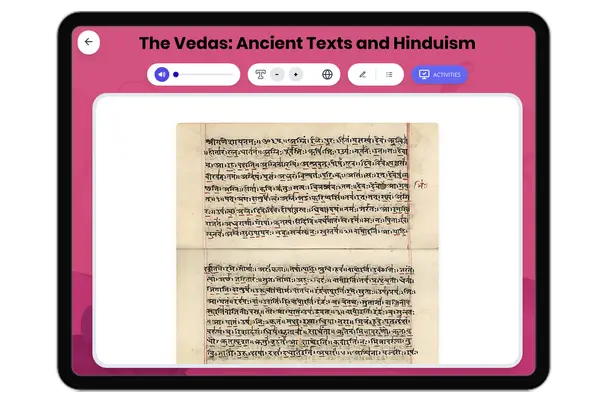
Hinduism, one of the world's oldest religions, developed in ancient India over 3,000 years ago. Its core beliefs, including dharma, karma, and reincarnation, have shaped Indian society and culture since the times of the early Vedic civilization (around 1500 BCE). The Vedas, Hinduism's oldest sacred texts, provide evidence of these ideas and their significance in ancient Indian life.
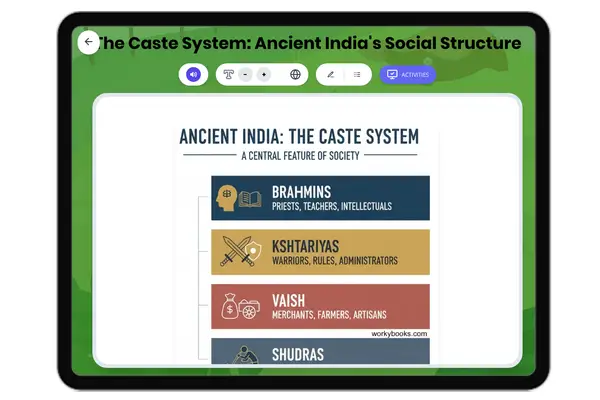
The concept of dharma refers to a person's duty or the moral code that guides actions. In ancient India, dharma was closely linked to a person's social class, or varna, and role in society. For example, the Rigveda, a primary Vedic text, describes the four main social classes: priests (Brahmins), warriors (Kshatriyas), merchants (Vaishyas), and laborers (Shudras). Each group had its own dharma, or responsibilities, to maintain harmony in society. Following one's dharma was believed to support the order of the universe, or cosmos.
The idea of karma is another central Hindu belief. Karma means that every action has consequences, shaping a person's future experiences. Good actions lead to positive outcomes, while negative actions bring suffering. This cause-and-effect principle is found in many ancient Hindu texts, including the Upanishads, which state, "As a person acts, so he becomes." Karma influenced daily life, encouraging people to act with kindness and honesty.
Reincarnation is the belief that the soul is reborn in a new body after death. According to Hindu teachings, a person's karma from past lives determines their next birth. Someone who fulfilled their dharma and built up good karma might be reborn into a higher social class or even reach moksha—liberation from the cycle of rebirth. This belief gave hope to people in lower social groups, since they could improve their position in the next life by living morally. Archaeological evidence, such as ancient burial practices and religious art, suggests that these beliefs were widespread across India by the time of the Mauryan Empire (c. 322–185 BCE).
Over centuries, these beliefs have remained central to Hinduism and Indian culture. While the details of dharma, karma, and reincarnation evolved over time, their influence on laws, traditions, and social organization can still be seen today. Ancient Indian thinkers used these concepts to explain inequality, motivate good behavior, and guide rulers and citizens alike. These ideas also connected people to their geographic environment, as many Hindu rituals honor rivers, animals, and the land itself.
Understanding dharma, karma, and reincarnation helps us see how ancient Indians explained the world, structured society, and found meaning in daily life. These beliefs continue to influence millions of people and connect the ancient past with the present.
Interesting Fact: The word "karma" comes from the Sanskrit root "kri," which means "to do" or "to act."
When did Vedic civilization begin?
Around 1500 BCE500 CE3000 BCE185 BCE
Which text lists four main social classes?
RigvedaBibleQuranTorah
What is moksha?
Liberation from rebirthA social groupA Hindu festivalA river in India
How did karma affect daily life?
Encouraged good actionsStopped social classesBanned tradeCreated new empires
Why was dharma important?
Kept society balancedStarted warsBuilt templesChanged geography
What does reincarnation mean?
Soul reborn in new bodyBecoming a priestGaining new skillsWriting a new text
Dharma is a person’s duty. True or false?
TrueFalse
What is the meaning of 'varna'?
Social classA riverSacred textTemple
Perfect For:
👩🏫 Teachers
• Reading comprehension practice
• Auto-graded assessments
• Literacy skill development
👨👩👧👦 Parents
• Reading practice at home
• Comprehension improvement
• Educational reading time
🏠 Homeschoolers
• Reading curriculum support
• Independent reading practice
• Progress monitoring
Reading Features:
📖
Reading Passage
Engaging fiction or nonfiction text
❓
Comprehension Quiz
Auto-graded questions
📊
Instant Feedback
Immediate results and scoring
📄
Printable Version
Download for offline reading
🔊
Read Aloud
Voice-over with word highlighting
Reviews & Ratings
No reviews yet. Be the first to share your experience!
Related Content
Geography of Ancient India
This passage explores the geography of Ancient India and its impact on the rise of civilization along the Indus River. L...
Trade Across Ancient India
This history reading passage explores Ancient India's trade networks and their impact on global connections. Students wi...
Cotton and Spices of Ancient India
This detailed passage explores the significance of cotton and spices as two of ancient India's most valuable resources. ...
The Caste System in Ancient India
This passage explores the origins, structure, and impact of the caste system in Ancient India, a hierarchical social ord...
The Vedas: Ancient Texts
This passage explores the Vedas, ancient texts from India that form the foundation of Hinduism. Students will learn abou...
Sanskrit and Indian Literature
This engaging passage explores Sanskrit, the classical language of ancient India, and its impact on culture, literature,...
Evidence in Ancient History
This engaging history reading passage investigates how archaeologists and historians discover clues about how ancient pe...
Ashoka the Great: India's Emperor
This passage explores the life and legacy of Ashoka the Great, emperor of the Mauryan Empire in ancient India. Discover ...
Indian Mathematician Invent Zero
This engaging history reading passage explores the invention of zero by ancient Indian mathematicians, focusing on the c...
Indian Science, Math, and Art
This engaging history reading passage explores the enduring achievements of Ancient India in science, mathematics, and a...
Ancient Literature
This passage explores the importance of ancient stories and poems from civilizations such as Greece, India, and Israel. ...
Ancient Philosophy
This reading passage takes students on a journey through the philosophical traditions of ancient Greece, India, and Chin...
The Delhi Sultanate and Islam in India
Explore the rise of the Delhi Sultanate and the arrival of Islam in India with this engaging history reading passage. St...
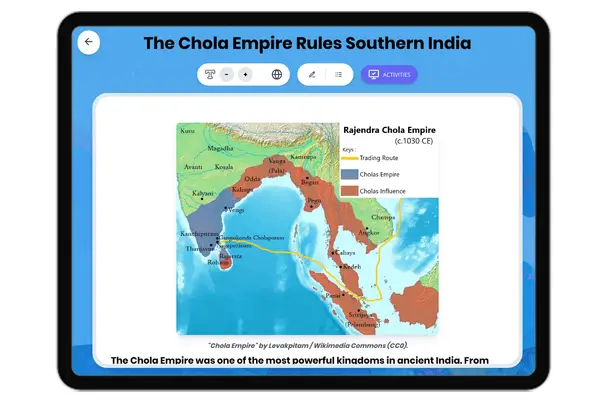
The Chola Empire Rules Southern India
This passage explores the achievements and legacy of the Chola Empire, which ruled Southern India from the 9th to 13th c...
Ancient Theocracy
This engaging history reading passage explores the concept of theocracy in ancient civilizations, where priests and reli...
Ancient Canaan
This educational passage explores the land of Canaan, the historical homeland of the ancient Israelites. Students will l...
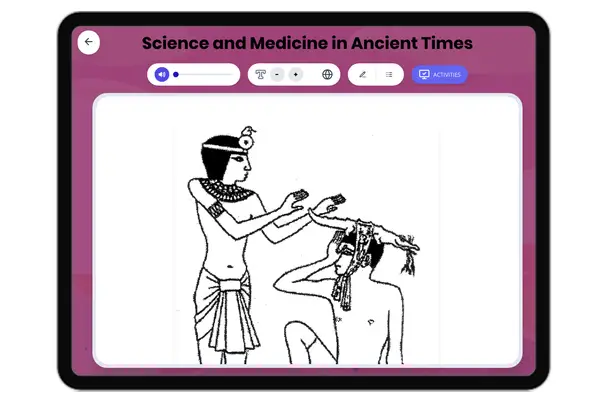
Ancient Science and Medicine
This comprehensive reading passage explores the development of science and medicine in ancient civilizations, including ...
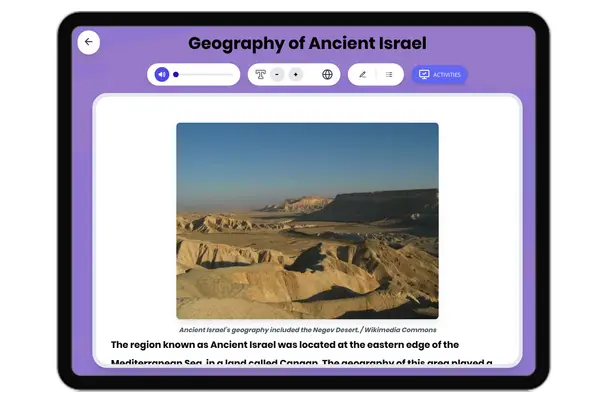
Geography of Ancient Israel
This passage explores the rich geography of Ancient Israel, focusing on how landforms, climate, and natural resources sh...
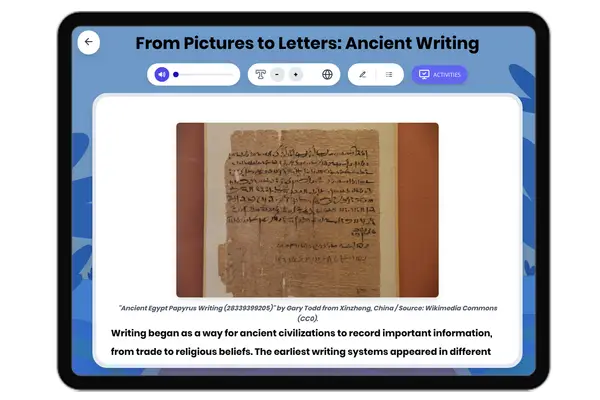
Ancient Writing Systems
This engaging history reading passage explores the origins and evolution of ancient writing systems, including cuneiform...
Ancient Agriculture Farming
This passage explores the transformative impact of farming on ancient societies, examining how the Neolithic Revolution ...