Anatomical Evidence for Evolution
Interactive passage with audio narration, comprehension questions, and printable PDF.
By completing this purchase you agree to our Terms of Use and Privacy Policy. Your subscription renews automatically until you cancel. You can cancel anytime from your account settings. All sales are final and non-refundable. Digital content is available for download in your account immediately upon purchase.
What's included
Anatomical Evidence for Evolution preview and details
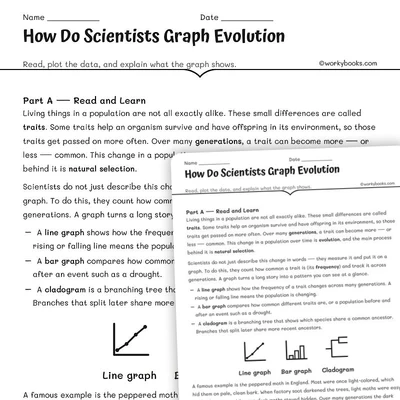
About this printable Anatomical Evidence for Evolution science reading passage, NGSS-aligned (Grade 6)
Sample passage and quiz from Anatomical Evidence for Evolution
Reading passage and comprehension quiz preview
How Anatomical Structures Provide Evidence for Evolution
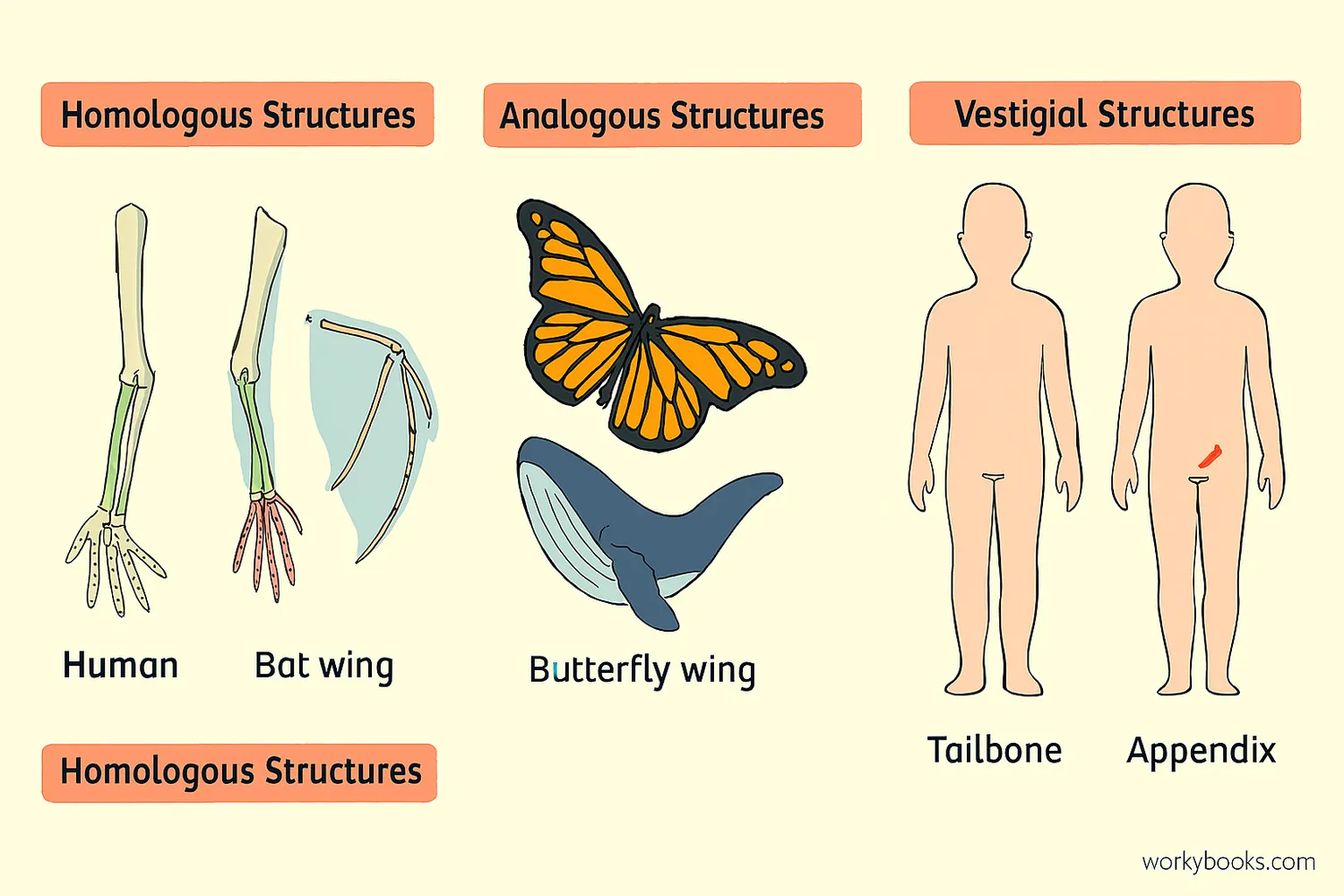
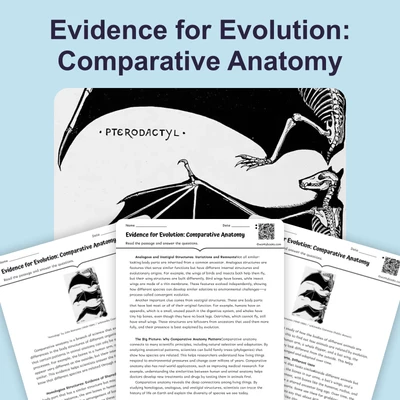
Imagine looking at your own arm, then at the wing of a bat, and finally at the flipper of a whale. At first glance, they seem very different. One is for grasping, one for flying, and one for swimming. But look closer, underneath the skin and muscles, at the bones. You might be surprised by what you find! This close inspection of body parts is called comparative anatomy, and it's a powerful tool for understanding how life on Earth has changed over time, a process known as evolution.
One of the most compelling pieces of evidence for evolution comes from what scientists call homologous structures. These are body parts in different species that have a similar basic structure, even if they have different functions. Think back to the human arm, bat wing, and whale flipper. They all share a remarkably similar bone pattern: one long upper bone, two lower bones, a group of wrist bones, and then finger bones. This shared blueprint suggests that humans, bats, and whales all share a common ancestor – a species from which they all descended millions of years ago. Over vast stretches of time, as these species adapted to different environments and ways of life, these structures changed in form, but their underlying similarity remains.
Not all similarities mean a common ancestor, however. Sometimes, different species evolve similar structures because they live in similar environments or face similar challenges. These are called analogous structures. For example, both a bat's wing and a butterfly's wing allow them to fly. But if you look at their internal structure, they are completely different. A bat's wing has bones, while a butterfly's wing is made of a thin membrane and veins. This tells us they evolved flight independently, not from a close common ancestor that could fly.
Another fascinating type of anatomical evidence for evolution comes from vestigial structures. These are body parts that have lost their original function over time. They might be small or reduced, and seem to serve no purpose in the modern organism, but they were important for an ancestor. A great example in humans is the appendix. While its function in humans is debated, it is much larger and more functional in other mammals, suggesting it once played a larger role in our ancestors. The presence of these seemingly useless parts provides a historical record of our evolutionary journey, showing the remnants of structures that were once essential.
By studying these different anatomical structures – homologous, analogous, and vestigial – scientists can piece together the incredible story of life's evolution. They help us understand the deep connections between all living things and how species have adapted and changed over millions of years to create the diverse world we see today.
Interesting Fact: Whales and dolphins, despite living entirely in water, still have tiny hip bones buried deep within their bodies, remnants from their land-dwelling ancestors!
Comprehension quiz (10 questions)
1. Which type of structures have a similar basic design?
2. What is the process of change over time called?
3. Humans, bats, and whales share a common ancestor.
4. What is the definition of 'comparative anatomy'?
5. What do homologous structures suggest?
6. Why do analogous structures evolve similar functions?
7. Which structure example is vestigial in humans?
8. What is the primary evidence from vestigial structures?
9. If two species have very similar DNA, what would you expect about their homologous structures?
10. A bird's wing and an insect's wing both allow flight. Based on the passage, what kind of structures are they likely to be?
Perfect for the way you teach
- Build comprehension skills
- Auto-graded quiz
- Differentiated reading
- Read together at home
- Improve fluency
- Quiet reading time
- Reading curriculum support
- Independent practice
- Track Lexile growth