How Camels Made Trans-Saharan Trade Possible
Interactive passage with audio narration, comprehension questions, and printable PDF.
By completing this purchase you agree to our Terms of Use and Privacy Policy. Your subscription renews automatically until you cancel. You can cancel anytime from your account settings. All sales are final and non-refundable. Digital content is available for download in your account immediately upon purchase.
What's included
How Camels Made Trans-Saharan Trade Possible preview and details
About this printable How Camels Made Trans-Saharan Trade Possible reading passage (Grades 5-8)
Sample passage and quiz from How Camels Made Trans-Saharan Trade Possible
Reading passage and comprehension quiz preview
How Camels Made Trans-Saharan Trade Possible
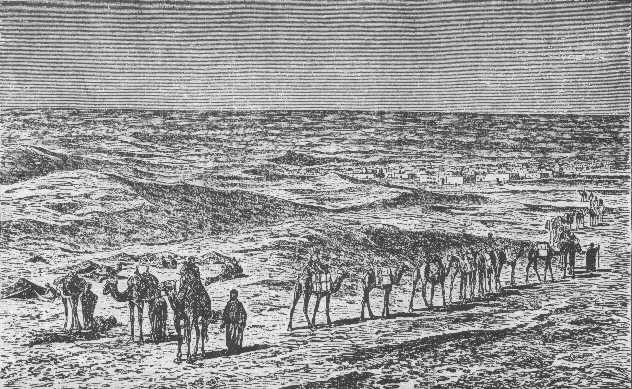
"ST-caravan" by Own work /
Source: Wikimedia Commons (Public domain).
The Sahara Desert in Africa is one of the largest and harshest deserts on Earth. For centuries, its vast stretches of sand dunes, extreme heat, and scarcity of water made it nearly impossible for people to travel long distances across it. However, the introduction of the camel to North Africa during the early centuries CE changed this reality and made trans-Saharan trade between West Africa and North Africa possible.
Camels, sometimes called the "ships of the desert," were introduced to the Sahara region around the third century CE. Unlike horses or donkeys, camels can survive for long periods without water and can carry heavy cargo. Their broad feet are adapted to walk on soft sand, and their humps store fat for energy. These physical features made camels the perfect animals for crossing the dangerous desert. Archaeologists have found ancient rock art in places like Tassili n'Ajjer, Algeria, showing camels and camel caravans, providing evidence for their use in trade. Written accounts from Arab travelers, such as Ibn Battuta in the 14th century, also describe how camel caravans moved goods between distant cities.
With camels, merchants formed large caravans that could carry goods across the Sahara. These caravans often included hundreds of camels and people, traveling from West African kingdoms such as Ghana and Mali to cities in North Africa like Sijilmasa and Cairo. The main products traded were gold from West Africa and salt from the Sahara, but other items like ivory, copper, and textiles were also exchanged. The trade routes followed a system of oases, where travelers could find water and rest. The control of these routes made West African rulers wealthy and powerful, helping cities like Timbuktu become important centers of learning and culture. The use of camels also changed daily life: people living near the trade routes found new economic opportunities, while social hierarchies shifted as merchants and caravan leaders gained status.
Trans-Saharan trade brought not only goods but also ideas, religion, and technology. Islam spread along these routes, as did new knowledge in mathematics and science. Over time, the camel caravan system connected West Africa with the Mediterranean world and beyond, creating a network that shaped the history of the region for centuries. The impact of camels on trade and society remains visible in cultural traditions and in the cities that grew up along ancient caravan routes.
By making trans-Saharan trade possible, camels transformed the economic and cultural landscape of ancient West Africa and linked it to the wider world. The story of camels and trade caravans connects to broader themes in world history, including the importance of geography, technology, and human adaptation in shaping civilizations.
Interesting Fact: The largest camel caravans could include up to 12,000 camels, stretching for miles across the desert!
Comprehension quiz (8 questions)
1. When were camels introduced to North Africa?
2. What was the main good traded from West Africa?
3. Which city became a center of learning?
4. Why were camels better than horses for desert travel?
5. How did camel trade change West African society?
6. What evidence shows camels were used in trade?
7. Camels helped spread new ideas and religions.
8. What is a 'caravan'?
Perfect for the way you teach
- Build comprehension skills
- Auto-graded quiz
- Differentiated reading
- Read together at home
- Improve fluency
- Quiet reading time
- Reading curriculum support
- Independent practice
- Track Lexile growth