How do Bacteria Use Acids to Spoil Food? — Reading Comprehension
Rate this
Premium Resource
Present
Present in classroom. No work saved
Assign
Classroom with student accounts, Track progress
Quick Play
No student accounts, assign with a link
Grades
3
4
5
6
7
8
PRINT+DIGITAL RESOURCE
This learning resource is available in interactive and printable formats. The interactive worksheet can be played online and assigned to students. The Printable PDF version can be downloaded and printed for completion by hand.
"This science reading passage, titled 'How Bacteria Use Acids to Spoil Food,' is designed for middle school students to explore the chemical processes behind food spoilage. It aligns with NGSS standards related to matter and its interactions (MS-PS1-1, MS-PS1-2), and matter and energy in organisms (MS-LS1-7). The passage details how bacteria metabolize nutrients, producing acids like lactic and acetic acid, which alter the food's pH, taste, and texture. Key vocabulary terms such as metabolism and pH level are highlighted to build a strong foundation in scientific language. The text also connects this phenomenon to real-world examples, like spoiled milk and fermented foods, and explains common preservation methods like refrigeration and pasteurization. The accompanying multiple-choice questions assess a range of skills from factual recall to application and main idea comprehension."
CONTENT PREVIEW
Expand content preview
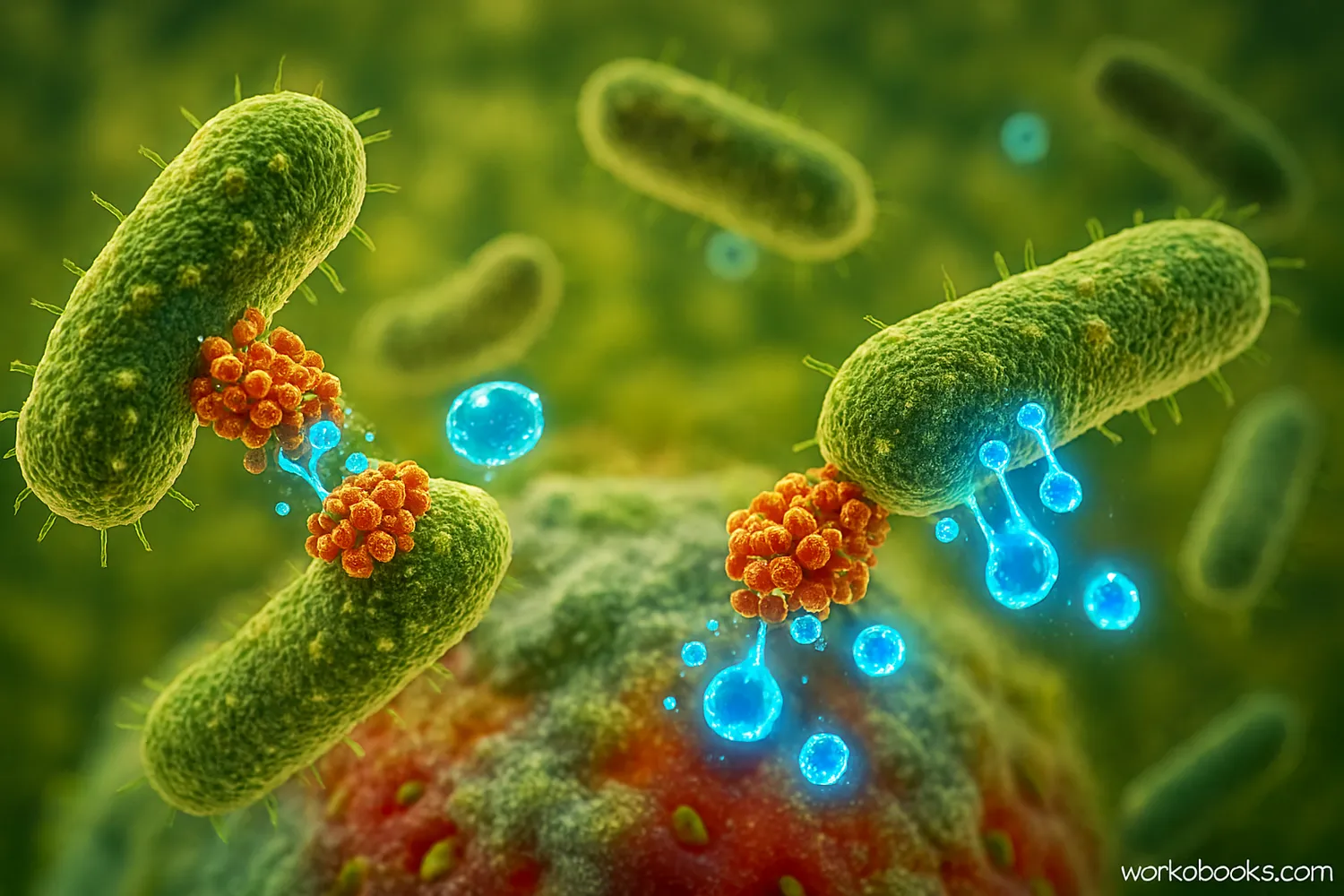
Bacteria are tiny, single-celled organisms found almost everywhere, including on and in our food. While many bacteria are harmless or even beneficial, some are responsible for food spoilage. This process is often driven by a chemical reaction that produces acids. Bacteria consume the nutrients in food, such as sugars and proteins, for energy. As a byproduct of this process, known as metabolism, they release waste products. In many food-spoiling bacteria, these waste products are various types of acids, including lactic acid and acetic acid.
The production of these acids is the primary reason why food spoils. The presence of a high concentration of acid changes the food's pH level, making it more acidic. This change in pH alters the texture, flavor, and appearance of the food. For example, the sour taste in spoiled milk is caused by lactic acid produced by bacteria breaking down lactose, the sugar in milk. The clumping of milk proteins, which thickens and sours the milk, is also a direct result of this increased acidity. This chemical change makes the food undesirable and unsafe to consume.
This process is not limited to dairy. Other foods, like fruits, vegetables, and even meat, can be spoiled by acid-producing bacteria. For instance, bacteria can ferment sugars in fruit, producing acetic acid (the main component of vinegar) that gives a pungent, sour smell. Understanding this process helps us prevent spoilage through methods like refrigeration, which slows down bacterial metabolism, and pasteurization, which kills existing bacteria.
Fun Fact: Some acid-producing bacteria are intentionally used in food production to create foods like yogurt, cheese, and sauerkraut.
What is the primary reason that bacteria cause food spoilage?
They increase the food's temperature.They introduce air into the food.They produce acids as waste products.They add sugar to the food.
What is the term for the process where bacteria consume nutrients for energy?
DigestionPhotosynthesisMetabolismFermentation
How does the production of acids change the food?
It lowers the food's temperature.It makes the food less acidic.It changes the food's pH level.It removes all bacteria.
According to the passage, what specific substance is responsible for the sour taste in spoiled milk?
Acetic acidLactoseLactic acidProtein
Which of the following is a real-world example of bacterial acid production mentioned in the passage?
The sweet taste of ripe fruit.The clumping of milk proteins.The freezing of water in food.The darkening of a cut apple.
What is the main idea of the reading passage?
Bacteria are always harmful to food.Refrigeration is the only way to prevent food spoilage.Bacteria spoil food by consuming nutrients and producing acids.All sour foods are spoiled.
If a batch of homemade pickles has a very sour, vinegar-like smell, what is the most likely cause, based on the passage?
The presence of lactic acid from bacteria.The pickles were not refrigerated properly.The production of acetic acid by bacteria.The pickles were not sealed correctly.
What is the main purpose of methods like refrigeration and pasteurization, as described in the passage?
To add new flavors to food.To slow down or kill bacteria.To increase the acid level in food.To make food less acidic.
Perfect For:
👩🏫 Teachers
• Reading comprehension practice
• Auto-graded assessments
• Literacy skill development
👨👩👧👦 Parents
• Reading practice at home
• Comprehension improvement
• Educational reading time
🏠 Homeschoolers
• Reading curriculum support
• Independent reading practice
• Progress monitoring
Reading Features:
📖
Reading Passage
Engaging fiction or nonfiction text
❓
Comprehension Quiz
Auto-graded questions
📊
Instant Feedback
Immediate results and scoring
📄
Printable Version
Download for offline reading
🔊
Read Aloud
Voice-over with word highlighting
Reviews & Ratings
No reviews yet. Be the first to share your experience!
Related Content
The Nature of Life Science
This passage, aligned with NGSS MS-LS1-1, introduces students in grades 6-8 to the foundational concepts of life science...
MS-LS1-1
Aerobic Organisms
This engaging, audio-integrated reading passage, titled 'Aerobic Organisms: The Breath of Life,' introduces students to ...
From Cells to Organisms
This educational passage, "From Cells to Organisms," explores the fundamental concept of how living things are built, st...
Using Dichotomous Keys to Identify Organisms
This audio-integrated passage, 'Using Dichotomous Keys to Identify Organisms,' introduces 6th-grade students to a fundam...
Science Vocabulary
This worksheet on domain-specific words will help students learn some science vocabulary. Students will be asked to matc...
L.3.6L.3.4.A
The Aorta: Molecules to Organisms of the Body's Largest Artery
This educational content features a fascinating reading passage, audio integrated for an enhanced learning experience, a...
Simple Machines Science Report
This science writing task requires students to clearly explain how three simple machines work using precise domain-speci...
W.5.4
Tools and Technology for Life Scientists
This informational passage for grades 6-8 explores the essential tools and technology used by life scientists, aligned t...
MS-LS1-1MS-LS1.A
Cryptobiosis: Pausing Life to Survive
This engaging, audio-integrated reading passage explores the amazing biological process of cryptobiosis, where organisms...
From Senses to Actions
This Grade 4-5 science passage, 'From Senses to Actions,' explores how our senses work together with the brain and body ...
The Science of Hibernation
This educational module, featuring an audio-integrated reading passage titled 'The Science of Hibernation,' is designed ...
The Life Cycle of a Giant Panda
This engaging, audio-integrated reading passage, titled "The Life Cycle of a Giant Panda," explores the fascinating stag...
How Bats Use Sound to See
This Grade 4-5 science passage, 'How Bats Use Sound to See,' explores the fascinating process of echolocation in bats. S...
Citizen Science and Ecological Monitoring
This engaging passage for grades 6-8 introduces the concept of citizen science and its critical role in ecological monit...
MS-LS2-1
The Pumpkin Life Cycle
This informational worksheet explores the pumpkin lifecycle, guiding students through procedural steps in a scientific t...
RI.2.3RI.2.10
Life Cycle Stages
This comprehensive word sort activity helps Grade 3 students understand the universal stages of life cycles as outlined ...
What Is Earth Science?
This engaging middle school science passage introduces students to the field of Earth science, aligning with NGSS standa...
MS-ESS1MS-ESS2MS-ESS3SEP
Growth and Development of Organisms
This middle school science passage, aligned with NGSS standards MS-LS1-4 and MS-LS1-5, provides an in-depth look at the ...
MS-LS1-4MS-LS1-5
Life Makers
This engaging word sort activity helps elementary students understand the diverse methods of reproduction in living orga...
Barnacles and Biofouling
This engaging, audio-integrated reading passage, 'Barnacles and Biofouling,' delves into the fascinating world of how ti...