How Does a Hurricane Tracker Work?
Interactive passage with audio narration, comprehension questions, and printable PDF.
By completing this purchase you agree to our Terms of Use and Privacy Policy. Your subscription renews automatically until you cancel. You can cancel anytime from your account settings. All sales are final and non-refundable. Digital content is available for download in your account immediately upon purchase.
What's included
How Does a Hurricane Tracker Work? preview and details
About this printable How Does a Hurricane Tracker Work? science reading passage, NGSS-aligned (Grade 6)
Sample passage and quiz from How Does a Hurricane Tracker Work?
Reading passage and comprehension quiz preview
How Does a Hurricane Tracker Work?
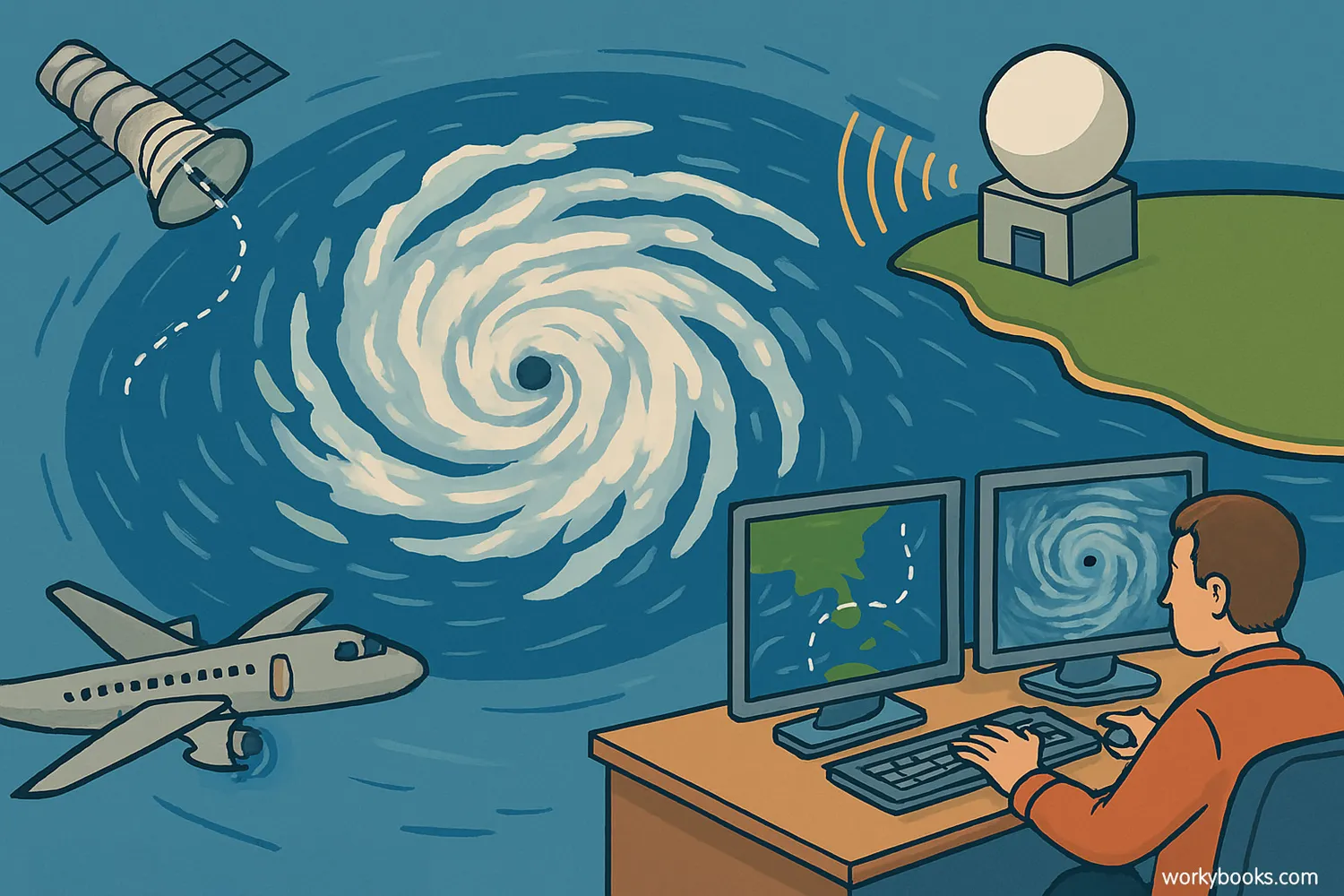
Imagine a swirling giant, hundreds of miles wide, moving across the ocean. This powerful storm, a hurricane, can bring devastating winds and flooding to coastal areas. Understanding where and when it will strike is crucial for saving lives and protecting property. This is where hurricane tracking comes in, a vital part of modern meteorology, the study of weather.
Hurricane trackers use a variety of advanced tools to follow these storms. One of the most important is satellite technology. Satellites orbiting Earth continuously capture images of weather systems, including hurricanes. These images show the storm's size, shape, and movement, providing essential data. Scientists can see how quickly the storm is spinning and in which direction it's heading. This helps them create early forecasts and predictions about its path.
Another key tool is weather radar. Radar stations on land and aboard ships send out radio waves that bounce off rain and storm clouds. By analyzing the reflected waves, meteorologists can determine the storm's intensity, the amount of rainfall, and the speed of the winds. As a hurricane approaches land, radar becomes even more critical for providing precise, real-time information about its exact location and structure.
Specialized aircraft, known as "hurricane hunter" planes, also play a significant role. These brave pilots fly directly into the eye of the storm to gather detailed information that satellites and radar cannot. They deploy dropsondes, small instruments that measure temperature, humidity, and atmospheric pressure as they fall through the storm. This direct data collection is invaluable for improving forecast models and making more accurate predictions.
All this data – from satellites, radar, and aircraft – is fed into powerful computers that run complex computer models. These models use scientific equations to simulate how the atmosphere will behave, helping scientists predict the hurricane's future track and intensity. While no forecast is ever 100% perfect, these technologies work together to provide the best possible information, allowing communities to prepare and take action to mitigate the potential damage from these natural hazards. Understanding how these tools help us forecast future catastrophic events is essential for our safety.
Interesting Fact: The eye of a hurricane, while surrounded by violent winds, can be surprisingly calm and clear.
Comprehension quiz (10 questions)
1. Which tool captures images of weather systems?
2. What is the primary role of computer models?
3. What is the study of weather called?
4. How do hurricane hunter planes gather data?
5. Why is accurate hurricane tracking important?
6. What does radar primarily measure?
7. Which tool provides real-time information as a hurricane approaches land?
8. True or False: No hurricane forecast is ever 100% perfect.
9. If a new, faster satellite were launched, how might it affect hurricane tracking?
10. What does 'mitigate' mean in the passage?
Perfect for the way you teach
- Build comprehension skills
- Auto-graded quiz
- Differentiated reading
- Read together at home
- Improve fluency
- Quiet reading time
- Reading curriculum support
- Independent practice
- Track Lexile growth