Earth's Major Climate Zones Explained — Reading Comprehension
Rate this
Premium Resource
Present
Present in classroom. No work saved
Assign
Classroom with student accounts, Track progress
Quick Play
No student accounts, assign with a link
Grades
5
6
7
8
PRINT+DIGITAL RESOURCE
This learning resource is available in interactive and printable formats. The interactive worksheet can be played online and assigned to students. The Printable PDF version can be downloaded and printed for completion by hand.
This engaging science passage for grades 6-8 explains Earth's major climate zones, including tropical, temperate, and polar regions. Students will learn the scientific concepts behind climate, such as temperature, precipitation, latitude, and the influence of sunlight. The passage features clear definitions of key terms, real-world examples of different ecosystems, and an 'Interesting Fact' about climate. It aligns with NGSS standards for understanding Earth's systems and includes a glossary, an 8-question multiple-choice quiz, and three writing activities that foster scientific thinking and connections to daily life. The passage is also fully translated into Spanish and is audio integrated for accessibility. This resource is ideal for classroom lessons or independent study, helping students build vocabulary and comprehension while making science relevant and fun.
CONTENT PREVIEW
Expand content preview
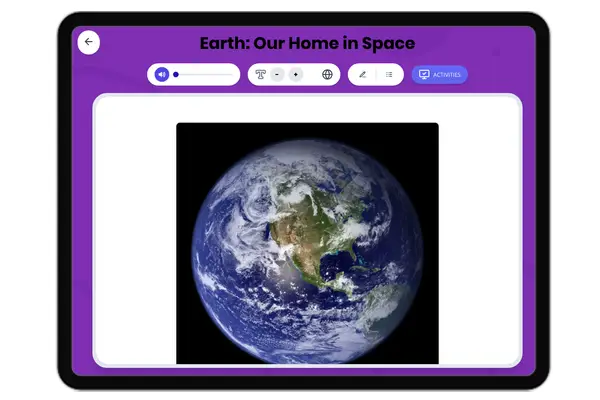
"Space Science" / NASA (Public domain).
Earth has many different climate zones, which are areas with similar patterns of temperature, precipitation, and weather. A climate zone is defined by long-term weather conditions in a region, not just daily weather changes. The three main types of climate zones on Earth are tropical, temperate, and polar zones.
The tropical zone is found near the equator, which is an imaginary line that circles the middle of Earth. This zone receives the most direct sunlight all year, making it hot and humid. Rainforests, such as the Amazon in South America and the Congo in Africa, are found in the tropical zone. These areas get a lot of rainfall and support a huge variety of plants and animals.
The temperate zone lies between the tropical and polar zones. It has four distinct seasons: spring, summer, fall, and winter. The temperature in temperate zones changes throughout the year. Places like the United States, much of Europe, and parts of China are in the temperate zone. These areas have a variety of forests, grasslands, and cities.
The polar zone is located near the North and South Poles. These regions receive very little direct sunlight, which makes them very cold. Most of the land here is covered with ice or snow for much of the year. The polar zone is home to animals like polar bears in the Arctic and penguins in Antarctica.
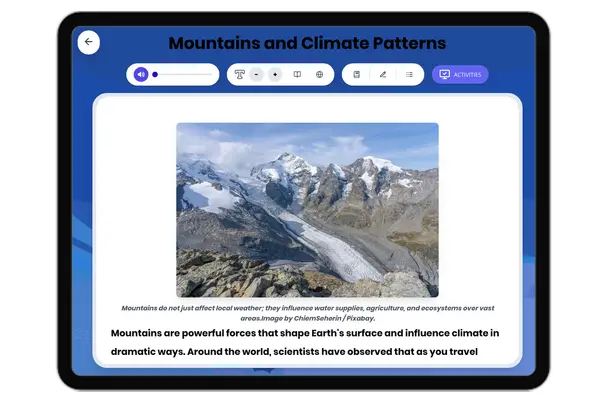
The main factors that affect a region’s climate are latitude (how far a place is from the equator), altitude (how high a place is above sea level), and its distance from large bodies of water like oceans. Areas closer to the equator are warmer because they receive more sunlight. Higher altitudes tend to be cooler because the air gets thinner and colder as you go up a mountain.
Climate zones are important because they help determine what plants and animals can survive in a region. They also affect how people live, what crops can be grown, and what clothes are worn. Understanding climate zones helps scientists predict weather patterns and study how changes in the environment, like global warming, might affect life on Earth.
Interesting Fact: The Sahara Desert in Africa is part of the tropical zone, but it is very dry because of special wind patterns that limit rainfall.
Which zone is near the equator?
Tropical zoneTemperate zonePolar zoneDesert zone
How many main climate zones exist?
TwoThreeFourFive
Which animal lives in the polar zone?
Polar bearLionGiraffeJaguar
Why is the tropical zone warm?
More direct sunlightHigher altitudeCloser to oceanLess rainfall
A city with four seasons is in which zone?
TropicalTemperatePolarDesert
What makes polar regions cold?
Little direct sunlightHigh rainfallLow altitudeNear equator
The Sahara is in the polar zone. True or false?
TrueFalse
What does 'precipitation' mean?
Rain or snowSunlightWind speedCloud cover
Perfect For:
👩🏫 Teachers
• Reading comprehension practice
• Auto-graded assessments
• Literacy skill development
👨👩👧👦 Parents
• Reading practice at home
• Comprehension improvement
• Educational reading time
🏠 Homeschoolers
• Reading curriculum support
• Independent reading practice
• Progress monitoring
Reading Features:
📖
Reading Passage
Engaging fiction or nonfiction text
❓
Comprehension Quiz
Auto-graded questions
📊
Instant Feedback
Immediate results and scoring
📄
Printable Version
Download for offline reading
🔊
Read Aloud
Voice-over with word highlighting
Reviews & Ratings
No reviews yet. Be the first to share your experience!
Related Content
Climate and weather activity
This worksheet is perfect for understanding the differences between climate and weather. Students will read the phrases ...
Climate and Weather — Distinguishing Characterstics
This worksheet highlights the differences between climate and weather. The chart format makes comparing and contrasting ...
Comparing Weather and Climate Texts
This reading comprehension worksheet has 5th graders read two informational texts about Weather and Climate. Students th...
RI.5.9
Tools and Technology in Earth Science
This middle school science reading passage explores the wide range of tools and technologies used in Earth science, from...
MS-ESS2-2MS-ESS3-2MS-ETS1-1MS-PS4-3
What Is Earth Science?
This engaging middle school science passage introduces students to the field of Earth science, aligning with NGSS standa...
MS-ESS1MS-ESS2MS-ESS3SEP
What Is Space Weather and How Does It Affect the Earth?
This NGSS-aligned science passage for middle school explains what space weather is and how it affects Earth. Students le...
MS-ESS2-2
Extreme Weather and Climate Change
This Grade 6-8 science passage, aligned to NGSS standards, explores the impact of climate change on extreme weather even...
What Is The Difference Between Climate Model And Weather Model?
This reading passage delves into the fundamental differences between weather models and climate models, explaining their...
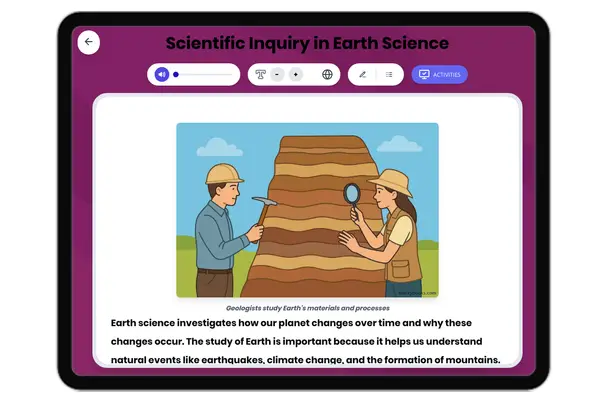
Scientific Inquiry in Earth Science
This passage explores scientific inquiry in Earth science for grades 6-8, aligned with NGSS standards MS-ESS1-4, MS-ESS2...
MS-ESS1-4MS-ESS2-1MS-ESS3-5SEP
Climate Through Earth's History
This engaging passage for grades 6-8 explores how Earth's climate has naturally changed over millions of years, highligh...
MS-ESS1-4MS-ESS2-6
Earth: Our Home in Space
This engaging Grade 4-5 science passage, aligned to NGSS, introduces students to Earth's special place in the solar syst...
Weather vs. Climate
This comprehensive passage for grades 6-8 explores the difference between weather and climate, aligning with NGSS standa...
MS-ESS2-6
How is Climate Different from Weather?
This passage distinguishes climate from weather for young readers. It defines climate as the usual weather patterns over...
RI.3.1RI.4.14.ESS2.D
Air Masses and Weather
This audio-integrated passage, "Air Masses and Weather," is designed for 6th-grade students to understand how the moveme...
Antarctica Climate
This engaging science passage for grades 6-8 explores Antarctica, the coldest climate zone on Earth. Students will learn...
How Climate Change Affects Weather
This middle school science passage explores how and why weather patterns are changing globally. Students will learn abou...
MS-ESS3-5
Climate Zones Word Sort
This word sort activity helps students understand different climate zones through real-world locations. Students classif...
Escape Velocity and Space Travel
This middle school science passage introduces students to the concept of escape velocity—the minimum speed required to b...
MS-ESS1-2MS-PS2-4
Weather Tools & Measurements Word Sort
This word sort activity connects weather measurement tools with their corresponding measurements. Students match 12 weat...