Weather vs. Climate — Reading Comprehension

Premium Resource
Grades
  • 5
  • 6
  • 7
  • 8
Standards
  • MS-ESS2-6
SHARE

About This Reader

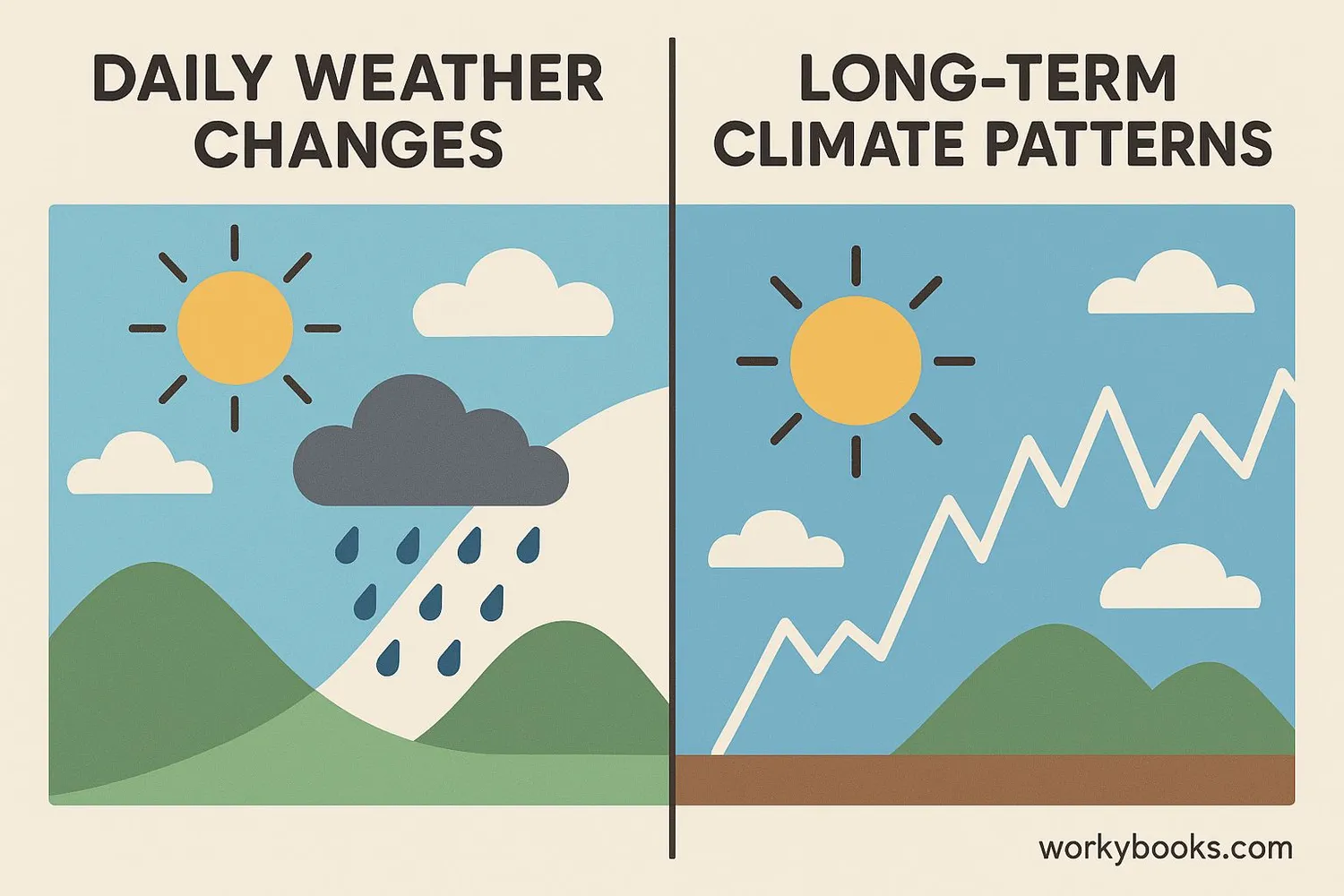
This comprehensive passage for grades 6-8 explores the difference between weather and climate, aligning with NGSS standard MS-ESS2-6. Students will learn how weather represents short-term atmospheric conditions, while climate is the average of these conditions over decades, including temperature, precipitation, and seasonal variations. The passage explains the underlying mechanisms scientists use to distinguish between the two, such as using climographs and analyzing long-term data. Real-world applications highlight why understanding this distinction is vital, from making daily decisions to addressing global climate change. The passage includes a glossary, differentiated versions, Spanish translations, a multiple-choice quiz, writing prompts, and graphic organizers for easy comprehension. Audio integration ensures accessibility for all learners. This resource supports systems thinking, encourages scientific reasoning, and helps students interpret patterns and trends in Earth’s atmosphere.

Perfect For:

👩‍🏫 Teachers
  • • Reading comprehension practice
  • • Auto-graded assessments
  • • Literacy skill development
👨‍👩‍👧‍👦 Parents
  • • Reading practice at home
  • • Comprehension improvement
  • • Educational reading time
🏠 Homeschoolers
  • • Reading curriculum support
  • • Independent reading practice
  • • Progress monitoring

Reading Features:

📖
Reading Passage
Engaging fiction or nonfiction text
Comprehension Quiz
Auto-graded questions
📊
Instant Feedback
Immediate results and scoring
📄
Printable Version
Download for offline reading
🔊
Read Aloud
Voice-over with word highlighting
How Rainforests Help the Planet - reading educational content
How Rainforests Help the Planet
This NGSS-aligned reading passage for middle school students explains how rainforests help regulate Earth’s climate and ...
MS-ESS2-6MS-LS2-5
Understanding the Koppen Climate Classification System - reading educational content
Understanding the Koppen Climate Classification System
This NGSS-aligned science reading passage explains the Köppen Climate Classification System, a scientific method used to...
MS-ESS2-6MS-LS2-5
What Is a Temperate Climate? - reading educational content
What Is a Temperate Climate?
This NGSS-aligned science reading passage introduces middle school students to temperate climates, which have moderate t...
MS-ESS2-6
What Is the Temperate Zone? - reading educational content
What Is the Temperate Zone?
This NGSS-aligned reading passage explains the location and characteristics of the temperate zone. Students learn that t...
MS-ESS2-6
Humid Continental Climate Characteristics - reading educational content
Humid Continental Climate Characteristics
This NGSS-aligned reading passage introduces middle school students to the humid continental climate zone. It explains t...
MS-ESS2-6
Humid Continental Climate Countries - reading educational content
Humid Continental Climate Countries
This NGSS-aligned reading passage introduces students to countries that have a humid continental climate, including part...
MS-ESS2-6
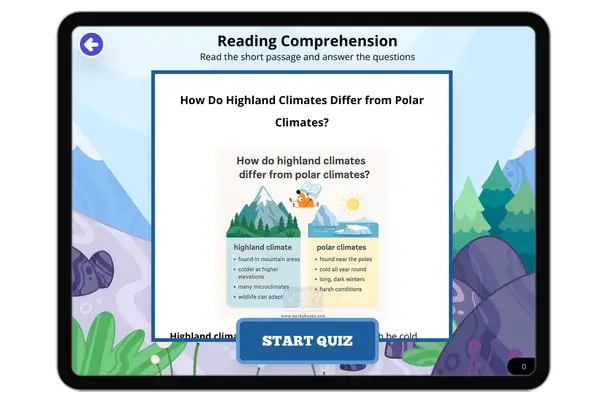
How Do Highland Climates Differ from Polar Climates? - reading educational content
How Do Highland Climates Differ from Polar Climates?
This NGSS-aligned reading passage helps middle school students compare and contrast highland and polar climates. It expl...
MS-ESS2-6
Which Factor Controls the Water Cycle? - reading educational content
Which Factor Controls the Water Cycle?
This NGSS-aligned science reading passage explores the question: Which factor controls the water cycle? Students will le...
MS-ESS2-6
What Is Condensation in the Water Cycle? - reading educational content
What Is Condensation in the Water Cycle?
This NGSS-aligned reading passage introduces students to the role of condensation in the water cycle. Written for middle...
MS-ESS2-6
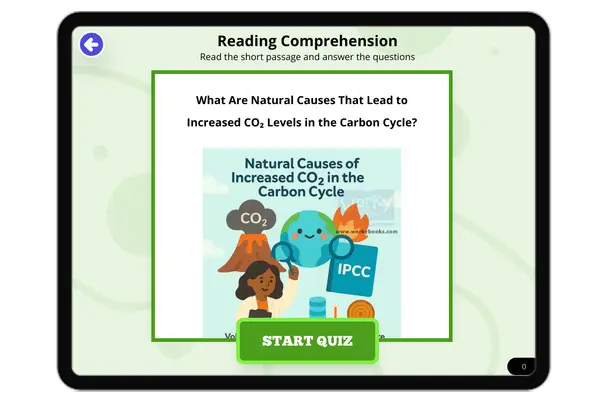
What Are Natural Causes That Lead to Increased CO₂ Levels in the Carbon Cycle? - reading educational content
What Are Natural Causes That Lead to Increased CO₂ Levels in the Carbon Cycle?
This NGSS-aligned middle school science passage explains natural causes that increase carbon dioxide levels in the carbo...
MS-ESS2-6
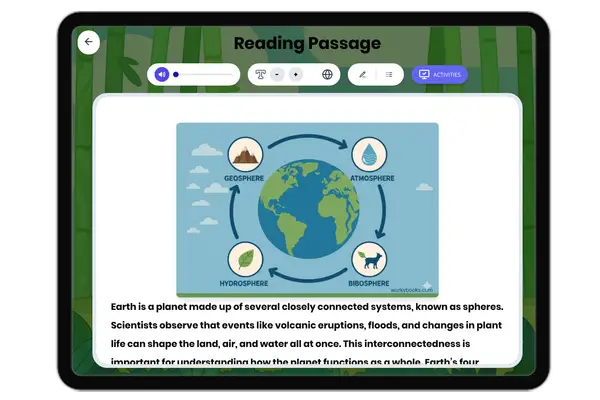
Earth's Spheres - reading educational content
Earth's Spheres
This middle school science passage introduces students to Earth's four major spheres: the geosphere, hydrosphere, atmosp...
MS-ESS2-4MS-ESS2-6
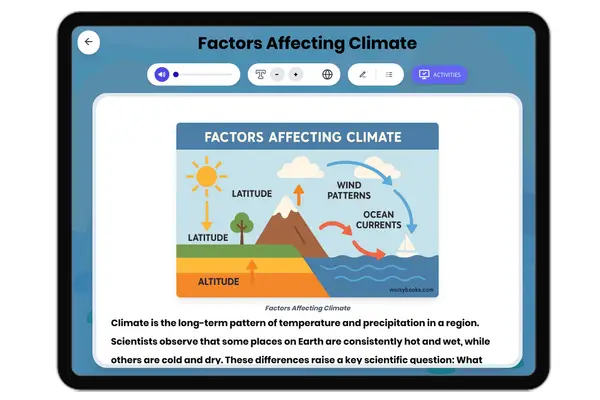
Factors Affecting Climate - reading educational content
Factors Affecting Climate
This informative science passage for grades 6-8 explains the main factors that determine climate in different regions of...
MS-ESS2-6
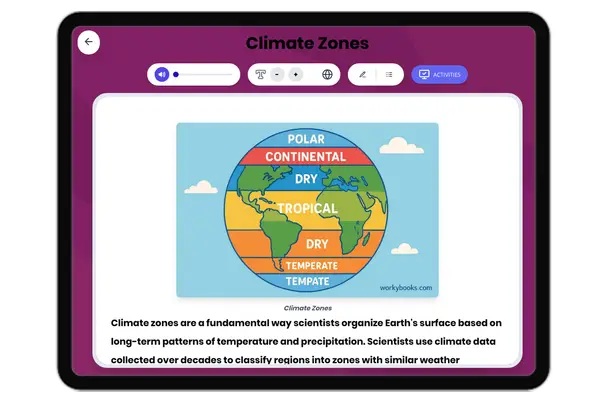
Climate Zones - reading educational content
Climate Zones
This passage provides an in-depth look at Earth’s climate zones using the Köppen classification system, covering tropica...
MS-ESS2-6
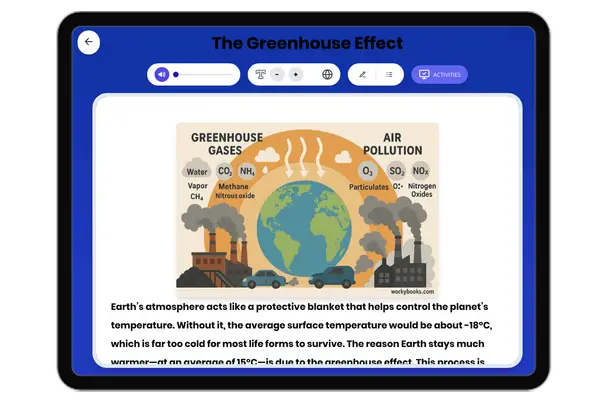
The Greenhouse Effect - reading educational content
The Greenhouse Effect
This comprehensive middle school science passage explores the greenhouse effect, a process essential to maintaining Eart...
MS-ESS2-6MS-ESS3-5
Copyright © 2025 Workybooks. Made with ♥ in California.