This learning resource is available in interactive and printable formats. The interactive worksheet can be played online and assigned to students. The Printable PDF version can be downloaded and printed for completion by hand.
This science passage, designed for grades 4-5 and aligned with NGSS standards, explores how owls see in the dark. Students will discover the unique adaptations of owl eyes, such as their large size, special light-sensitive cells, and movable necks, that help them hunt at night. The passage defines key vocabulary terms in bold, making it easy for students to learn and understand important science concepts. Real-world examples show how owl vision compares to human vision and why these adaptations matter in nature. The resource includes a Spanish translation, a comprehensive glossary, reading comprehension quiz, and engaging writing prompts to help students connect science to everyday life. This audio-integrated resource is perfect for science classrooms, literacy centers, or at-home learning. Keywords such as owls, night vision, and animal adaptations support learning and searchability.
CONTENT PREVIEW
Expand content preview
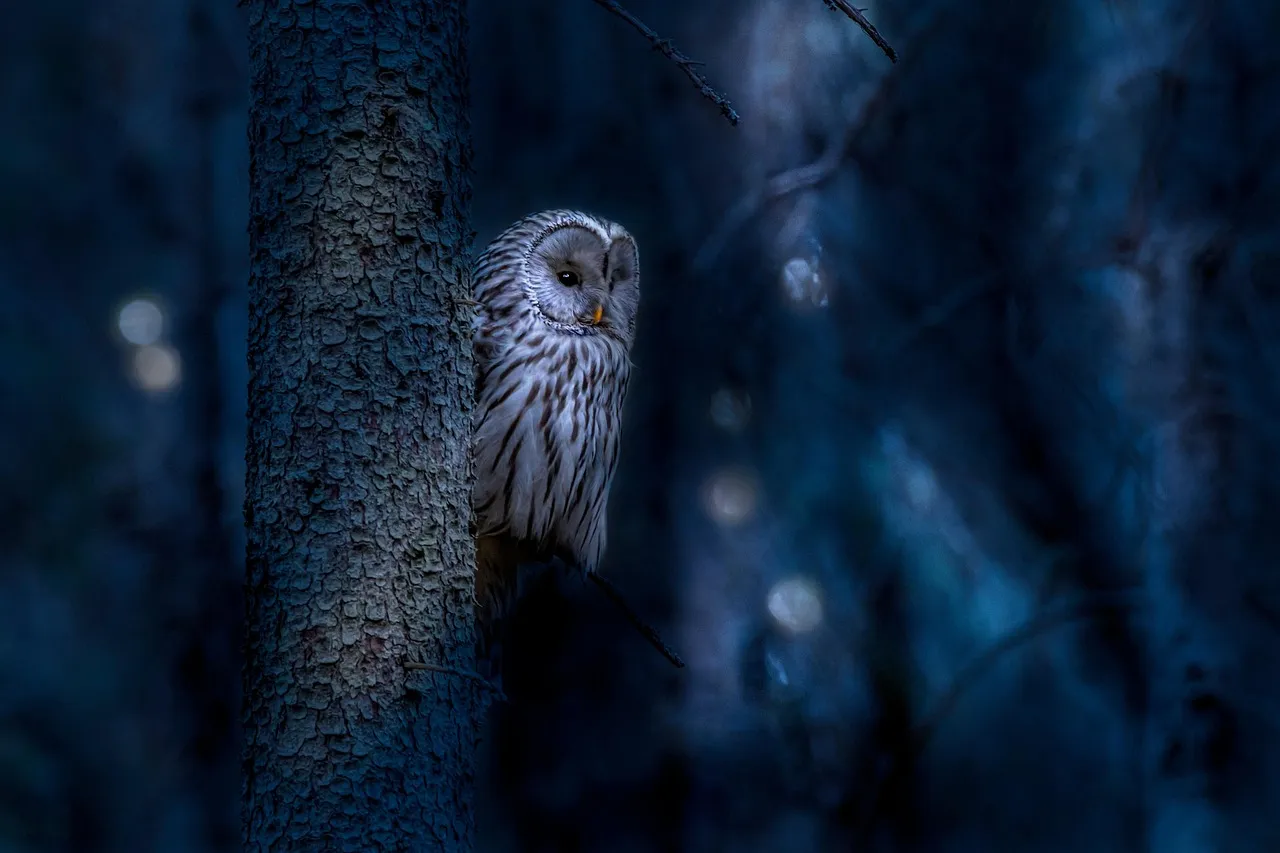
Owls can see much better at night than humans can. Image by Erik_Karits / Source: Pixabay.
Owls are birds that hunt for food at night. They have special adaptations that allow them to see very well in the dark. The most important adaptation is their large eyes. An owl’s eyes are much bigger than the eyes of other birds their size. This helps them collect more light when it is dark outside.
Inside their eyes, owls have many rod cells. These are special cells that help them see in dim light. Humans also have rod cells, but owls have a lot more. This means owls can see much better at night than humans can. The shape of their eyes is also different. Owl eyes are not round like human eyes. They are more like tubes. This special shape helps the eyes focus better in the dark and lets more light in.
Owls cannot move their eyes like humans do. Instead, they have a very flexible neck that can turn up to 270 degrees! This lets them look all around without moving their bodies. This is very useful when they are searching for prey at night.
Another adaptation is a special layer in their eyes called the tapetum lucidum. This layer reflects light back through the eye, giving the owl a second chance to see it. This is why owl eyes sometimes shine when a light is pointed at them in the dark.
Owls use their amazing night vision to hunt animals like mice, insects, and other small animals. Their eyesight helps them find food quickly and quietly, even when it is very dark.
Interesting Fact: Some owl species can see up to 100 times better in low light than humans can!
What helps owls see in the dark?
Large eyesSmall beaksBright feathersShort legs
What shape are owl eyes?
Like tubesSquareFlatTriangle
What do rod cells help with?
Seeing in dim lightHearing soundsSmelling foodFlying faster
Why do owl eyes shine in the light?
Tapetum lucidum reflects lightTheir eyes are wetThey blink quicklyThey have lots of feathers
How do owls look around if their eyes don't move?
Turn their necksMove their bodiesJump upFlap their wings
What might happen if an owl loses its night vision?
It can't hunt well at nightIt flies fasterIt eats plantsIt sleeps during day
Owls can see better at night than humans. True or false?
TrueFalse
What does adaptation mean?
A helpful changeA type of foodA kind of birdA hunting sound
Perfect For:
👩🏫 Teachers
• Reading comprehension practice
• Auto-graded assessments
• Literacy skill development
👨👩👧👦 Parents
• Reading practice at home
• Comprehension improvement
• Educational reading time
🏠 Homeschoolers
• Reading curriculum support
• Independent reading practice
• Progress monitoring
Reading Features:
📖
Reading Passage
Engaging fiction or nonfiction text
❓
Comprehension Quiz
Auto-graded questions
📊
Instant Feedback
Immediate results and scoring
📄
Printable Version
Download for offline reading
🔊
Read Aloud
Voice-over with word highlighting
Reviews & Ratings
No reviews yet. Be the first to share your experience!
Related Content
The Nature of Life Science
This passage, aligned with NGSS MS-LS1-1, introduces students in grades 6-8 to the foundational concepts of life science...
MS-LS1-1
Aerobic Organisms
This engaging, audio-integrated reading passage, titled 'Aerobic Organisms: The Breath of Life,' introduces students to ...
From Cells to Organisms
This educational passage, "From Cells to Organisms," explores the fundamental concept of how living things are built, st...
Using Dichotomous Keys to Identify Organisms
This audio-integrated passage, 'Using Dichotomous Keys to Identify Organisms,' introduces 6th-grade students to a fundam...
Science Vocabulary
This worksheet on domain-specific words will help students learn some science vocabulary. Students will be asked to matc...
L.3.6L.3.4.A
The Aorta: Molecules to Organisms of the Body's Largest Artery
This educational content features a fascinating reading passage, audio integrated for an enhanced learning experience, a...
Simple Machines Science Report
This science writing task requires students to clearly explain how three simple machines work using precise domain-speci...
W.5.4
Tools and Technology for Life Scientists
This informational passage for grades 6-8 explores the essential tools and technology used by life scientists, aligned t...
MS-LS1-1MS-LS1.A
Cryptobiosis: Pausing Life to Survive
This engaging, audio-integrated reading passage explores the amazing biological process of cryptobiosis, where organisms...
From Senses to Actions
This Grade 4-5 science passage, 'From Senses to Actions,' explores how our senses work together with the brain and body ...
The Science of Hibernation
This educational module, featuring an audio-integrated reading passage titled 'The Science of Hibernation,' is designed ...
The Life Cycle of a Giant Panda
This engaging, audio-integrated reading passage, titled "The Life Cycle of a Giant Panda," explores the fascinating stag...
How Bats Use Sound to See
This Grade 4-5 science passage, 'How Bats Use Sound to See,' explores the fascinating process of echolocation in bats. S...
Citizen Science and Ecological Monitoring
This engaging passage for grades 6-8 introduces the concept of citizen science and its critical role in ecological monit...
MS-LS2-1
The Pumpkin Life Cycle
This informational worksheet explores the pumpkin lifecycle, guiding students through procedural steps in a scientific t...
RI.2.3RI.2.10
Life Cycle Stages
This comprehensive word sort activity helps Grade 3 students understand the universal stages of life cycles as outlined ...
What Is Earth Science?
This engaging middle school science passage introduces students to the field of Earth science, aligning with NGSS standa...
MS-ESS1MS-ESS2MS-ESS3SEP
Growth and Development of Organisms
This middle school science passage, aligned with NGSS standards MS-LS1-4 and MS-LS1-5, provides an in-depth look at the ...
MS-LS1-4MS-LS1-5
Life Makers
This engaging word sort activity helps elementary students understand the diverse methods of reproduction in living orga...
Barnacles and Biofouling
This engaging, audio-integrated reading passage, 'Barnacles and Biofouling,' delves into the fascinating world of how ti...