This learning resource is available in interactive and printable formats. The interactive worksheet can be played online and assigned to students. The Printable PDF version can be downloaded and printed for completion by hand.
This engaging history reading passage explores King Solomon and the construction of the First Temple in ancient Jerusalem. Students will learn about Solomon’s reign, his reputation for wisdom and wealth, and the historical significance of the First Temple for the people of Israel. The passage integrates primary sources, archaeological evidence, cause-and-effect relationships, and change over time. Aligned to CA HSS 6.2 and CCSS RI.6-8.1-4, this resource supports close reading, critical thinking, and evidence-based learning. Activities include a multiple-choice quiz, explanatory writing prompts, graphic organizers, glossary, and timeline. The passage is available with read aloud audio and a full Spanish translation, making it accessible and rigorous for diverse learners studying ancient civilizations and world history.
CONTENT PREVIEW
Expand content preview
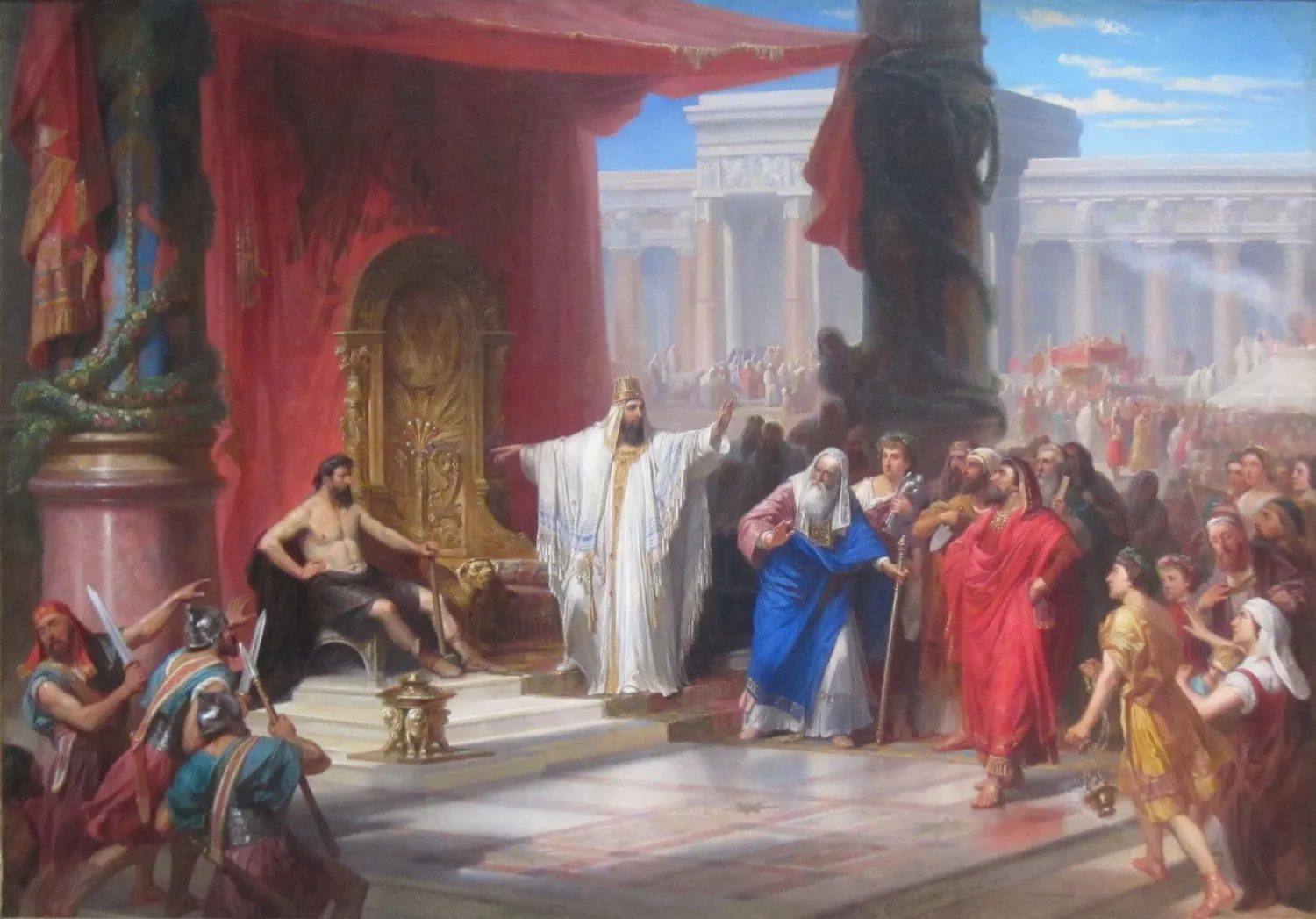
King Solomon and the Iron Worker, oil on canvas painting by Christian Schussele, 1863, Pennsylvania Academy of the Fine Arts/ Wikimedia Commons
King Solomon ruled the ancient kingdom of Israel from about 970 to 931 BCE. He is remembered for his remarkable wisdom, great wealth, and as the builder of the First Temple in Jerusalem. The Temple became a central place of worship and an important symbol for the people of Israel, reflecting their beliefs and society. Solomon’s actions shaped the religious and political landscape of the ancient Near East.
Solomon’s reign marked a period of peace and prosperity for Israel. According to historical and biblical sources, including the Hebrew Bible’s Book of Kings, Solomon’s wisdom was famous throughout the region. He made alliances with neighboring kingdoms, such as Egypt and Phoenicia, strengthening Israel’s position. Archaeological discoveries, like ancient inscriptions and monumental buildings, support the idea that Jerusalem became a powerful city during this era. However, historians still debate the full extent of Solomon’s kingdom because direct evidence is limited, and much knowledge comes from written records.
One of Solomon’s greatest achievements was the construction of the First Temple around 957 BCE. The Temple was built on Mount Moriah in Jerusalem, a site considered sacred. Solomon organized thousands of workers, including skilled craftsmen from Israel and Phoenicia. The Temple’s design included a large main hall, a special inner sanctuary called the Holy of Holies, and elaborate decorations made of gold, cedar wood, and precious stones. According to the Bible, the Temple housed the Ark of the Covenant, a sacred chest said to hold the tablets of the Ten Commandments. Archaeological digs in Jerusalem have uncovered ancient walls and artifacts that help historians imagine what the Temple area might have looked like, though much remains unknown due to later destructions.
The First Temple became the heart of Israelite religious life. It unified the people by giving them a central place for worship and festivals. The Temple also demonstrated the power and organization of Solomon’s government, as it required careful planning, resources, and cooperation among different groups. Over time, the Temple’s destruction and rebuilding would influence Jewish history and identity for centuries. The story of Solomon and the Temple connects to broader themes of leadership, faith, and how people shape their environment.
The building of the First Temple under King Solomon is significant because it represents a turning point in ancient Israel’s history. It reflects how leaders use architecture and religion to unify societies and leave a lasting legacy. This story also shows the challenges historians face in using both written records and archaeology to understand the past. The legacy of King Solomon and his Temple continues to inspire discussions about culture, faith, and the power of human ambition.
Interesting Fact: According to tradition, King Solomon wrote over 3,000 proverbs and 1,005 songs, though only some survive today.
Who built the First Temple?
King SolomonKing DavidNebuchadnezzarPharaoh Ramses
When was the First Temple completed?
1200 BCE957 BCE700 BCE500 BCE
Where was the Temple built?
BabylonJerusalemMemphisNineveh
Why did Solomon make alliances?
To gain wisdomTo strengthen IsraelTo find goldTo build pyramids
What was kept in the Holy of Holies?
Statue of SolomonArk of the CovenantGold coinsWeapons
How did the Temple affect Israel?
Divided the peopleUnified the peopleWas ignoredWeakened the kingdom
The Temple was built with help from Phoenician craftsmen. True or false?
TrueFalse
What does 'prosperity' mean?
A time of successA place of worshipA sacred boxA group of priests
Perfect For:
👩🏫 Teachers
• Reading comprehension practice
• Auto-graded assessments
• Literacy skill development
👨👩👧👦 Parents
• Reading practice at home
• Comprehension improvement
• Educational reading time
🏠 Homeschoolers
• Reading curriculum support
• Independent reading practice
• Progress monitoring
Reading Features:
📖
Reading Passage
Engaging fiction or nonfiction text
❓
Comprehension Quiz
Auto-graded questions
📊
Instant Feedback
Immediate results and scoring
📄
Printable Version
Download for offline reading
🔊
Read Aloud
Voice-over with word highlighting
Reviews & Ratings
No reviews yet. Be the first to share your experience!
Related Content
Ancient Civilizations and the Environment
This engaging history reading passage explores how ancient civilizations such as Mesopotamia, Egypt, and the Maya adapte...
Gender Roles in Ancient Civilizations
This engaging history reading passage explores the roles of men and women in various ancient civilizations, including Me...
Writing Prompts Ancient Civilizations
Step into the shoes of an archaeologist with this engaging worksheet focused on ancient civilizations. Students will be ...
W.5.2.A-2W.5.1.CW.5.1.D
Power and Authority in Ancient Civilizations
This passage explores the roles of men in positions of power within ancient civilizations, focusing on their authority i...
Evidence in Ancient History
This engaging history reading passage investigates how archaeologists and historians discover clues about how ancient pe...
Ancient Monarchy
This reading passage explores the concept of monarchy in ancient civilizations, focusing on the origins, structure, and ...
Ancient Theocracy
This engaging history reading passage explores the concept of theocracy in ancient civilizations, where priests and reli...
Ancient Mathematics
This passage explores the essential role of mathematics in ancient civilizations, including Mesopotamia, Egypt, Greece, ...
Ancient Canaan
This educational passage explores the land of Canaan, the historical homeland of the ancient Israelites. Students will l...
Ancient Money Barter
This passage explores the fascinating evolution from barter to the earliest coins in ancient civilizations, focusing on ...
Ancient Science and Medicine
This comprehensive reading passage explores the development of science and medicine in ancient civilizations, including ...
Ancient Literature
This passage explores the importance of ancient stories and poems from civilizations such as Greece, India, and Israel. ...
Ancient Agriculture Farming
This passage explores the transformative impact of farming on ancient societies, examining how the Neolithic Revolution ...
Ancient Writing Systems
This engaging history reading passage explores the origins and evolution of ancient writing systems, including cuneiform...
Geography of Ancient Israel
This passage explores the rich geography of Ancient Israel, focusing on how landforms, climate, and natural resources sh...
Slavery Across Civilizations
This detailed history reading passage explores the role and impact of slavery across several ancient civilizations, incl...
Social Classes in Ancient Societies
This passage explores the concept of social hierarchies in ancient civilizations, focusing on why societies such as Meso...
Social structures in Ancient World
This passage explores the organization and significance of family life in ancient societies, focusing on how extended fa...
Polytheism and Monotheism in Ancient Times
This passage explores the religious beliefs of ancient civilizations, focusing on the differences and similarities betwe...
Women in Ancient Societies
This reading passage explores the complex roles of women in the ancient world, focusing on civilizations such as Mesopot...