This reading passage, "Knuckles the Echidna: A Famous Character," introduces students to the popular video game character from the "Sonic the Hedgehog" series. Aligned with NGSS Life Science standards, particularly MS-LS4-D (Biodiversity and Humans), it serves as a unique bridge between popular culture and scientific curiosity. The passage describes Knuckles' defining traits – his strength, red color, and spiky fists – and then crucially explains that his design was directly inspired by the real-life echidna. It draws a clear distinction between the fictional character's abilities (like punching) and the actual behaviors of a real echidna, which are shy and use spikes for defense. This resource is excellent for fostering reading comprehension and analytical thinking by comparing fictional portrayals with biological reality. It encourages students to explore the biodiversity that sparks human imagination and to learn more about the unique animals that exist in the natural world.
Written by Workybooks TeamPublished by Workybooks
Preview
Sample passage and quiz content
CONTENT PREVIEW
Expand content preview
Have you ever played "Sonic the Hedgehog" video games? Then you probably know Knuckles the Echidna! He's a very famous and popular video game character, known for being tough, strong, and a loyal friend to Sonic. Knuckles is red, has powerful spiked fists, and can glide through the air. In his games, he's often the guardian of a powerful jewel.
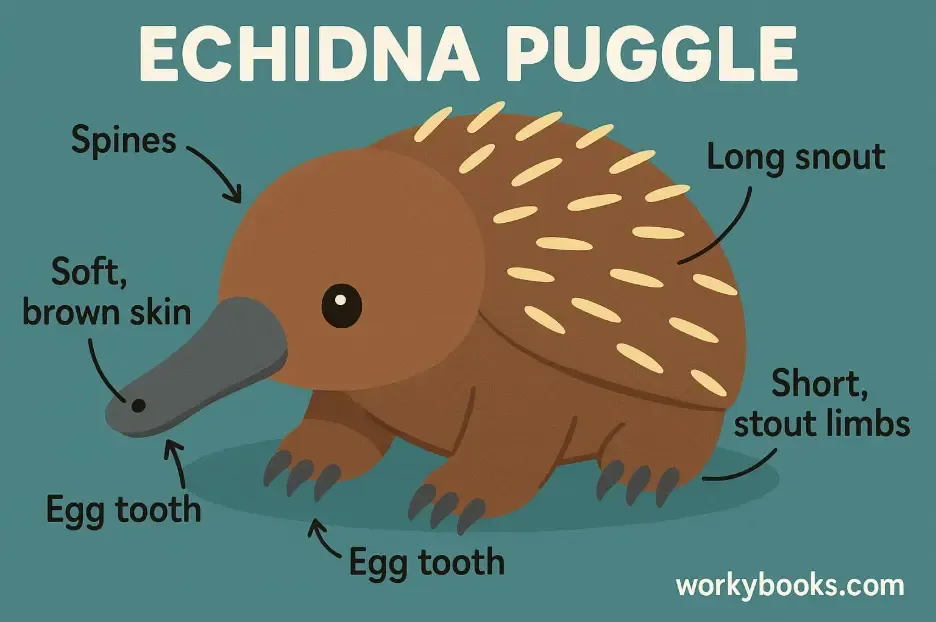
It's fun to think about where game creators get their ideas! Knuckles' design was inspired by a real echidna, especially his spiky look. Just like the real echidna, Knuckles has a spiky appearance, which is part of what makes him cool and recognizable.
But remember, while Knuckles is exciting, he's a fictional animal character created for games and cartoons. Real echidnas are very different! They don't wear big gloves, they don't talk, they can't punch, and they're usually shy, digging animals, not tough guardians of jewels. They use their spikes for protection, not for fighting.
Learning about characters like Knuckles can be a fun way to get curious about the real echidna and other amazing unique animals in our world. It helps us appreciate the biodiversity that exists and how it sparks imagination! So next time you see Knuckles, think about the quiet, spiky creature that inspired him.
Fun Fact: Knuckles made his very first appearance in the video game Sonic the Hedgehog 3 in 1994!
What kind of character is Knuckles?
A real animalA video game characterA petA plant
What is Knuckles often known for being?
Shy and quietSlow and sleepyTough and strongSmall and fluffy
What real animal inspired Knuckles' spiky look?
A hedgehogA porcupineAn echidnaA cat
What is one way real echidnas are different from Knuckles?
They are red.They have spikes.They don't wear gloves.They are fast runners.
What is Knuckles often the guardian of in his games?
A forestA jewelA houseA treasure map
Why did game creators use the echidna as inspiration for Knuckles?
For its singing.For its spiky look.For its long tongue.For its soft fur.
What is the main idea of this passage?
Knuckles is a super-fast runner.Knuckles is a fictional character inspired by a real animal.Knuckles lives on an island.All echidnas are red.
When a fictional character is based on a real animal, what can it help people do?
Play more games.Become curious about real animals.Forget about animals.Learn to draw better.
Who it's for
Perfect for the way you teach
Teachers
Build comprehension skills
Auto-graded quiz
Differentiated reading
Parents
Read together at home
Improve fluency
Quiet reading time
Homeschoolers
Reading curriculum support
Independent practice
Track Lexile growth
Topics
Knuckles the EchidnaSonic the Hedgehogvideo game characterfictional animalreal echidnaspikygamingpopular cultureinspirationbiodiversity educationMS-LS4-D
Reviews & Ratings
No reviews yet. Be the first to share your experience!
More reading you might love
14 more
Okapi: The Shy Zebra-Giraffe
This engaging science reading passage, titled "The Okapi: The Forest's Shy Zebra-Giraffe," introduces students to one of...
MS-LS4-DMS-LS4
Where Do Axolotls Live?
This science reading passage, titled "The Axolotl's Home," delves into the specific natural environment of the fascinati...
MS-LS4-DMS-LS2-1
The Blobfish
This science reading passage, titled "The Blobfish: A Deep-Sea Mystery," introduces students to one of Earth's most pecu...
MS-LS4-DMS-LS2-1
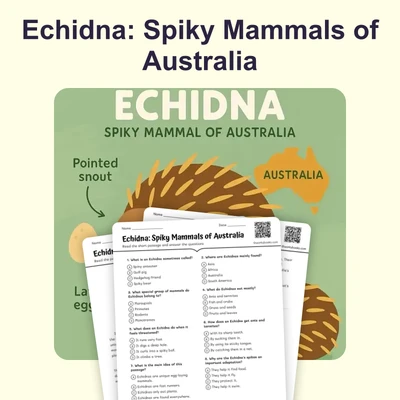
Echidna: Spiky Mammals of Australia
This science reading passage, titled "The Amazing Real Echidna: Spiky Mammals of Australia," introduces students to one ...
MS-LS4-D
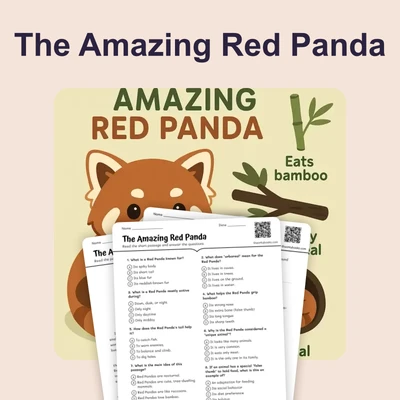
The Amazing Red Panda
This engaging science reading passage, titled "The Amazing Red Panda: A Fluffy Tree Dweller," introduces students to one...
MS-LS1-1MS-LS4-D
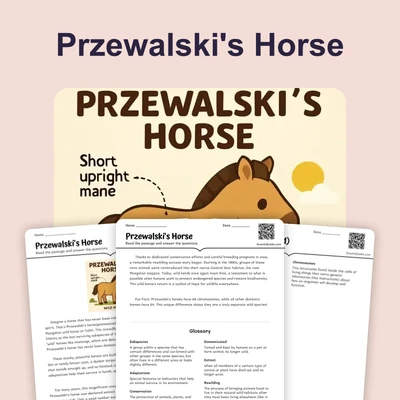
Przewalski's Horse
This engaging science reading passage, titled "Przewalski's Horse: A Wild Comeback Story," introduces students to the tr...
MS-LS4-DMS-LS1-1
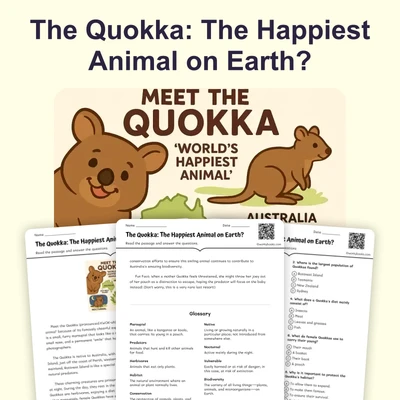
The Quokka
This engaging science reading passage, titled "The Quokka: The Happiest Animal on Earth?", introduces students to one of...
MS-LS4-DMS-LS1-1
The Proboscis Monkey
This interactive science reading passage, titled "The Proboscis Monkey: A Monkey with a Mighty Nose!", introduces studen...
MS-LS4-DMS-LS1-1
The Black-Footed Ferret
This engaging science reading passage, titled "The Black-Footed Ferret: North America's Rarest Mammal," introduces stude...
MS-LS4-DMS-LS1-1
The Wombat
This engaging science reading passage, titled "The Wombat: Australia's Burrowing Buddy," introduces students to one of A...
MS-LS4-DMS-LS1-1
The Orangutan
This engaging science reading passage, titled "The Orangutan: Red Ape of the Rainforest," introduces students to one of ...
MS-LS4-DMS-LS1-1
The Arabian Oryx
This science reading passage, titled "The Arabian Oryx: A Desert Survivor's Comeback," introduces students to a remarkab...
MS-LS4-DMS-LS1-1
The Komodo Dragon
This science reading passage, titled "The Komodo Dragon: A Giant Among Lizards," introduces students to one of the world...
MS-LS4-DMS-LS1-1
Where Do Sloths Live?
This interactive reading passage, titled "Where Do Sloths Live? A Slow Life in the Trees," introduces students to the un...