This learning resource is available in interactive and printable formats. The interactive worksheet can be played online and assigned to students. The Printable PDF version can be downloaded and printed for completion by hand.
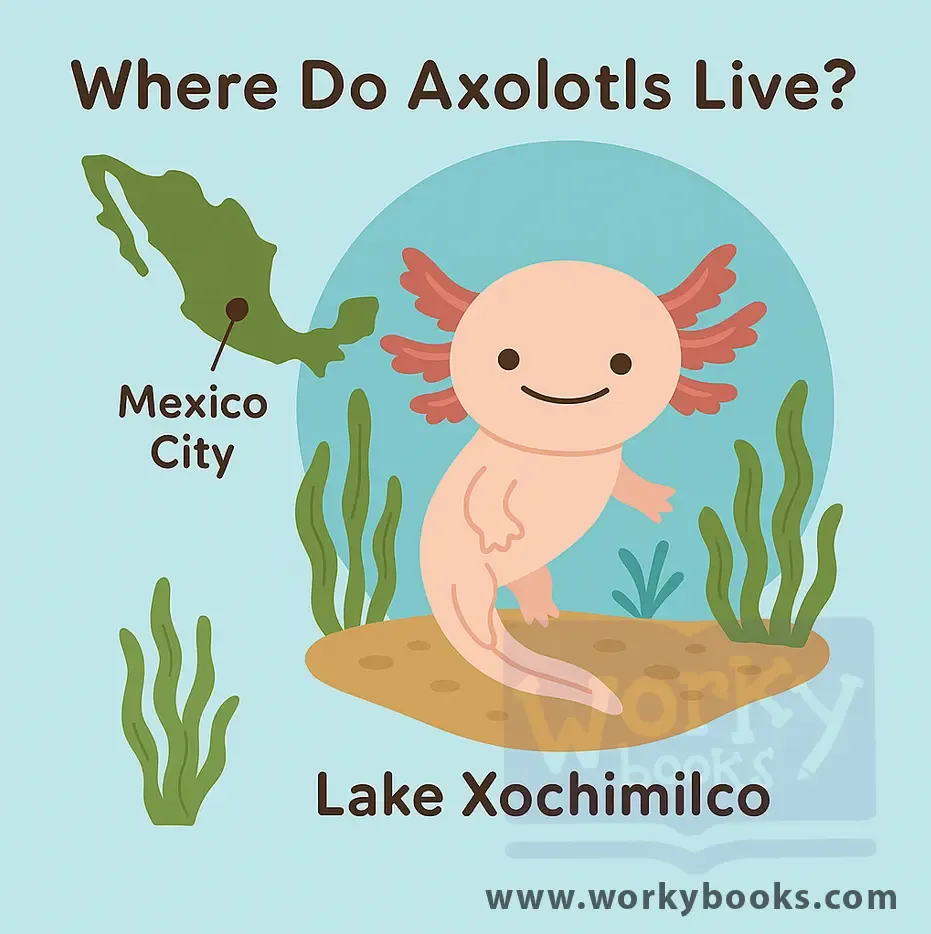
This science reading passage, titled "The Axolotl's Home," delves into the specific natural environment of the fascinating Axolotl, aligning perfectly with NGSS Life Science standards, particularly focusing on how organisms are adapted to their habitats (LS4.C) and the impact of humans on biodiversity (LS4.D). The passage clearly identifies Axolotls' native range in the lakes and canals near Mexico City, emphasizing their unique aquatic lifestyle. It describes the specific characteristics of their preferred habitat, such as cool, calm waters with abundant vegetation, and highlights Lake Xochimilco as their primary remaining wild home. The text explains why this particular environment is crucial for their survival, linking it to their physical adaptations like feathery gills. Crucially, the passage also addresses the threats to the Axolotl's habitat, including pollution and drainage, thereby introducing concepts of endangered species and environmental conservation. This resource is excellent for developing reading comprehension, enhancing science literacy about ecosystems, and fostering an understanding of human responsibility in protecting unique species and their homes.
CONTENT PREVIEW
Expand content preview
Have you ever wondered where the amazing Axolotl lives? This unique creature has a very special home! Axolotls are only found in a few lakes near Mexico City, which is a big city in Mexico. They are known as "Mexican walking fish," but they aren't fish at all – they are a type of salamander that stays in the water its whole life!
Their favorite place to live is in cool, calm waters with lots of plants at the bottom. The most famous place they live in the wild is called Lake Xochimilco. This lake isn't like a big, open ocean. It's more like a network of canals and shallow, muddy areas, perfect for hiding among the weeds and plants. This type of habitat gives them plenty of places to hide from bigger fish and find their food, like small worms and insects.
Axolotls need this very specific kind of water to survive. They don't do well in fast-moving rivers or super clean, open lakes. Their special feathery gills need calm, cool water to breathe properly.
Sadly, the Axolotl's home is getting smaller and dirtier. People are building more in Mexico City, and some of the lake areas are drying up or getting polluted. This means there are fewer and fewer good places for wild axolotls to live, which is why they are in so much trouble. Protecting Lake Xochimilco and keeping its waters clean is super important to help these smiling creatures survive!
Fun Fact: Even though they live in Mexico City, axolotls were once worshipped by the Aztecs, who thought they were a god!
Where do Axolotls mostly live in the wild?
In desertsNear Mexico CityIn deep oceansOn mountains
What is the most famous lake where wild Axolotls live?
Lake SuperiorLake XochimilcoLake BaikalLake Victoria
What kind of water do Axolotls like?
Fast-moving riversSuper clean lakesCool, calm waterWarm, salty water
What does their habitat give them places to do?
Run fastFly highHide and find foodClimb trees
Why is the Axolotl's home getting smaller?
People are planting more trees.The water is getting too cold. Lake areas are drying up.Fish are eating their homes.
Why is it important that their home has calm water?
So they can sleep better.So their gills can breathe.So they can see far.So they can swim fast.
What is the main idea of this passage?
Axolotls are good pets.Axolotls live in a very specific, shrinking home.Mexico City has many lakes.Axolotls like eating worms.
If we want to help wild Axolotls, what is a good thing to do?
Give them warm water.Keep their lakes clean.Move them to the ocean.Plant more trees in deserts.
Perfect For:
👩🏫 Teachers
• Reading comprehension practice
• Auto-graded assessments
• Literacy skill development
👨👩👧👦 Parents
• Reading practice at home
• Comprehension improvement
• Educational reading time
🏠 Homeschoolers
• Reading curriculum support
• Independent reading practice
• Progress monitoring
Reading Features:
📖
Reading Passage
Engaging fiction or nonfiction text
❓
Comprehension Quiz
Auto-graded questions
📊
Instant Feedback
Immediate results and scoring
📄
Printable Version
Download for offline reading
🔊
Read Aloud
Voice-over with word highlighting
Reviews & Ratings
No reviews yet. Be the first to share your experience!
Related Content
The Narwhal: Arctic’s Unicorn of the Sea
This NGSS-aligned passage (MS-LS2-1) explores how narwhals survive in Arctic ecosystems. Students learn about specialize...
MS-LS2-1RI.6.3RI.7.3RI.8.8
The Blue-Ringed Octopus
This NGSS aligned passage explores how the tiny blue-ringed octopus impacts its ecosystem through predator-prey relation...
MS-LS2-1RI.6.3RI.7.3RI.8.8
Tardigrades: Microscopic Superheroes
Aligned to MS-LS1-1, this passage examines how tardigrade cell structures (TDP proteins, DNA-repair enzymes) allow survi...
MS-LS2-1RI.6.3RI.7.3RI.8.8
The Leafy Sea Dragon: Nature's Living Seaweed
This NGSS-aligned passage explores how leafy sea dragons (Phycodurus eques) demonstrate key life science concepts for mi...
MS-LS2-1RI.6.3RI.7.3RI.8.8
What Do Axolotls Eat?
This science reading passage, titled "What Do Axolotls Eat?", offers an engaging exploration into the feeding habits of ...
MS-LS2-1
The Blobfish
This science reading passage, titled "The Blobfish: A Deep-Sea Mystery," introduces students to one of Earth's most pecu...
MS-LS4-DMS-LS2-1
What Do Blobfish Eat?
This science reading passage, titled "What Do Blobfish Eat?", offers an engaging exploration into the feeding habits of ...
MS-LS2-1
Echidna: Spiky Mammals of Australia
This science reading passage, titled "The Amazing Real Echidna: Spiky Mammals of Australia," introduces students to one ...
MS-LS4-D
Knuckles the Echidna: A Famous Character
This reading passage, "Knuckles the Echidna: A Famous Character," introduces students to the popular video game characte...
MS-LS4-DMS-LS4
The Amazing Red Panda
This engaging science reading passage, titled "The Amazing Red Panda: A Fluffy Tree Dweller," introduces students to one...
MS-LS1-1MS-LS4-D
Przewalski's Horse
This engaging science reading passage, titled "Przewalski's Horse: A Wild Comeback Story," introduces students to the tr...
MS-LS4-DMS-LS1-1
The Quokka
This engaging science reading passage, titled "The Quokka: The Happiest Animal on Earth?", introduces students to one of...
MS-LS4-DMS-LS1-1
The Proboscis Monkey
This interactive science reading passage, titled "The Proboscis Monkey: A Monkey with a Mighty Nose!", introduces studen...
MS-LS4-DMS-LS1-1
The Black-Footed Ferret
This engaging science reading passage, titled "The Black-Footed Ferret: North America's Rarest Mammal," introduces stude...
MS-LS4-DMS-LS1-1
The Wombat
This engaging science reading passage, titled "The Wombat: Australia's Burrowing Buddy," introduces students to one of A...
MS-LS4-DMS-LS1-1
The Orangutan
This engaging science reading passage, titled "The Orangutan: Red Ape of the Rainforest," introduces students to one of ...
MS-LS4-DMS-LS1-1
The Arabian Oryx
This science reading passage, titled "The Arabian Oryx: A Desert Survivor's Comeback," introduces students to a remarkab...
MS-LS4-DMS-LS1-1
Where Do Penguins Live?
This engaging science reading passage, titled "Where Do Penguins Live? A Cold and Coastal World," clarifies the diverse ...
MS-LS2-1
The Emperor Penguin
This science reading passage, titled "The Emperor Penguin: Antarctica's Royal Survivor," introduces students to one of t...