The Blobfish
Interactive passage with audio narration, comprehension questions, and printable PDF.
By completing this purchase you agree to our Terms of Use and Privacy Policy. Your subscription renews automatically until you cancel. You can cancel anytime from your account settings. All sales are final and non-refundable. Digital content is available for download in your account immediately upon purchase.
What's included
The Blobfish preview and details
About this printable The Blobfish science reading passage, NGSS-aligned (Grades 3-8)
Sample passage and quiz from The Blobfish
Reading passage and comprehension quiz preview
The Blobfish
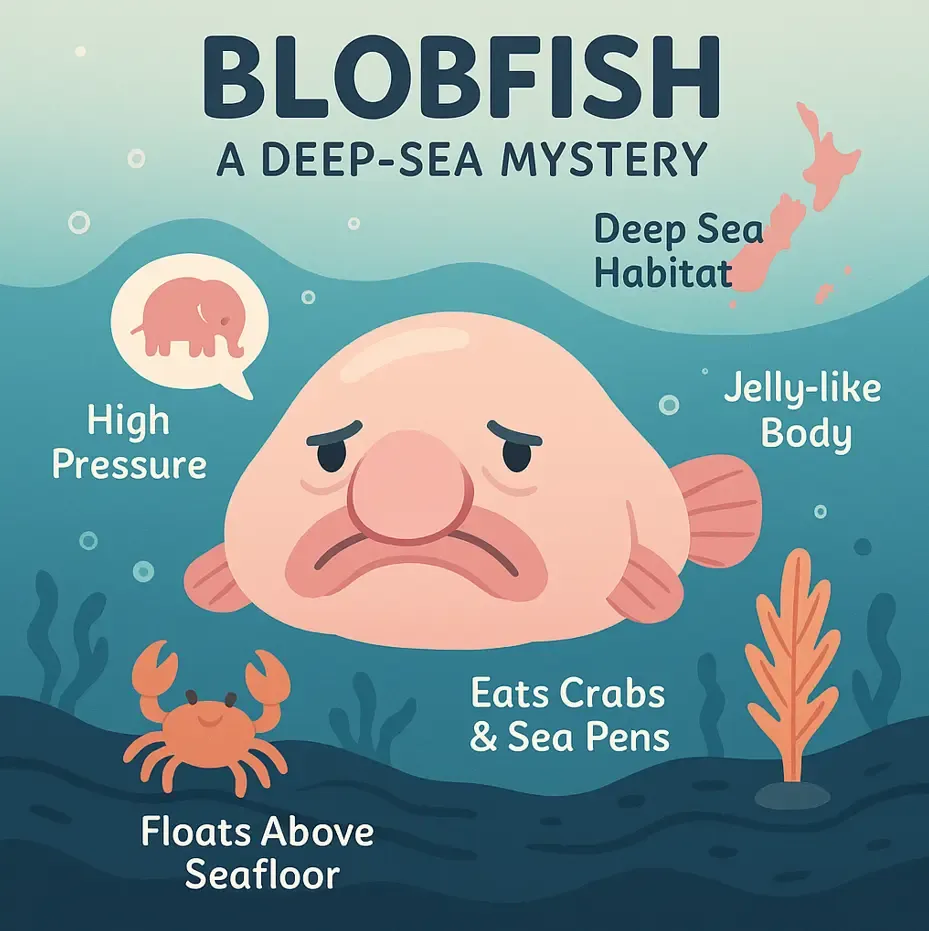
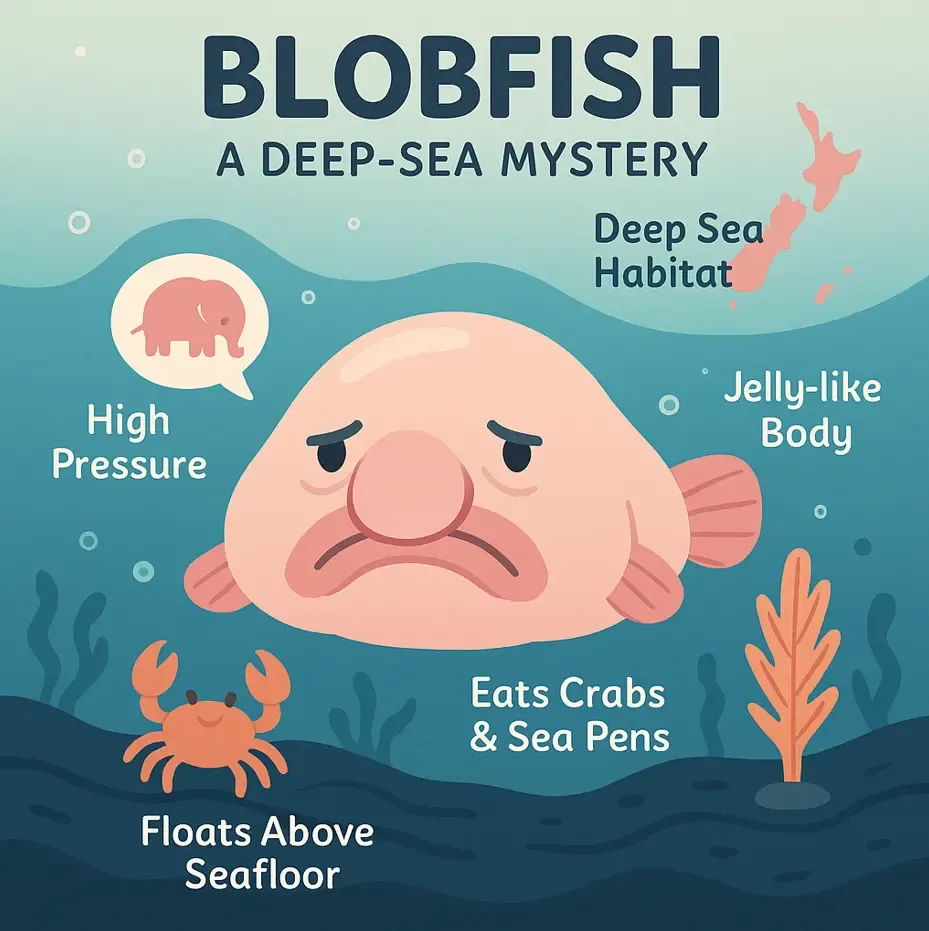
Imagine an animal that looks like a grumpy, pink blob! That's the Blobfish, one of the ocean's most unusual residents. You won't find this creature swimming near the surface; the blobfish lives deep, deep down in the ocean, off the coasts of Australia, Tasmania, and New Zealand.
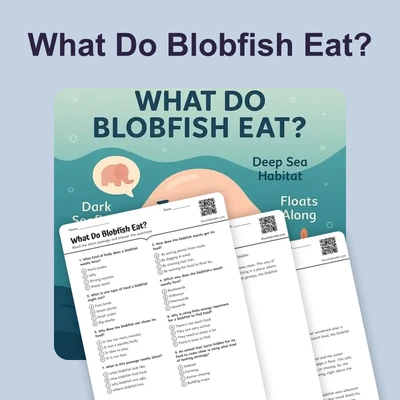
Life in the deep sea is very different from life on land or near the surface. Down there, the water pressure is incredibly high – like having many elephants standing on you! To survive this crushing pressure, the blobfish doesn't have strong muscles or a hard skeleton like most fish. Instead, its body is mostly a jelly-like mass. This jelly is less dense than water, which means the blobfish can float just above the seafloor without using much energy. It simply drifts along, waiting for small creatures like crabs and sea pens to float by, which it then gulps down.
Because of its squishy body, the blobfish looks very different when it's brought up to the surface. Without the immense pressure of the deep sea supporting its body, it expands and loses its shape, looking like the sad, melting blob we often see in pictures. In its natural home, however, it's thought to look more like a typical fish, just a very soft one!
The blobfish might look strange, but it's perfectly adapted to its extreme environment. It's a reminder of how diverse and surprising life can be in the hidden parts of our planet.
Fun Fact: The blobfish was once voted the "World's Ugliest Animal" to raise awareness about threatened species!
Comprehension quiz (8 questions)
1. Where does the blobfish mostly live?
2. What does the blobfish's body mostly feel like?
3. What is special about the blobfish's body that helps it in the deep sea?
4. What does the blobfish do to eat?
5. Why does the blobfish look like a "sad, melting blob" at the surface?
6. Why is the blobfish a good example of how diverse life can be?
7. What is the main idea of this passage?
8. If an animal needs a very specific, harsh environment to survive, like the blobfish, what might happen if its home changes even a little?
Perfect for the way you teach
- Build comprehension skills
- Auto-graded quiz
- Differentiated reading
- Read together at home
- Improve fluency
- Quiet reading time
- Reading curriculum support
- Independent practice
- Track Lexile growth