The Quokka
Interactive passage with audio narration, comprehension questions, and printable PDF.
By completing this purchase you agree to our Terms of Use and Privacy Policy. Your subscription renews automatically until you cancel. You can cancel anytime from your account settings. All sales are final and non-refundable. Digital content is available for download in your account immediately upon purchase.
What's included
The Quokka preview and details
About this printable The Quokka science reading passage, NGSS-aligned (Grades 3-8)
Sample passage and quiz from The Quokka
Reading passage and comprehension quiz preview
The Quokka: The Happiest Animal on Earth?
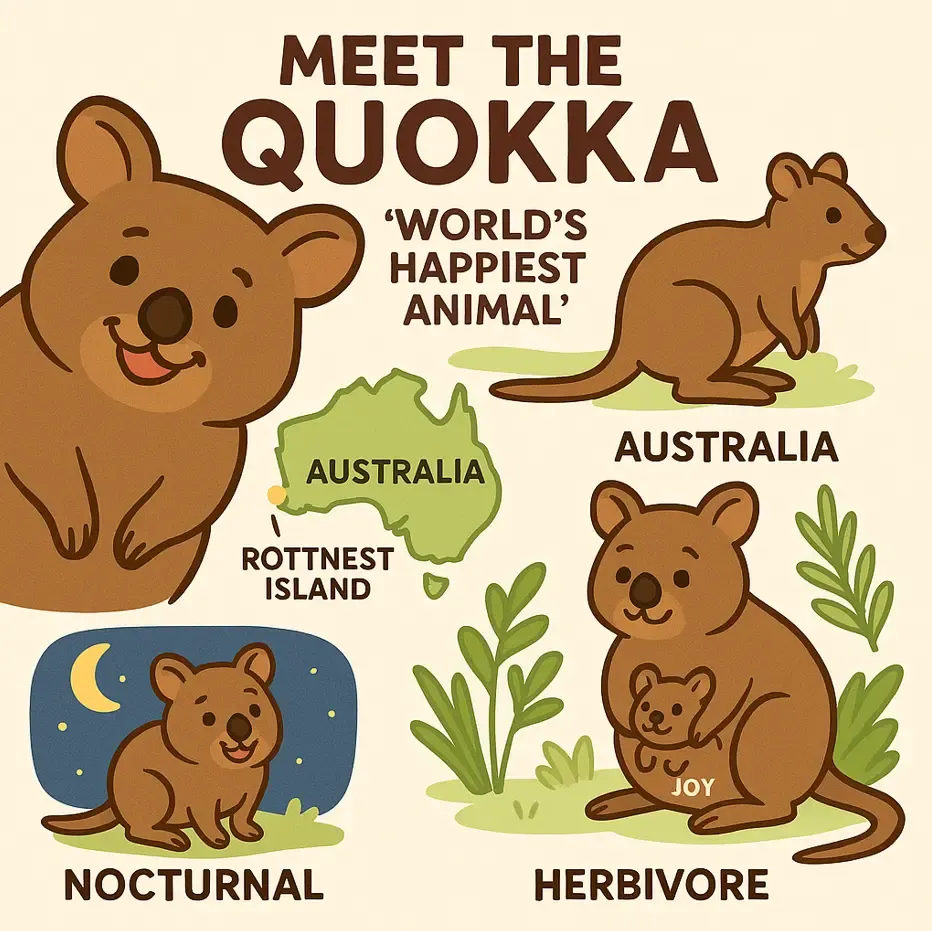
Meet the Quokka (pronounced KWOK-uh), often called "the world's happiest animal" because of its famously cheerful expression! This adorable and unique animal is a small, furry marsupial that looks like a miniature kangaroo. It has round ears, a small nose, and a permanent "smile" that has made it a favorite for tourists and photographers.
The Quokka is native to Australia, with its largest populations found on Rottnest Island, just off the coast of Perth, Western Australia. While a few live on the mainland, Rottnest Island is like a special paradise where they thrive without many natural predators.
These charming creatures are primarily nocturnal, meaning they are most active at night. During the day, they rest in the shade, often hidden among vegetation. Quokkas are herbivores, enjoying a diet of leaves, stems, bark, and grasses. Like other marsupials, female Quokkas have a pouch where they carry and raise their young, called "joeys."
Quokkas are naturally curious and not afraid of humans, which contributes to their "friendly" reputation. However, it's important to remember they are wild animals and should be observed respectfully without touching or feeding them. Despite their thriving numbers on Rottnest Island, the Quokka is considered vulnerable to extinction on the mainland due to habitat loss and predators. Protecting their unique habitat and raising awareness about their needs are crucial conservation efforts to ensure this smiling animal continues to contribute to Australia's amazing biodiversity.
Fun Fact: When a mother Quokka feels threatened, she might throw her joey out of her pouch as a distraction to escape, hoping the predator will focus on the baby instead! (Don't worry, this is a very rare last resort!)
Comprehension quiz (8 questions)
1. What is the Quokka often called?
2. Where is the largest population of Quokkas found?
3. What type of animal is a Quokka?
4. What does a Quokka's diet mainly consist of?
5. What does "nocturnal" mean for the Quokka?
6. What do female Quokkas use to carry their young?
7. What is the main idea of this passage?
8. Why is it important to protect the Quokka's habitat?
Perfect for the way you teach
- Build comprehension skills
- Auto-graded quiz
- Differentiated reading
- Read together at home
- Improve fluency
- Quiet reading time
- Reading curriculum support
- Independent practice
- Track Lexile growth