The Black-Footed Ferret
Interactive passage with audio narration, comprehension questions, and printable PDF.
By completing this purchase you agree to our Terms of Use and Privacy Policy. Your subscription renews automatically until you cancel. You can cancel anytime from your account settings. All sales are final and non-refundable. Digital content is available for download in your account immediately upon purchase.
What's included
The Black-Footed Ferret preview and details
About this printable The Black-Footed Ferret science reading passage, NGSS-aligned (Grades 3-8)
Sample passage and quiz from The Black-Footed Ferret
Reading passage and comprehension quiz preview
The Black-Footed Ferret
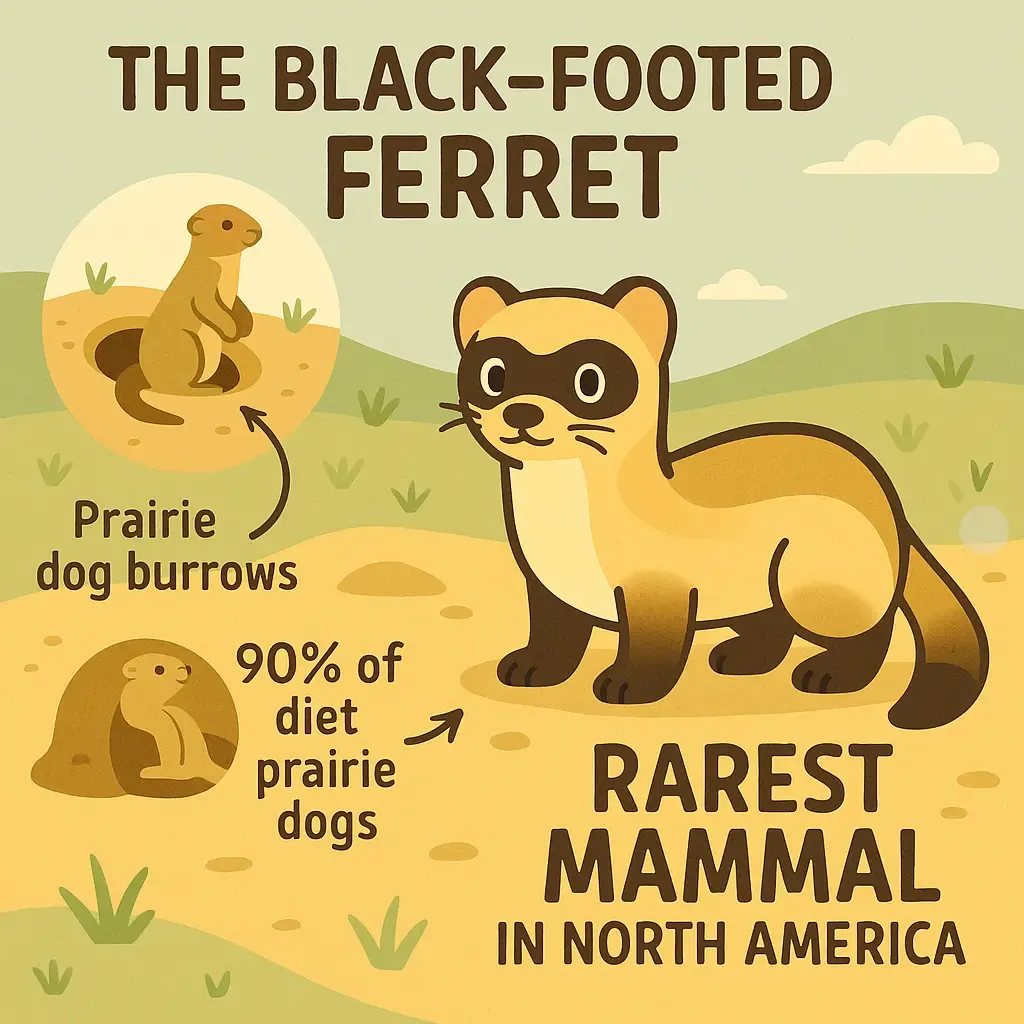
Imagine an animal that vanished from the wild, only to be found again, giving hope to its entire species! That's the incredible story of the Black-footed ferret, often called North America's rarest mammal. This slender, masked creature is a true survivor, playing a vital role in its ecosystem.
The Black-footed ferret has a distinctive appearance: a bandit-like black mask across its eyes, black feet, and a black tip on its tail, contrasting with its yellowish-brown body. These unique animals are specially adapted for life in the vast grassland ecosystems of central North America.
What makes this ferret so unique is its extreme dependence on prairie dogs. Black-footed ferrets live almost exclusively in prairie dog burrows, using them for shelter, raising their young, and, most importantly, as their primary food source. An astonishing 90% of their diet consists of prairie dogs! This tight relationship means the ferret's survival is directly linked to healthy prairie dog populations.
Sadly, this highly specialized diet and habitat made the Black-footed ferret incredibly vulnerable. By 1980, it was declared extinct in the wild, mainly due to widespread prairie dog eradication programs (as they were seen as pests) and diseases like sylvatic plague. However, in 1981, a small, surviving population was miraculously discovered in Wyoming.
Since then, an intensive conservation effort has been underway. Dedicated scientists have worked tirelessly to breed ferrets in captivity and reintroduce them into protected areas across the West. This rewilding success story, despite ongoing challenges, makes the Black-footed ferret a powerful symbol of endangered species recovery and the importance of preserving biodiversity in our prairies.
Fun Fact: Black-footed ferrets are incredible nocturnal hunters, using their keen sense of smell and hearing to track prairie dogs even within their dark underground tunnels!
Comprehension quiz (8 questions)
1. What is the Black-footed ferret often called?
2. What distinctive feature does the Black-footed ferret have on its face?
3. What is the Black-footed ferret's primary food source?
4. Where do Black-footed ferrets live and hunt?
5. What happened to the Black-footed ferret by 1980?
6. Where was a small surviving population of ferrets found in 1981?
7. What is the main idea of this passage?
8. Why is conserving prairie dog populations important for ferrets?
Perfect for the way you teach
- Build comprehension skills
- Auto-graded quiz
- Differentiated reading
- Read together at home
- Improve fluency
- Quiet reading time
- Reading curriculum support
- Independent practice
- Track Lexile growth