The Wombat
Interactive passage with audio narration, comprehension questions, and printable PDF.
What's included
The Wombat preview and details
About this printable The Wombat science reading passage, NGSS-aligned (Grades 3-8)
Sample passage and quiz from The Wombat
Reading passage and comprehension quiz preview
The Wombat
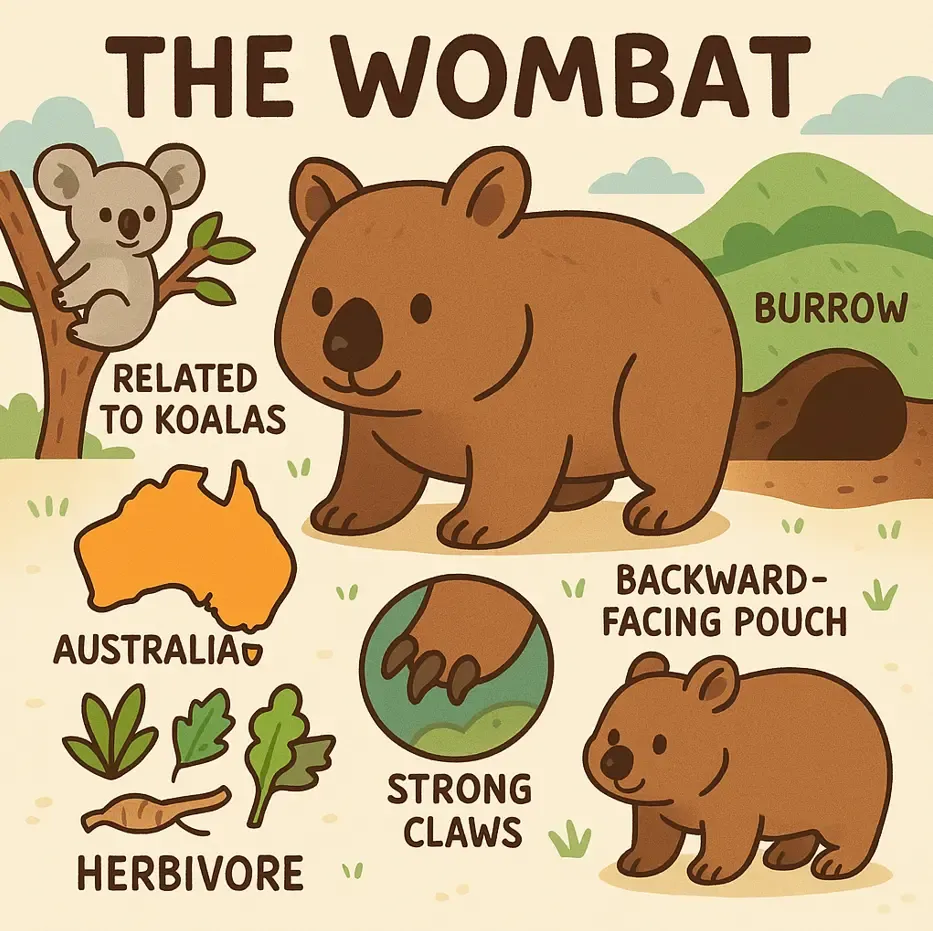
Meet the Wombat, Australia's adorable and powerful burrowing champion! These stocky, short-legged marsupials are truly unique animals native to southeastern Australia, including Tasmania. While they might look a bit like tiny bears, wombats are actually more closely related to koalas.
Wombats are built for digging. They have strong, broad paws with long, sharp claws that allow them to create vast, complex networks of tunnels underground. These burrowing animals spend most of their days sleeping in their cool, dark burrows, as they are primarily nocturnal. At night, they emerge to graze on grasses, roots, herbs, and bark, making them herbivores.
One of the most fascinating adaptations of the Wombat is its backward-facing pouch. Unlike kangaroos or koalas whose pouches open towards their heads, a female wombat's pouch opens towards her rear. This incredible design keeps dirt out of the pouch and off her baby (called a joey) when she's digging, ensuring the joey stays safe and clean in their underground home.
Wombats are also known for their tough defense. If threatened, they will often dive headfirst into a burrow, using their incredibly thick, bony rump to block the entrance. This hard backside makes it very difficult for predators to attack them from behind. While some wombat species are more common, others like the northern hairy-nosed wombat are critically endangered, making conservation efforts important for the native Australian wildlife and its biodiversity.
Fun Fact: A wombat's poop is cube-shaped! This unusual shape prevents it from rolling away, making it easier for wombats to mark their territory.
Comprehension quiz (8 questions)
1. What country is the Wombat native to?
2. What kind of animal is a Wombat?
3. What special adaptation does a female wombat have for its pouch?
4. What activity are wombats best known for?
5. When are wombats primarily active?
6. What do wombats eat?
7. What is the main idea of this passage?
8. Why is the wombat's hard rump a good defense?
Perfect for the way you teach
- Build comprehension skills
- Auto-graded quiz
- Differentiated reading
- Read together at home
- Improve fluency
- Quiet reading time
- Reading curriculum support
- Independent practice
- Track Lexile growth