Where Do Sloths Live?
Interactive passage with audio narration, comprehension questions, and printable PDF.
By completing this purchase you agree to our Terms of Use and Privacy Policy. Your subscription renews automatically until you cancel. You can cancel anytime from your account settings. All sales are final and non-refundable. Digital content is available for download in your account immediately upon purchase.
What's included
Where Do Sloths Live? preview and details
About this printable Where Do Sloths Live? science reading passage, NGSS-aligned (Grades 3-8)
Sample passage and quiz from Where Do Sloths Live?
Reading passage and comprehension quiz preview
Where Do Sloths Live?
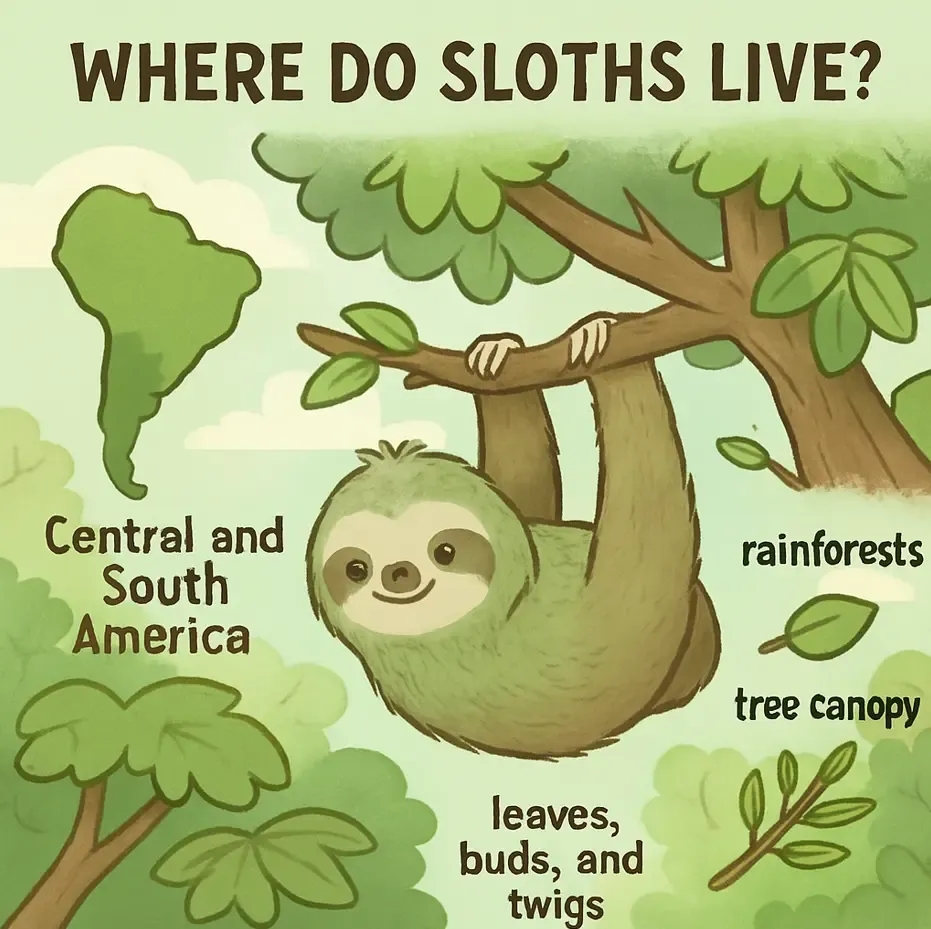
When you picture a sloth, you likely imagine a very slow-moving, furry creature. This is absolutely true, but where do these unique animals call home? Sloths are exclusively found in the warm, humid tropical rainforests of Central and South America, from Honduras south to Peru and eastern Brazil.
These incredible unique mammals spend almost their entire lives high up in the tree canopy. Their long, powerful claws and strong grip are perfectly adapted for hanging upside down from branches, where they eat, sleep, and even give birth! Living in the trees provides them with safety from ground predators like jaguars and also puts them right next to their main food source: leaves, buds, and twigs. Their fur often appears greenish due to algae growing on it, which provides excellent camouflage among the leafy branches.
There are two main types of sloths: two-toed sloths and three-toed sloths. While both are arboreal and inhabit the same general regions, they sometimes prefer different parts of the canopy or slightly different types of trees within the rainforest. Their lives revolve around their arboreal home, moving deliberately and slowly to conserve energy.
Sadly, the very habitat that supports their unique lifestyle is under threat. Rapid deforestation for agriculture, logging, and development is causing severe habitat loss and fragmentation for sloths across their range. This makes it harder for them to find food, mates, and safe places to live. Conservation efforts are crucial to protect these gentle, slow-moving inhabitants of the rainforest and preserve the rich biodiversity of these vital ecosystems.
Fun Fact: Sloths descend from their trees only about once a week to poop, making this a rare and vulnerable journey!
Comprehension quiz (8 questions)
1. Where are sloths primarily found?
2. What kind of habitat do sloths live in?
3. Where do sloths spend most of their lives?
4. What is a sloth's main food source?
5. What helps camouflage a sloth in trees?
6. What are the two main types of sloths?
7. What is the main idea of this passage?
8. What is a major threat to sloth populations?
Perfect for the way you teach
- Build comprehension skills
- Auto-graded quiz
- Differentiated reading
- Read together at home
- Improve fluency
- Quiet reading time
- Reading curriculum support
- Independent practice
- Track Lexile growth