The Proboscis Monkey
Interactive passage with audio narration, comprehension questions, and printable PDF.
What's included
The Proboscis Monkey preview and details
About this printable The Proboscis Monkey science reading passage, NGSS-aligned (Grades 3-8)
Sample passage and quiz from The Proboscis Monkey
Reading passage and comprehension quiz preview
The Proboscis Monkey
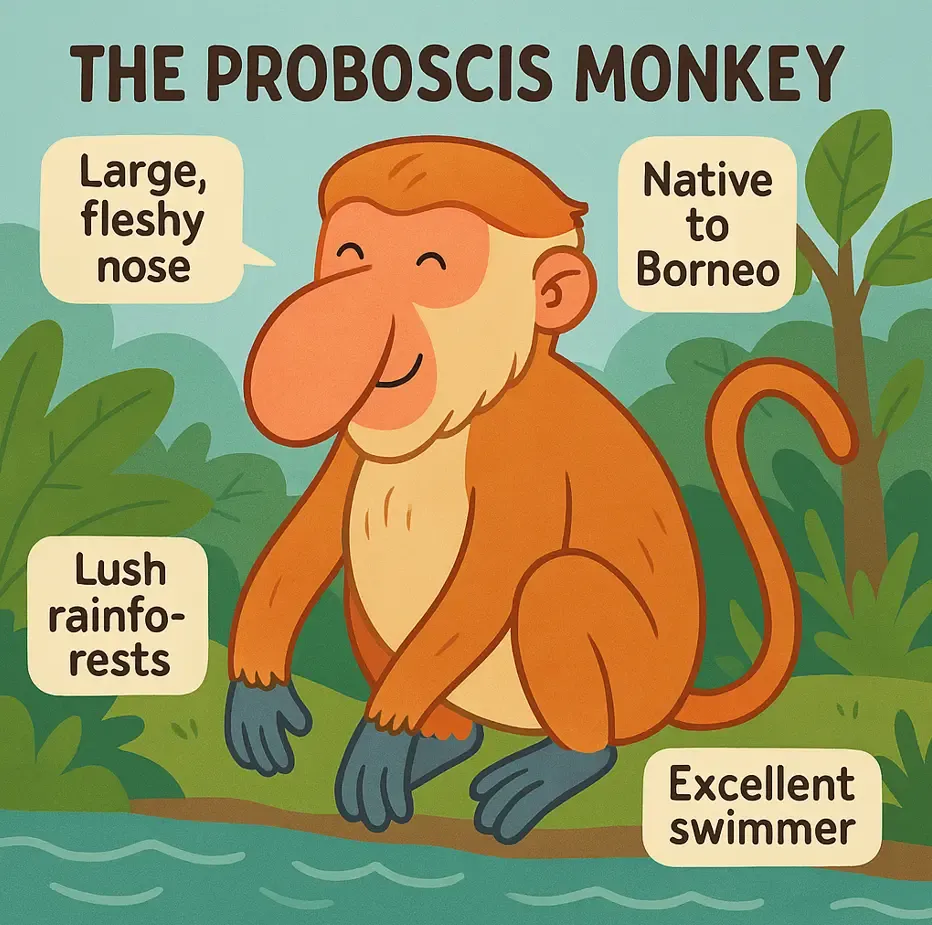
Imagine a monkey with a nose so big it hangs down past its mouth! That's the extraordinary Proboscis monkey(pronounced pro-BOSS-kis), one of the most unique and recognizable primates in the world. This fascinating unique animal is easy to spot, especially the males, who boast an exceptionally large, fleshy nose that can grow up to 7 inches long!
These long-nosed monkeys are native only to the island of Borneo, where they make their home in the lush rainforests, particularly in mangrove forests and along riverine forests. They are highly arboreal, spending most of their time in the trees, but they are also surprisingly semi-aquatic and excellent swimmers. Their partially webbed feet help them paddle through the water, often leaping into rivers from branches.
Proboscis monkeys have reddish-brown fur on their backs, a creamy belly, and a long tail. Besides their noses, another distinctive feature is their "pot belly," which comes from their specialized herbivore diet. They primarily eat young leaves and unripe fruits. Their digestive system is uniquely adapted to break down these tough foods, which often ferment, causing their bellies to bloat.
These social animals live in groups, often led by a dominant male. Sadly, the Proboscis monkey is an endangered species. Their unique habitat in Borneo's coastal and riverine areas is rapidly shrinking due to deforestation for palm oil plantations and logging. Dedicated conservation efforts are crucial to protect these incredible long-nosed monkeys and ensure the future of Borneo's rich biodiversity.
Fun Fact: Male Proboscis monkeys' big noses are believed to act like a resonating chamber, making their alarm calls louder and more impressive to attract females!
Comprehension quiz (8 questions)
1. What is the most distinctive feature of the Proboscis monkey?
2. Where is the Proboscis monkey native to?
3. What kind of forests do Proboscis monkeys prefer?
4. What does "arboreal" mean for the Proboscis monkey?
5. What does "semi-aquatic" mean for the Proboscis monkey?
6. What do Proboscis monkeys primarily eat?
7. What is the main idea of this passage?
8. Why is the Proboscis monkey considered an endangered species?
Perfect for the way you teach
- Build comprehension skills
- Auto-graded quiz
- Differentiated reading
- Read together at home
- Improve fluency
- Quiet reading time
- Reading curriculum support
- Independent practice
- Track Lexile growth