The Komodo Dragon
Interactive passage with audio narration, comprehension questions, and printable PDF.
By completing this purchase you agree to our Terms of Use and Privacy Policy. Your subscription renews automatically until you cancel. You can cancel anytime from your account settings. All sales are final and non-refundable. Digital content is available for download in your account immediately upon purchase.
What's included
The Komodo Dragon preview and details
About this printable The Komodo Dragon science reading passage, NGSS-aligned (Grades 3-8)
Sample passage and quiz from The Komodo Dragon
Reading passage and comprehension quiz preview
The Komodo Dragon
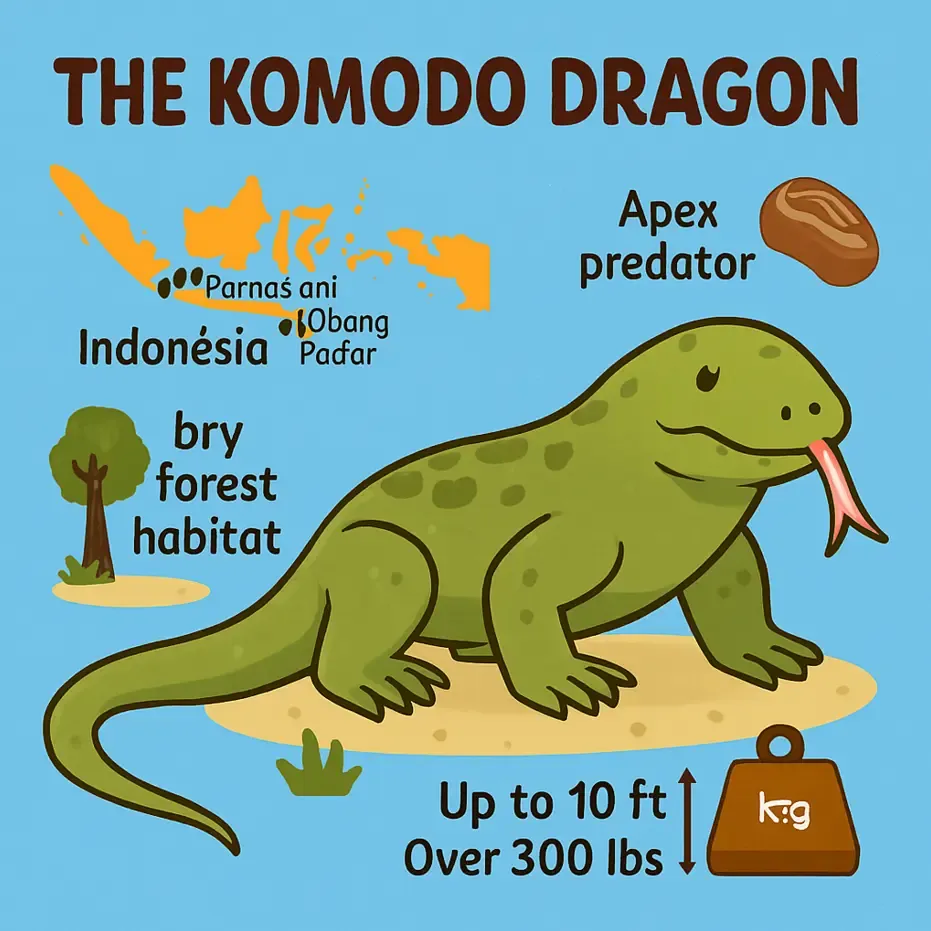
Imagine encountering a creature that looks like it stepped out of a prehistoric era – a giant, scaly lizard with a powerful build. This is the Komodo Dragon, the largest and heaviest lizard on Earth! These awe-inspiring unique animals are truly apex predators in their island homes in Indonesia.
Komodo Dragons are found only on a few islands in Indonesia, most notably Komodo Island, Rinca, Flores, Gili Motang, and Padar. Here, they rule their rugged, dry forest habitat as the top of the food chain. Adult Komodo Dragons can grow up to 10 feet long and weigh over 300 pounds, making them incredibly formidable. Their bodies are covered in tough, scaly skin, and they possess powerful limbs, sharp claws, and a long, muscular tail that is as long as their body.
As skilled carnivores, Komodo Dragons are ambush predators, lying in wait to surprise their prey. Their diet includes deer, wild boar, and even water buffalo. While they have sharp, serrated teeth, their bite is particularly dangerous due to toxic bacteria in their saliva, which can lead to severe infections in their victims, weakening them over time. They also have an excellent sense of smell, using their forked tongues to "taste" the air for signs of food, even from miles away.
Despite their fearsome nature, the Komodo Dragon is an endangered species. Their population is small and isolated, primarily threatened by habitat loss due to human encroachment and climate change, which affects their prey base.Dedicated conservation efforts are vital to protect these magnificent monitor lizards and ensure the survival of this iconic part of biodonesian heritage.
Fun Fact: Komodo Dragons can eat up to 80% of their body weight in a single meal!
Comprehension quiz (8 questions)
1. What is the Komodo Dragon known for being?
2. Where are Komodo Dragons found?
3. What kind of predator is a Komodo Dragon?
4. What makes their bite dangerous?
5. How do Komodo Dragons "taste" the air?
6. What is a major threat to Komodo Dragons?
7. What is the main idea of this passage?
8. What do Komodo Dragons eat?
Perfect for the way you teach
- Build comprehension skills
- Auto-graded quiz
- Differentiated reading
- Read together at home
- Improve fluency
- Quiet reading time
- Reading curriculum support
- Independent practice
- Track Lexile growth