Life in Ancient China
Interactive passage with audio narration, comprehension questions, and printable PDF.
By completing this purchase you agree to our Terms of Use and Privacy Policy. Your subscription renews automatically until you cancel. You can cancel anytime from your account settings. All sales are final and non-refundable. Digital content is available for download in your account immediately upon purchase.
What's included
Life in Ancient China preview and details
About this printable Life in Ancient China reading passage (Grades 5-8)
Sample passage and quiz from Life in Ancient China
Reading passage and comprehension quiz preview
Life in Ancient China
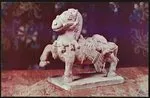
"Chinese horse, Han dynasty" / Library of Congress.
In Ancient China, daily life was shaped by a strong social hierarchy and the influence of geography, dynastic rule, and philosophical traditions. Three important groups—farmers, scholars, and soldiers—helped build and maintain Chinese civilization across more than two thousand years, especially during the Han dynasty (206 BCE–220 CE).
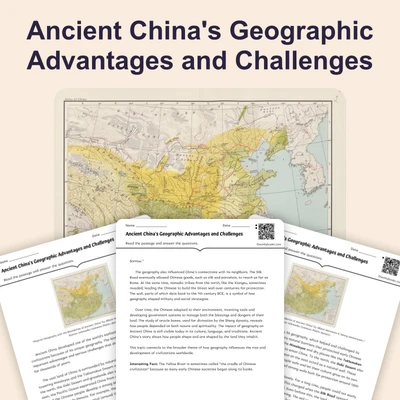
The majority of Ancient China's population were farmers. Living mainly along the Yellow River and Yangtze River valleys, they grew rice, millet, and wheat. The geography of river basins provided rich soil for farming, but frequent floods forced farmers to develop irrigation and flood-control systems. Archaeological evidence, such as ancient plows and remains of terraced fields, shows how farmers adapted to their environment. Despite their vital role, farmers were ranked below scholars in the Confucian order, though higher than merchants and artisans. In official Han government records, Emperor Wen praised farmers in 179 BCE for "feeding the nation," yet they paid high taxes and were often required to work on state projects like the Great Wall.
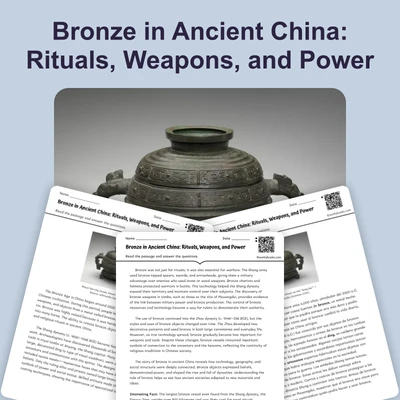
Scholars formed an elite class in Ancient China. Influenced by Confucianism, which emphasized respect, education, and moral duty, scholars studied classic texts and trained to become government officials. The civil service examination system, first developed during the Han dynasty, allowed men to gain government positions based on knowledge rather than family background. Bronze inscriptions and ancient books such as the "Analects" provide evidence of the scholar's role and daily life. Scholars advised emperors, wrote histories, and were highly respected. Their status reflected the importance of knowledge and ethical leadership in Chinese society.
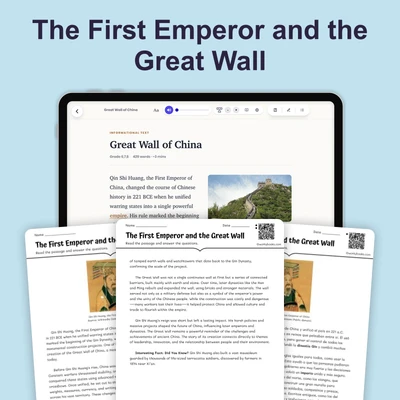
Soldiers protected the empire's borders and maintained internal order. Military service was both a duty and an opportunity for social advancement, especially during times of war. The famous Terracotta Army—thousands of life-sized clay soldiers buried with Emperor Qin Shi Huang in 210 BCE—shows the significance of the military. Soldiers defended against nomadic invaders like the Xiongnu, helped expand the empire, and enforced law and order. However, soldiers were often paid less than scholars and sometimes faced harsh conditions. Historical records from the Han dynasty describe long campaigns and strict discipline.
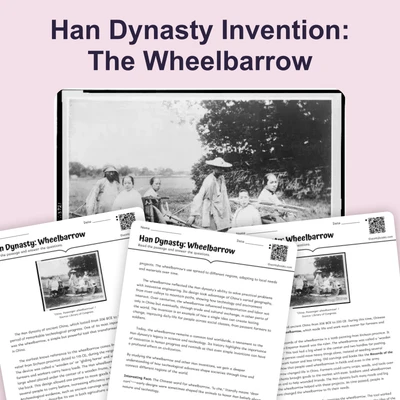
Throughout Ancient China’s history, the relationships between these groups changed. The development of new farming tools improved crop yields, supporting population growth. The civil service system allowed more social mobility, as scholars could rise in status. Soldiers gained importance in times of conflict but were less respected during peace. Despite these changes, the basic social hierarchy remained: farmers produced food, scholars governed, and soldiers protected.
Understanding the daily lives of farmers, scholars, and soldiers in Ancient China reveals how geography, technology, and philosophy shaped society and government. The legacy of these groups can still be seen in Chinese culture today, connecting the past to the present.
Interesting Fact: The Terracotta Army, discovered in 1974, includes over 8,000 unique soldiers, each with different facial features and armor.
Comprehension quiz (8 questions)
1. Which group made up most of Ancient China?
2. What river valleys did farmers live by?
3. Who praised farmers in 179 BCE?
4. How did the civil service exams change society?
5. Why did farmers build irrigation systems?
6. What did the Terracotta Army show?
7. The Han dynasty established civil service exams. True or false?
8. What is a social hierarchy?
Perfect for the way you teach
- Build comprehension skills
- Auto-graded quiz
- Differentiated reading
- Read together at home
- Improve fluency
- Quiet reading time
- Reading curriculum support
- Independent practice
- Track Lexile growth