The First Emperor: Qin Shi Huangdi Unites China — Reading Comprehension
Rate this
Premium Resource
Present
Present in classroom. No work saved
Assign
Classroom with student accounts, Track progress
Quick Play
No student accounts, assign with a link
Grades
5
6
7
8
PRINT+DIGITAL RESOURCE
This learning resource is available in interactive and printable formats. The interactive worksheet can be played online and assigned to students. The Printable PDF version can be downloaded and printed for completion by hand.
This comprehensive reading passage explores the rise of Qin Shi Huangdi, the first emperor who united ancient China. Students will learn about the historical context, major reforms, and lasting impact of the Qin Dynasty, including the construction of the Great Wall and the Terracotta Army. The passage integrates primary sources and archaeological evidence, addresses cause-and-effect relationships, and connects to broader East Asian history themes. Activities include a multiple-choice quiz, writing prompts, graphic organizers, and a timeline. Spanish translations and a simplified version ensure accessibility. This lesson aligns with CA HSS 6.6 and CCSS RH.6-8.1, RH.6-8.2. It is ideal for teaching world and ancient history with support for ELA informational text standards. Audio read aloud and Spanish translation included.
CONTENT PREVIEW
Expand content preview
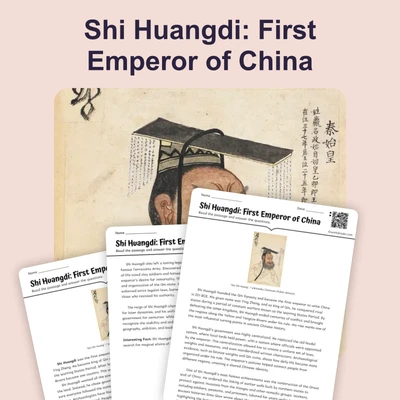
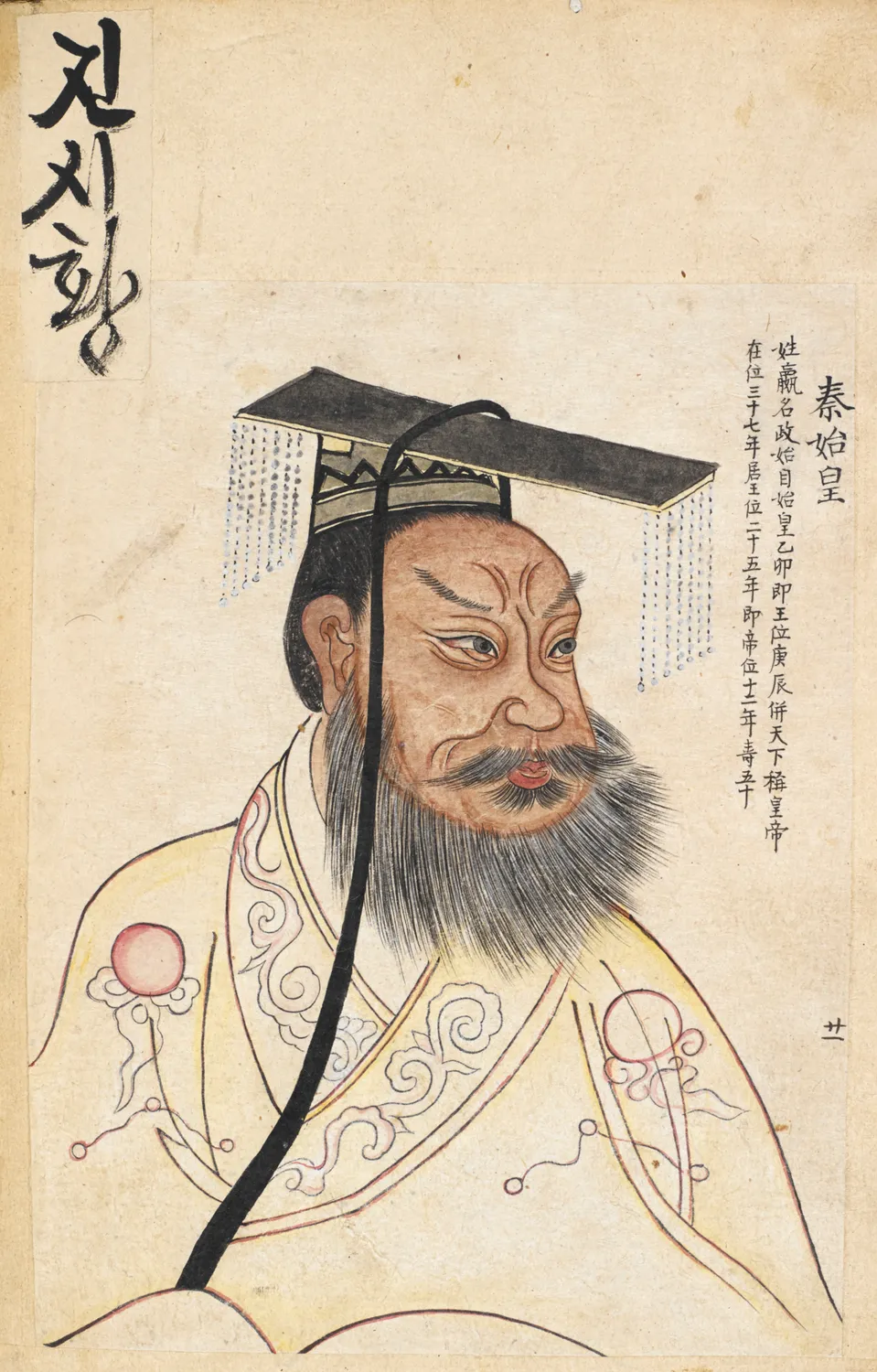
"Qin Shi Huang" / Wikimedia Commons (Public domain).
In 221 BCE, Qin Shi Huangdi became the first emperor of a unified China. Before his rule, China was divided into several warring states that constantly fought for power. Qin Shi Huangdi, originally named Ying Zheng, was the king of the state of Qin. Through powerful armies, strict laws, and clever strategies, he conquered rival kingdoms and ended centuries of conflict. His rule began a new era known as the Qin Dynasty, which greatly changed Chinese society.
Qin Shi Huangdi introduced a system called legalism, which used strict laws and harsh punishments to keep order. He dismissed old feudal systems and replaced regional leaders with his own officials. This change reduced the power of noble families and allowed the emperor to control the country more directly. Qin Shi Huangdi also ordered the construction of massive projects, including the first version of the Great Wall to protect China’s northern borders from nomadic invaders. Thousands of workers, many of them prisoners, built these walls under difficult conditions. Archaeological evidence shows sections of the wall and tools from this period.
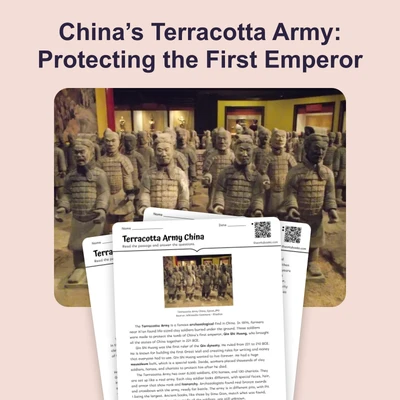
Another major achievement was the standardization of weights, measures, money, and even written characters across the empire. By making laws and communication the same everywhere, trade and government became much more efficient. Qin Shi Huangdi also created a network of roads and canals, making it easier to move armies and goods. One of the most famous discoveries from his reign is the Terracotta Army, found in 1974 near his tomb in Xi’an. Thousands of life-sized clay soldiers and horses were buried to protect the emperor in the afterlife, showing the power and resources he controlled.
However, Qin Shi Huangdi’s rule was very harsh. He burned books that disagreed with his ideas and punished those who criticized him. While his changes united China, many people suffered, especially peasants who worked on his building projects. When the emperor died in 210 BCE, rebellion soon broke out. The Qin Dynasty lasted only 15 years, but its impact shaped China’s future. Later dynasties kept many of Qin’s ideas about government and unity.
The unification of China under Qin Shi Huangdi is significant because it set the foundation for future dynasties and a centralized state. His policies, both positive and negative, show how leaders can use power to create lasting change. The Qin Dynasty’s story connects to broader themes in history, such as the rise and fall of empires and the importance of strong leadership in shaping society.
Interesting Fact: Qin Shi Huangdi’s real name was Ying Zheng, but he called himself "Shi Huangdi," meaning "First Emperor," to show his unique role in Chinese history.
Who became China's first emperor?
Qin Shi HuangdiHan WudiConfuciusEmperor Wu
What year did Qin unify China?
221 BCE210 BCE1974 CE100 CE
What was built to protect northern borders?
Great WallForbidden CitySilk RoadGrand Canal
How did legalism affect society?
Created strict laws and punishmentsGave nobles more powerEncouraged free speechFocused on trade only
Why did Qin Shi Huangdi standardize weights and measures?
To make trade and government easierTo build the Terracotta ArmyTo punish noblesTo create feudal states
What happened after Qin Shi Huangdi died?
Rebellion broke outEmpire lasted 100 yearsHe became king againChina split into two
Qin Shi Huangdi started the Han Dynasty. (true/false)
FalseTrue
What does 'dynasty' mean?
Ruling family lineType of wallLaws and punishmentsClay army
Perfect For:
👩🏫 Teachers
• Reading comprehension practice
• Auto-graded assessments
• Literacy skill development
👨👩👧👦 Parents
• Reading practice at home
• Comprehension improvement
• Educational reading time
🏠 Homeschoolers
• Reading curriculum support
• Independent reading practice
• Progress monitoring
Reading Features:
📖
Reading Passage
Engaging fiction or nonfiction text
❓
Comprehension Quiz
Auto-graded questions
📊
Instant Feedback
Immediate results and scoring
📄
Printable Version
Download for offline reading
🔊
Read Aloud
Voice-over with word highlighting
Reviews & Ratings
No reviews yet. Be the first to share your experience!
Related Content
Life in Ancient China
This comprehensive history reading passage explores daily life and social structure in Ancient China, focusing on the ro...
Bronze in Ancient China
This passage explores the significance of bronze in Ancient China, focusing on its use in rituals, weapons, and expressi...
Geography of Ancient China
This passage examines the geographic advantages and challenges faced by Ancient China, exploring how natural features li...
Confucianism, Daoism, and Buddhism in China
This rigorous ancient history reading passage explores the development and impact of Confucianism, Daoism, and Buddhism ...
Evidence in Ancient History
This engaging history reading passage investigates how archaeologists and historians discover clues about how ancient pe...
Ancient Theocracy
This engaging history reading passage explores the concept of theocracy in ancient civilizations, where priests and reli...
Shi Huangdi: First Emperor of China
This rigorous history reading passage explores the remarkable reign of Shi Huangdi, the first emperor of China, and his ...
Ancient Canaan
This educational passage explores the land of Canaan, the historical homeland of the ancient Israelites. Students will l...
Ban Zhao: China's Woman Scholar
This passage explores the life and legacy of Ban Zhao, one of ancient China's most respected scholars and the author of ...
Ancient Philosophy
This reading passage takes students on a journey through the philosophical traditions of ancient Greece, India, and Chin...
Ancient Literature
This passage explores the importance of ancient stories and poems from civilizations such as Greece, India, and Israel. ...
Geography of Ancient Israel
This passage explores the rich geography of Ancient Israel, focusing on how landforms, climate, and natural resources sh...
Ancient Writing Systems
This engaging history reading passage explores the origins and evolution of ancient writing systems, including cuneiform...
Ancient Money Barter
This passage explores the fascinating evolution from barter to the earliest coins in ancient civilizations, focusing on ...
Ancient Science and Medicine
This comprehensive reading passage explores the development of science and medicine in ancient civilizations, including ...
Ancient Agriculture Farming
This passage explores the transformative impact of farming on ancient societies, examining how the Neolithic Revolution ...
Social structures in Ancient World
This passage explores the organization and significance of family life in ancient societies, focusing on how extended fa...
Ancient Mathematics
This passage explores the essential role of mathematics in ancient civilizations, including Mesopotamia, Egypt, Greece, ...
Terracotta Army China
This passage examines the remarkable discovery of China’s Terracotta Army, one of the world’s most famous archaeological...