Ban Zhao: China's Woman Scholar — Reading Comprehension
Rate this
Premium Resource
Present
Present in classroom. No work saved
Assign
Classroom with student accounts, Track progress
Quick Play
No student accounts, assign with a link
Grades
6
7
8
PRINT+DIGITAL RESOURCE
This learning resource is available in interactive and printable formats. The interactive worksheet can be played online and assigned to students. The Printable PDF version can be downloaded and printed for completion by hand.
This passage explores the life and legacy of Ban Zhao, one of ancient China's most respected scholars and the author of 'Admonitions for Women.' Students will learn about her achievements during the Han dynasty, her role in shaping ideas about education and family, and her influence on Chinese literature and society. The text integrates key academic vocabulary and references to primary sources, providing historical context and connections to geography and social hierarchy. Activities include multiple-choice questions, writing prompts, graphic organizers, and a timeline to deepen understanding. The passage is aligned to CA HSS 6.6.7 and CCSS RH.6-8.2, supporting critical thinking and analysis. Spanish translations and read aloud audio are included for accessibility. This resource is ideal for students studying ancient world history, women's roles in society, and the development of Chinese civilization.
CONTENT PREVIEW
Expand content preview
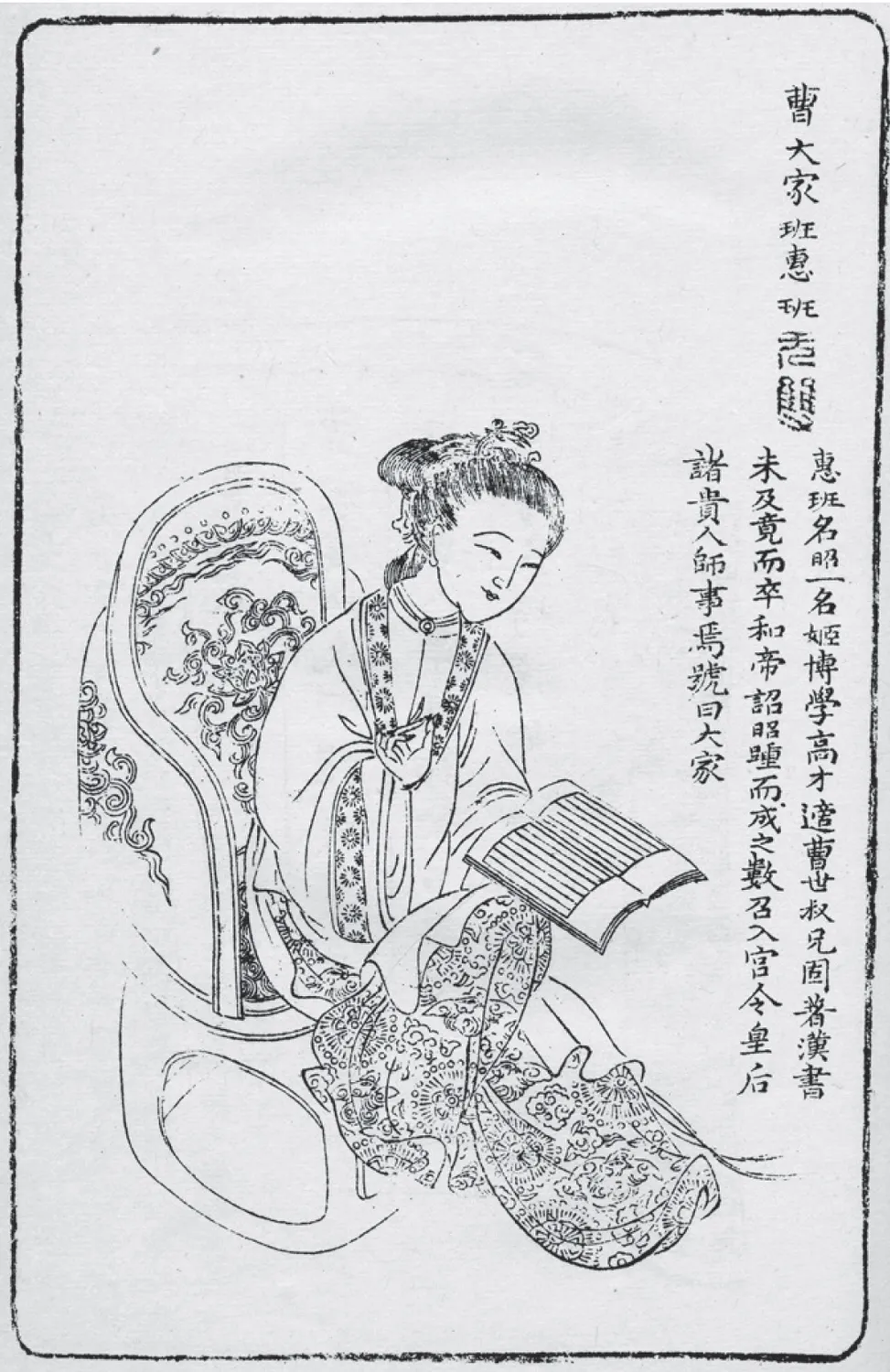
"Ban Zhao"/ Wikimedia Commons (Public domain).
Ban Zhao (c. 45–120 CE) was one of the most celebrated scholars of ancient China and the first known female historian in Chinese history. Living during the Han dynasty, Ban Zhao made important contributions to literature, education, and the role of women in society. Her work, Admonitions for Women, became a guiding text for women's conduct and education for centuries.
Ban Zhao was born in Anling, near modern-day Henan province, into a family of respected scholars. Her father, Ban Biao, started writing the Book of Han, a history of the Han dynasty. After her brother, Ban Gu, continued the project but died in prison in 92 CE, Ban Zhao completed the book. This made her the first woman to write an official Chinese history, a position rarely held by women in a male-dominated bureaucracy. Contemporary records, such as court documents and the text itself, show her careful attention to detail and her deep understanding of Confucian principles.
Ban Zhao's most famous work, Admonitions for Women (Nü Jie), was written to educate women in proper behavior, emphasizing respect, humility, and loyalty to family. She argued that women should be educated so they could serve their families and society wisely. In her own words, “Let a woman modestly yield to others,” Ban Zhao explained, “and she may be honored by them.” Although her advice followed traditional values, she pushed for expanded education for girls—a rare idea at the time. Archaeological evidence, such as Han tomb inscriptions, shows that educated women were respected in elite families.
Ban Zhao also served as a teacher to Empress Deng Sui and other women at the imperial court. Her guidance influenced the imperial family and contributed to shaping the expectations for women in noble households. Over time, the values she described became part of the social hierarchy of Chinese society, helping define gender roles well into later dynasties. Some later scholars debated whether Ban Zhao's writings limited women's freedoms or offered them new opportunities through education.
Ban Zhao's legacy demonstrates both change and continuity in Chinese culture. Her success as a scholar challenged the idea that women could not contribute to intellectual life. At the same time, her writings reinforced traditional Confucian values. Her life shows how geography, family background, and social status affected opportunities for women in ancient China. Today, Ban Zhao is remembered for her scholarship and for opening doors for women in Chinese history.
As you study Ban Zhao, consider how her ideas about education and gender connect to broader themes like social roles, power, and cultural traditions throughout world history.
Interesting Fact: Ban Zhao was so respected that she was invited to teach women at the royal palace, a rare honor for anyone outside the imperial family.
Who completed the Book of Han?
Ban ZhaoBan GuBan BiaoEmpress Deng Sui
What dynasty did Ban Zhao live in?
Han dynastyTang dynastyQin dynastyMing dynasty
Who did Ban Zhao teach at the imperial court?
Empress Deng SuiBan BiaoBan GuConfucius
Why was Admonitions for Women important?
It taught women proper behaviorIt was a mapIt was a poemIt was a law code
How did Ban Zhao impact education?
Encouraged education for girlsBanned booksBuilt schools for boys onlyWrote only about men
What is the meaning of 'hierarchy'?
A ranked social orderA type of foodA musical instrumentAn ancient city
Ban Zhao lived after 500 CE. True or false?
TrueFalse
What is a bureaucracy in this passage?
Government run by officialsA type of foodA painting styleA river
Perfect For:
👩🏫 Teachers
• Reading comprehension practice
• Auto-graded assessments
• Literacy skill development
👨👩👧👦 Parents
• Reading practice at home
• Comprehension improvement
• Educational reading time
🏠 Homeschoolers
• Reading curriculum support
• Independent reading practice
• Progress monitoring
Reading Features:
📖
Reading Passage
Engaging fiction or nonfiction text
❓
Comprehension Quiz
Auto-graded questions
📊
Instant Feedback
Immediate results and scoring
📄
Printable Version
Download for offline reading
🔊
Read Aloud
Voice-over with word highlighting
Reviews & Ratings
No reviews yet. Be the first to share your experience!
Related Content
Life in Ancient China
This comprehensive history reading passage explores daily life and social structure in Ancient China, focusing on the ro...
Bronze in Ancient China
This passage explores the significance of bronze in Ancient China, focusing on its use in rituals, weapons, and expressi...
Geography of Ancient China
This passage examines the geographic advantages and challenges faced by Ancient China, exploring how natural features li...
Confucianism, Daoism, and Buddhism in China
This rigorous ancient history reading passage explores the development and impact of Confucianism, Daoism, and Buddhism ...
Evidence in Ancient History
This engaging history reading passage investigates how archaeologists and historians discover clues about how ancient pe...
Ancient Theocracy
This engaging history reading passage explores the concept of theocracy in ancient civilizations, where priests and reli...
The First Emperor: Qin Shi Huangdi Unites China
This comprehensive reading passage explores the rise of Qin Shi Huangdi, the first emperor who united ancient China. Stu...
Shi Huangdi: First Emperor of China
This rigorous history reading passage explores the remarkable reign of Shi Huangdi, the first emperor of China, and his ...
Ancient Canaan
This educational passage explores the land of Canaan, the historical homeland of the ancient Israelites. Students will l...
Ancient Philosophy
This reading passage takes students on a journey through the philosophical traditions of ancient Greece, India, and Chin...
Ancient Literature
This passage explores the importance of ancient stories and poems from civilizations such as Greece, India, and Israel. ...
Geography of Ancient Israel
This passage explores the rich geography of Ancient Israel, focusing on how landforms, climate, and natural resources sh...
Ancient Writing Systems
This engaging history reading passage explores the origins and evolution of ancient writing systems, including cuneiform...
Ancient Money Barter
This passage explores the fascinating evolution from barter to the earliest coins in ancient civilizations, focusing on ...
Ancient Science and Medicine
This comprehensive reading passage explores the development of science and medicine in ancient civilizations, including ...
Ancient Agriculture Farming
This passage explores the transformative impact of farming on ancient societies, examining how the Neolithic Revolution ...
Social structures in Ancient World
This passage explores the organization and significance of family life in ancient societies, focusing on how extended fa...
Ancient Mathematics
This passage explores the essential role of mathematics in ancient civilizations, including Mesopotamia, Egypt, Greece, ...
Terracotta Army China
This passage examines the remarkable discovery of China’s Terracotta Army, one of the world’s most famous archaeological...