Mahavira: Founder of Jainism — Reading Comprehension
Rate this
Premium Resource
Present
Present in classroom. No work saved
Assign
Classroom with student accounts, Track progress
Quick Play
No student accounts, assign with a link
Grades
6
7
8
PRINT+DIGITAL RESOURCE
This learning resource is available in interactive and printable formats. The interactive worksheet can be played online and assigned to students. The Printable PDF version can be downloaded and printed for completion by hand.
This comprehensive history passage explores Mahavira, the founder of Jainism, and his impact on Ancient India. Students will learn about Mahavira's early life, the principles of Jain philosophy such as ahimsa (nonviolence), and how Jainism shaped Indian society. The passage uses primary sources and archaeological evidence to illustrate the development and spread of Jainism. Students will analyze cause-and-effect relationships, changes over time, and the significance of Mahavira’s teachings in the broader context of Indian history. Activities include a glossary, timeline, reading comprehension quiz, writing prompts, graphic organizers, and Spanish translation. This resource aligns with CA HSS 6.1.3 and CCSS RI.6-8.1, supporting historical thinking skills and ELA standards. Read aloud audio and accessible activities make it ideal for diverse learners.
CONTENT PREVIEW
Expand content preview
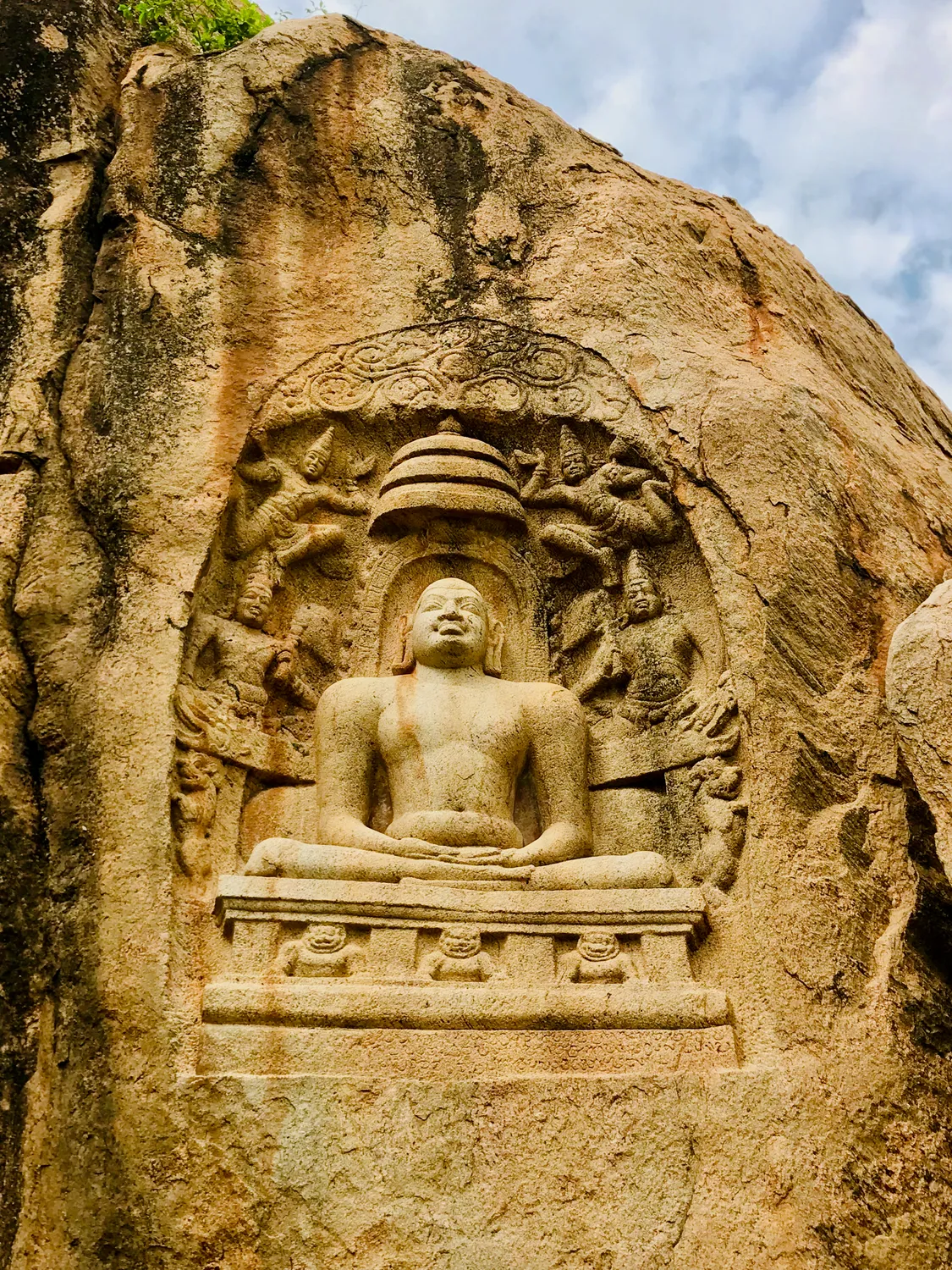
"10th century Samanar Malai Jain monuments, Madurai district, Tamil Nadu India - 7" by Ms Sarah Welch / Wikimedia Commons (CC0).
Mahavira was a key religious leader in ancient India. He lived from around 599 BCE to 527 BCE and is considered the founder of Jainism, one of India’s oldest religions. Mahavira’s teachings focused on the practice of ahimsa, or nonviolence, which influenced many people, including leaders centuries later. His life and ideas mark a significant period in Indian religious and social history.
Mahavira was born into a royal kshatriya family in the kingdom of Vaishali, in present-day Bihar. According to Jain texts, he left his wealthy life at the age of 30 to seek spiritual truth. For twelve years, he practiced extreme self-discipline and meditation in forests and villages. During this time, Mahavira followed a path of strict asceticism, avoiding harm to any living being. Archaeological discoveries, such as ancient Jain statues and inscriptions found at sites like Mathura, support the historical presence of Jain communities in northern India during this era.
After achieving enlightenment, Mahavira became known as a Tirthankara, or spiritual teacher who has found a path to liberation. He began teaching his followers the principles of Jainism. These included nonviolence, truthfulness, not stealing, chastity, and non-attachment to possessions. Mahavira’s followers, called Jains, organized into communities called sanghas. They built temples and spread his teachings throughout ancient India, especially in the regions of Gujarat and Rajasthan. Evidence from ancient cave inscriptions and the early Jain texts, such as the Agamas, describe the organization of Jain communities and their daily practices.
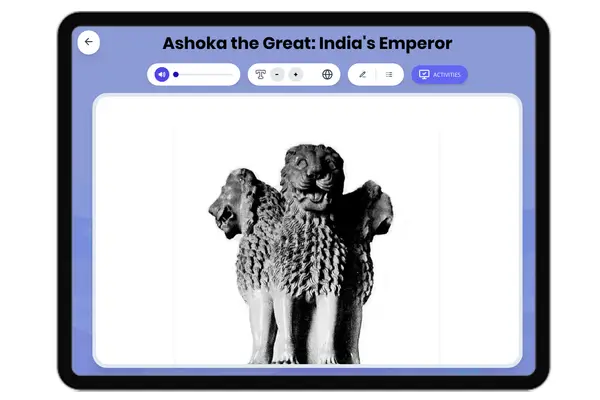
The philosophy of ahimsa taught by Mahavira had a lasting effect on Indian society. It shaped how people thought about the value of all life. This influence can be seen in later leaders, such as Ashoka, who promoted nonviolence and respect for all beings after converting to Buddhism. Jain monks and laypeople practiced strict vegetarianism, wore simple clothing, and often worked as merchants or scholars. Despite changes over time, the core values of Jainism have remained consistent. Today, the Jain community continues to follow the path set by Mahavira more than 2,500 years ago.
Mahavira’s teachings connected religion, social order, and ethics in ancient India. By encouraging nonviolence and self-restraint, Jainism offered an alternative to the rituals and social divisions found in Vedic society. The spread of Mahavira’s ideas shows how individual leaders can shape the development of entire civilizations.
Interesting Fact:Mahavira and the Buddha were born at almost the same time in India, and both taught about nonviolence, but their religions developed separately.
Mahavira’s story helps us understand how religion and philosophy influenced daily life and society in ancient India and lays the foundation for studying other belief systems and their impact on world history.
Coloring Page Prompt: Generate a coloring page for kids with a white background and thick black lines that represent Mahavira seated in a meditative pose, with a simple lotus base and a peaceful expression.
Who founded Jainism?
MahaviraAshokaBuddhaChandragupta
What does ahimsa mean?
NonviolenceMeditationTruthfulnessDevotion
Where was Mahavira born?
VaishaliPataliputraMathuraDelhi
Why did Mahavira leave his royal home?
To seek spiritual truthTo become a kingTo start a warTo travel the world
What effect did ahimsa have on Indian society?
Promoted respect for all lifeWeakened social orderLed to civil warEnded all religions
Who was Ashoka?
An emperor who promoted nonviolenceA Jain monkA rival kingA temple builder
Mahavira and Buddha lived at the same time.
TrueFalse
What is a sangha?
A Jain communityA type of foodA royal titleA city in India
Perfect For:
👩🏫 Teachers
• Reading comprehension practice
• Auto-graded assessments
• Literacy skill development
👨👩👧👦 Parents
• Reading practice at home
• Comprehension improvement
• Educational reading time
🏠 Homeschoolers
• Reading curriculum support
• Independent reading practice
• Progress monitoring
Reading Features:
📖
Reading Passage
Engaging fiction or nonfiction text
❓
Comprehension Quiz
Auto-graded questions
📊
Instant Feedback
Immediate results and scoring
📄
Printable Version
Download for offline reading
🔊
Read Aloud
Voice-over with word highlighting
Reviews & Ratings
No reviews yet. Be the first to share your experience!
Related Content
Geography of Ancient India
This passage explores the geography of Ancient India and its impact on the rise of civilization along the Indus River. L...
Trade Across Ancient India
This history reading passage explores Ancient India's trade networks and their impact on global connections. Students wi...
Cotton and Spices of Ancient India
This detailed passage explores the significance of cotton and spices as two of ancient India's most valuable resources. ...
The Caste System in Ancient India
This passage explores the origins, structure, and impact of the caste system in Ancient India, a hierarchical social ord...
The Vedas: Ancient Texts
This passage explores the Vedas, ancient texts from India that form the foundation of Hinduism. Students will learn abou...
Sanskrit and Indian Literature
This engaging passage explores Sanskrit, the classical language of ancient India, and its impact on culture, literature,...
Evidence in Ancient History
This engaging history reading passage investigates how archaeologists and historians discover clues about how ancient pe...
Ashoka the Great: India's Emperor
This passage explores the life and legacy of Ashoka the Great, emperor of the Mauryan Empire in ancient India. Discover ...
Indian Mathematician Invent Zero
This engaging history reading passage explores the invention of zero by ancient Indian mathematicians, focusing on the c...
Indian Science, Math, and Art
This engaging history reading passage explores the enduring achievements of Ancient India in science, mathematics, and a...
Ancient Literature
This passage explores the importance of ancient stories and poems from civilizations such as Greece, India, and Israel. ...
Ancient Philosophy
This reading passage takes students on a journey through the philosophical traditions of ancient Greece, India, and Chin...
The Delhi Sultanate and Islam in India
Explore the rise of the Delhi Sultanate and the arrival of Islam in India with this engaging history reading passage. St...
The Chola Empire Rules Southern India
This passage explores the achievements and legacy of the Chola Empire, which ruled Southern India from the 9th to 13th c...
Ancient Theocracy
This engaging history reading passage explores the concept of theocracy in ancient civilizations, where priests and reli...
Ancient Canaan
This educational passage explores the land of Canaan, the historical homeland of the ancient Israelites. Students will l...
Ancient Science and Medicine
This comprehensive reading passage explores the development of science and medicine in ancient civilizations, including ...
Geography of Ancient Israel
This passage explores the rich geography of Ancient Israel, focusing on how landforms, climate, and natural resources sh...
Ancient Writing Systems
This engaging history reading passage explores the origins and evolution of ancient writing systems, including cuneiform...
Ancient Agriculture Farming
This passage explores the transformative impact of farming on ancient societies, examining how the Neolithic Revolution ...