Moses and the Exodus from Egypt — Reading Comprehension
Rate this
Premium Resource
Present
Present in classroom. No work saved
Assign
Classroom with student accounts, Track progress
Quick Play
No student accounts, assign with a link
Grades
6
7
8
PRINT+DIGITAL RESOURCE
This learning resource is available in interactive and printable formats. The interactive worksheet can be played online and assigned to students. The Printable PDF version can be downloaded and printed for completion by hand.
This passage explores the story of Moses and the Exodus, a foundational event in ancient history when the Israelites were led out of slavery in Egypt. Students will analyze historical evidence, including archaeological discoveries and ancient texts, to understand the social, religious, and political impact of the Exodus. The passage examines cause-and-effect relationships, change over time, and the significance of geography in shaping the Israelites' journey. Activities include a glossary, multiple-choice questions, a writing exercise, graphic organizers, and a timeline. The content is aligned with California HSS 6.2.4 and Common Core literacy standards RH.6-8.1, RH.6-8.2, and RH.6-8.7. A Spanish translation and read-aloud audio are provided for accessibility. Key academic vocabulary is integrated throughout, supporting historical inquiry and critical thinking as required by social studies standards.
CONTENT PREVIEW
Expand content preview
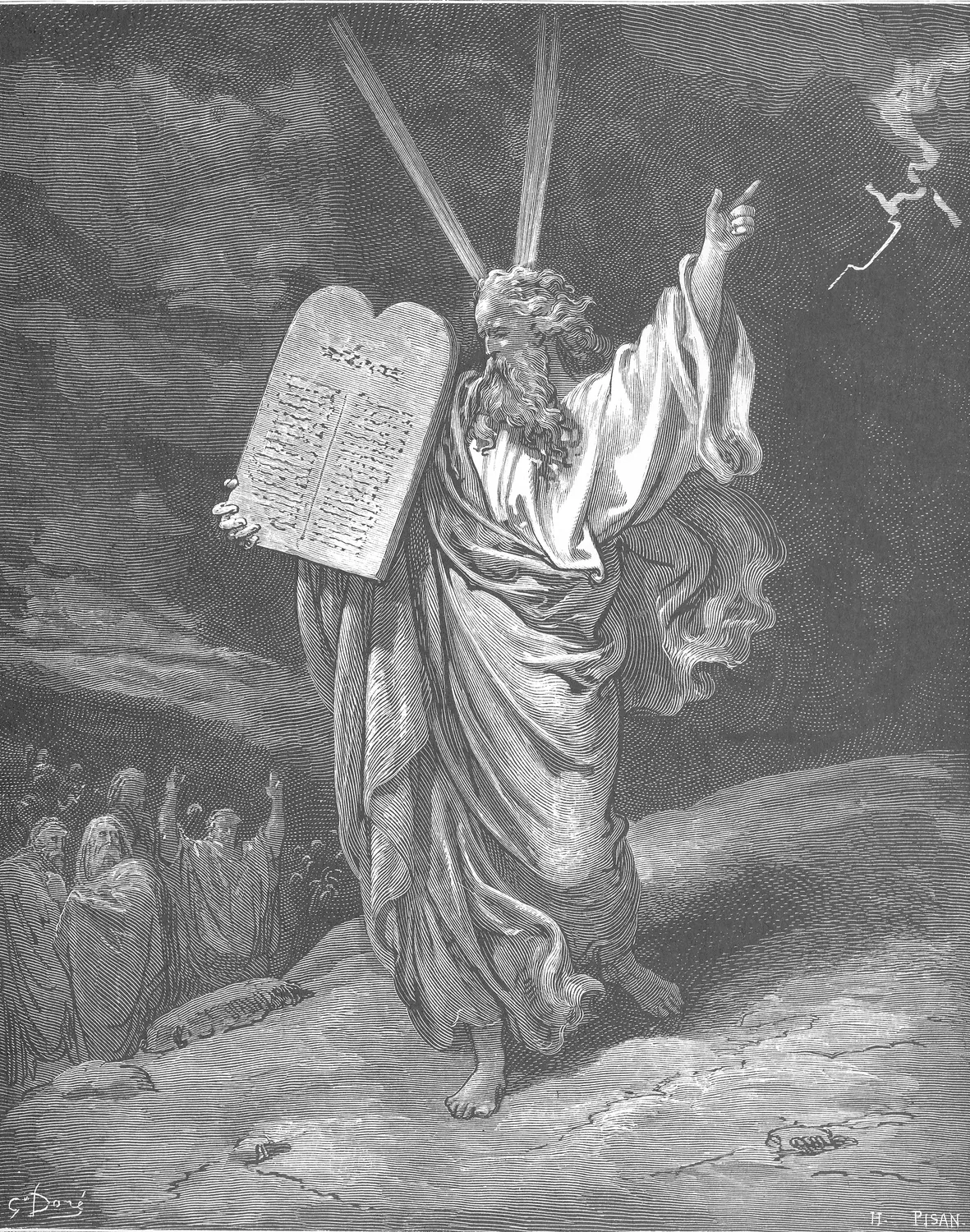
Moses Comes Down from Mount Sinai" by Gustave Doré / Wikimedia Commons
The story of Moses leading the Israelites out of slavery in ancient Egypt is one of the most influential events in world history. Around the 13th century BCE, the Israelites were enslaved by the Pharaoh, the ruler of Egypt. Their forced labor contributed to Egypt's monumental building projects, such as temples and store cities like Pithom and Raamses, as described in ancient texts.
Moses was born during a time when Pharaoh ordered all Israelite baby boys to be killed, fearing the growing population. According to the Hebrew Bible, Moses’s mother hid him in a basket among the Nile River reeds. He was discovered and raised in Pharaoh’s palace but knew his true heritage. As he grew, Moses witnessed the harsh oppression of his people. One day, after seeing an Egyptian overseer mistreat an Israelite, Moses acted in defense and fled Egypt to the land of Midian.
Years later, Moses experienced a vision at a burning bush, where he believed God commanded him to return and free the Israelites. Returning to Egypt, Moses demanded their release, but Pharaoh refused. The narrative describes a series of ten plagues—such as the Nile turning to blood and darkness covering the land—that struck Egypt. These plagues are documented in both biblical texts and some ancient Egyptian records referencing disasters, although scholars debate the exact historical details. Eventually, after the death of the firstborn in Egypt, Pharaoh allowed the Israelites to leave. This event is called the Exodus, meaning “departure.”
The Exodus was a difficult journey. The Israelites traveled across the harsh Sinai Desert, facing hunger, thirst, and uncertainty. Archaeological evidence, such as ancient settlement traces and Egyptian texts about Semitic laborers, supports the presence of foreign groups in Egypt during this period. According to tradition, Moses received the Ten Commandments at Mount Sinai, a set of laws that shaped the Israelites’ religious and social life. This moment represented a new covenant—or sacred agreement—between the Israelites and their God.
The Exodus had lasting significance. It shaped the Israelites’ identity as a people and influenced societies for centuries. The story highlights themes of freedom, faith, and justice. The Exodus is commemorated each year in the Jewish festival of Passover. While historians debate the exact timeline and details, the Exodus remains a symbol of hope and liberation, connecting ancient civilizations to modern ideas about human rights and dignity.
This story links to broader course themes of migration, leadership, and the impact of geography on human societies, as seen in many ancient civilizations.
Interesting Fact: The name “Moses” may mean “drawn out,” reflecting how he was drawn from the Nile River as a baby.
Who led the Israelites out of Egypt?
MosesPharaohAaronRamses
What does 'Exodus' mean?
DepartureCelebrationVictoryArrival
Where did Moses receive the Ten Commandments?
Mount SinaiMount OlympusJerusalemBabylon
Why did Pharaoh enslave the Israelites?
To build projectsFor tradeFor peaceFor education
What was the cause of the Exodus?
Slavery and oppressionFamineWarFlood
Which holiday remembers the Exodus?
PassoverHanukkahEasterRosh Hashanah
The Ten Commandments were given to Moses. True or false?
TrueFalse
What is a 'covenant'?
Sacred agreementBuildingPunishmentCelebration
Perfect For:
👩🏫 Teachers
• Reading comprehension practice
• Auto-graded assessments
• Literacy skill development
👨👩👧👦 Parents
• Reading practice at home
• Comprehension improvement
• Educational reading time
🏠 Homeschoolers
• Reading curriculum support
• Independent reading practice
• Progress monitoring
Reading Features:
📖
Reading Passage
Engaging fiction or nonfiction text
❓
Comprehension Quiz
Auto-graded questions
📊
Instant Feedback
Immediate results and scoring
📄
Printable Version
Download for offline reading
🔊
Read Aloud
Voice-over with word highlighting
Reviews & Ratings
No reviews yet. Be the first to share your experience!
Related Content
Ancient Civilizations and the Environment
This engaging history reading passage explores how ancient civilizations such as Mesopotamia, Egypt, and the Maya adapte...
Gender Roles in Ancient Civilizations
This engaging history reading passage explores the roles of men and women in various ancient civilizations, including Me...
Writing Prompts Ancient Civilizations
Step into the shoes of an archaeologist with this engaging worksheet focused on ancient civilizations. Students will be ...
W.5.2.A-2W.5.1.CW.5.1.D
Power and Authority in Ancient Civilizations
This passage explores the roles of men in positions of power within ancient civilizations, focusing on their authority i...
Evidence in Ancient History
This engaging history reading passage investigates how archaeologists and historians discover clues about how ancient pe...
Ancient Monarchy
This reading passage explores the concept of monarchy in ancient civilizations, focusing on the origins, structure, and ...
Ancient Theocracy
This engaging history reading passage explores the concept of theocracy in ancient civilizations, where priests and reli...
Ancient Mathematics
This passage explores the essential role of mathematics in ancient civilizations, including Mesopotamia, Egypt, Greece, ...
Ancient Canaan
This educational passage explores the land of Canaan, the historical homeland of the ancient Israelites. Students will l...
Ancient Money Barter
This passage explores the fascinating evolution from barter to the earliest coins in ancient civilizations, focusing on ...
Ancient Science and Medicine
This comprehensive reading passage explores the development of science and medicine in ancient civilizations, including ...
Ancient Literature
This passage explores the importance of ancient stories and poems from civilizations such as Greece, India, and Israel. ...
Ancient Agriculture Farming
This passage explores the transformative impact of farming on ancient societies, examining how the Neolithic Revolution ...
Ancient Writing Systems
This engaging history reading passage explores the origins and evolution of ancient writing systems, including cuneiform...
Geography of Ancient Israel
This passage explores the rich geography of Ancient Israel, focusing on how landforms, climate, and natural resources sh...
Slavery Across Civilizations
This detailed history reading passage explores the role and impact of slavery across several ancient civilizations, incl...
Social Classes in Ancient Societies
This passage explores the concept of social hierarchies in ancient civilizations, focusing on why societies such as Meso...
Social structures in Ancient World
This passage explores the organization and significance of family life in ancient societies, focusing on how extended fa...
Polytheism and Monotheism in Ancient Times
This passage explores the religious beliefs of ancient civilizations, focusing on the differences and similarities betwe...
Women in Ancient Societies
This reading passage explores the complex roles of women in the ancient world, focusing on civilizations such as Mesopot...